
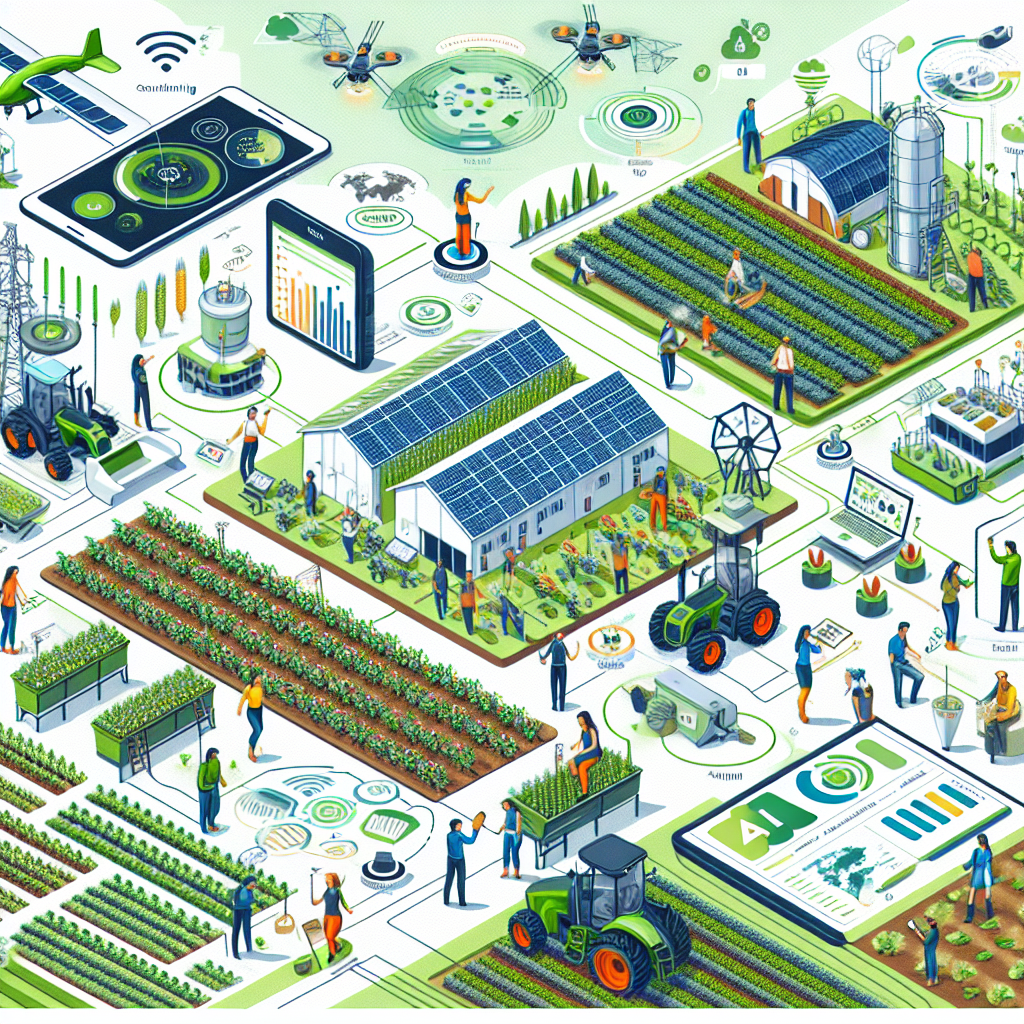
In recent years, the agriculture industry has seen a significant shift towards the adoption of new technologies to improve farm management practices. One of the most promising technologies in this regard is artificial intelligence (AI), which has the potential to revolutionize the way farms are managed and operated. AI-driven solutions offer a range of benefits, including increased efficiency, reduced costs, improved productivity, and better decision-making.
AI-driven solutions for enhancing farm management practices encompass a wide range of applications, including predictive analytics, precision agriculture, crop monitoring, livestock management, and more. These solutions leverage AI algorithms to analyze large amounts of data collected from various sources, such as sensors, satellites, drones, and weather stations, to provide real-time insights and recommendations to farmers.
One of the key advantages of AI-driven solutions is their ability to automate and optimize various farm management tasks, such as irrigation scheduling, pest control, and fertilizer application. By using AI algorithms to analyze data and predict future outcomes, farmers can make more informed decisions and take timely actions to improve their overall productivity and profitability.
For example, AI-driven solutions can help farmers monitor crop health and identify potential issues, such as pest infestations or nutrient deficiencies, before they become major problems. By analyzing data collected from sensors and drones, AI algorithms can detect patterns and anomalies in crop growth, enabling farmers to take proactive measures to address any issues and prevent crop losses.
Another application of AI in farm management is precision agriculture, which involves using AI algorithms to optimize the use of resources, such as water, fertilizer, and pesticides, to maximize crop yields while minimizing environmental impact. By analyzing data on soil moisture levels, weather conditions, and crop growth patterns, AI-driven solutions can generate precise recommendations on when and where to apply inputs, reducing waste and increasing efficiency.
AI-driven solutions also play a crucial role in livestock management, by monitoring animal health and behavior, optimizing feed rations, and predicting disease outbreaks. By using AI algorithms to analyze data from sensors and cameras installed in livestock facilities, farmers can track individual animal performance, detect signs of illness or distress, and provide timely interventions to improve overall animal welfare and productivity.
Overall, AI-driven solutions offer a range of benefits for enhancing farm management practices, including:
1. Improved decision-making: By analyzing large amounts of data and generating actionable insights, AI-driven solutions enable farmers to make more informed decisions and take timely actions to optimize their operations.
2. Increased efficiency: By automating and optimizing various farm management tasks, such as irrigation scheduling and pest control, AI-driven solutions can help farmers save time and resources, leading to increased efficiency and productivity.
3. Reduced costs: By optimizing the use of resources, such as water, fertilizer, and pesticides, AI-driven solutions can help farmers reduce input costs and increase profitability.
4. Better outcomes: By monitoring crop health, livestock performance, and environmental conditions, AI-driven solutions can help farmers improve outcomes, such as higher crop yields, better animal health, and reduced environmental impact.
In conclusion, AI-driven solutions offer a range of benefits for enhancing farm management practices, including improved decision-making, increased efficiency, reduced costs, and better outcomes. By leveraging AI algorithms to analyze data and generate insights, farmers can optimize their operations and achieve higher levels of productivity and profitability.
FAQs:
Q: What is artificial intelligence (AI) and how does it work in farm management?
A: AI refers to the ability of machines to perform tasks that typically require human intelligence, such as learning, reasoning, and problem-solving. In farm management, AI algorithms analyze data collected from various sources, such as sensors, satellites, drones, and weather stations, to provide real-time insights and recommendations to farmers. By using AI-driven solutions, farmers can automate and optimize various tasks, such as irrigation scheduling, pest control, and fertilizer application, to improve their overall productivity and profitability.
Q: What are some examples of AI-driven solutions for enhancing farm management practices?
A: Some examples of AI-driven solutions for farm management include predictive analytics, precision agriculture, crop monitoring, livestock management, and more. These solutions leverage AI algorithms to analyze data and generate insights on crop health, soil moisture levels, weather conditions, livestock performance, and more, to help farmers make more informed decisions and take timely actions to optimize their operations.
Q: How can AI-driven solutions benefit farmers?
A: AI-driven solutions offer a range of benefits for farmers, including improved decision-making, increased efficiency, reduced costs, and better outcomes. By using AI algorithms to analyze data and generate insights, farmers can optimize their operations, save time and resources, reduce input costs, and achieve higher levels of productivity and profitability.
Q: Are AI-driven solutions expensive to implement on farms?
A: While the initial cost of implementing AI-driven solutions on farms may vary depending on the scale and complexity of the operation, the long-term benefits of increased efficiency, reduced costs, and better outcomes often outweigh the initial investment. Additionally, there are a variety of AI-driven solutions available on the market, ranging from affordable software applications to more advanced systems, making it accessible to farmers of all sizes.
Q: How can farmers get started with AI-driven solutions for enhancing farm management practices?
A: Farmers interested in implementing AI-driven solutions for farm management can start by researching available options and consulting with agricultural technology providers to determine the best solution for their specific needs and goals. It is important to consider factors such as data collection, integration, and analysis capabilities, as well as training and support services, to ensure a successful implementation and adoption of AI-driven solutions on their farms.