
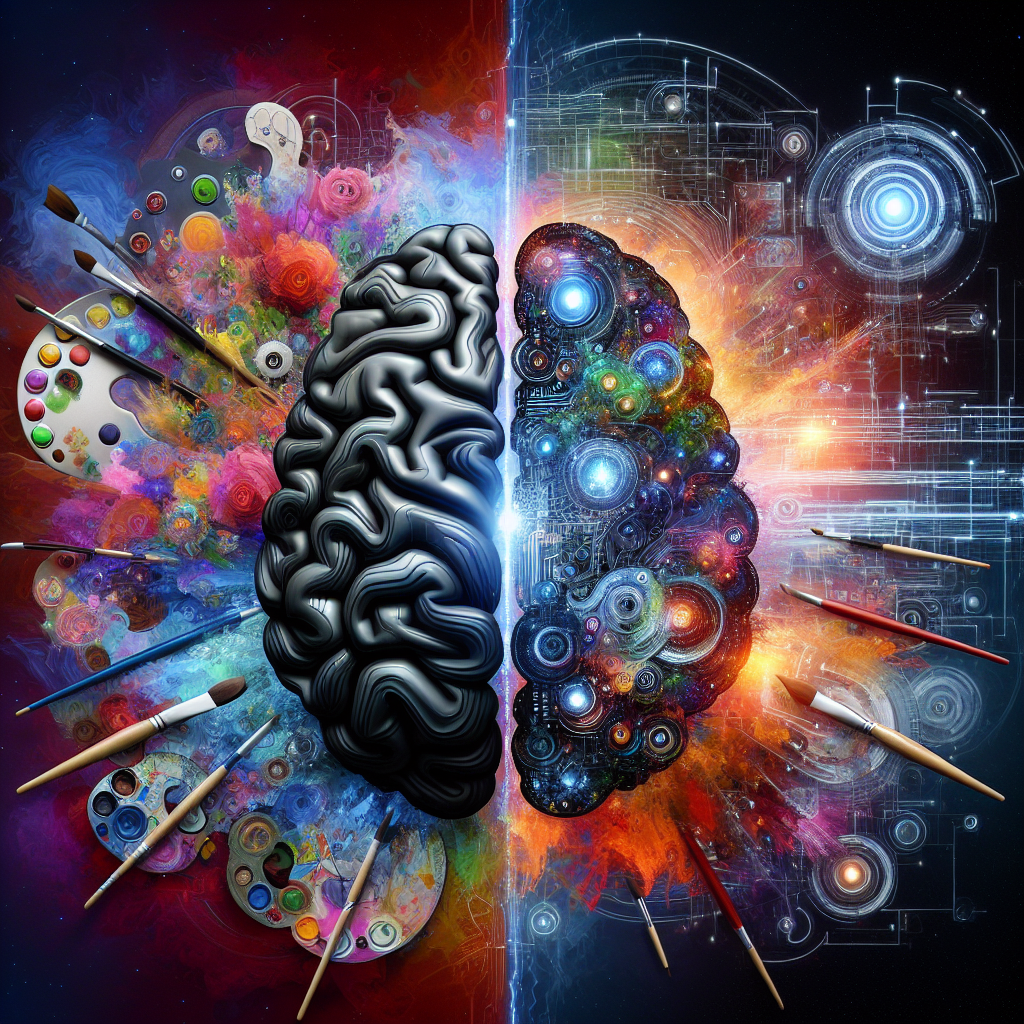
Artificial Intelligence (AI) is a rapidly evolving field that is changing the way we live, work, and create. While AI is often associated with technology and automation, it also has a creative side that is revolutionizing industries such as art, music, design, and more. In this article, we will explore the creative side of AI, how it is being used to inspire and enhance human creativity, and the potential impact it may have on the future of creative industries.
AI in Art
One of the most exciting areas where AI is making waves is in the world of art. AI algorithms are being used to create unique and innovative pieces of art that challenge traditional notions of creativity. Artists and designers are using AI tools to generate new ideas, experiment with different styles, and push the boundaries of what is possible in the art world.
One example of AI in art is the use of Generative Adversarial Networks (GANs) to create realistic images that blur the line between human and machine creativity. GANs work by pitting two neural networks against each other – one generates images, while the other tries to determine if they are real or fake. This process results in the creation of stunning and often surreal images that can inspire and captivate audiences.
AI is also being used to analyze and interpret art in new ways. For example, researchers have developed algorithms that can identify patterns and trends in art history, helping to shed light on the evolution of artistic styles and techniques. AI can also be used to identify the emotions and themes present in a piece of art, providing valuable insights for artists and critics alike.
AI in Music
In the world of music, AI is also making a big impact. AI algorithms are being used to compose music, analyze musical trends, and even create new instruments. Companies like Amper Music are using AI to create custom music tracks for filmmakers, advertisers, and other creatives, while platforms like Jukedeck are allowing anyone to create their own music using AI.
AI is also being used to analyze and interpret music in new ways. For example, researchers have developed algorithms that can identify the structure and patterns in a piece of music, helping to uncover hidden connections and influences. AI can also be used to generate new musical ideas, suggest chord progressions, and even compose entire songs.
AI in Design
In the field of design, AI is being used to streamline and enhance the creative process. Designers are using AI tools to generate new ideas, experiment with different layouts, and automate repetitive tasks. AI can help designers to quickly generate multiple design options, test different color schemes, and even predict how users will interact with a website or app.
One example of AI in design is the use of machine learning algorithms to create personalized user experiences. By analyzing user data and behavior, AI can suggest design changes that are tailored to individual preferences, improving the overall user experience. AI can also be used to automate the design process, freeing up designers to focus on more strategic and creative tasks.
FAQs
Q: Can AI truly be creative?
A: While AI can generate new ideas and produce unique works of art, it is important to remember that AI does not have consciousness or emotions like humans do. AI is limited by the data it is trained on and the algorithms it uses, so its creativity is more of a reflection of its programming than true inspiration.
Q: Will AI replace human creativity?
A: While AI is becoming more advanced and capable of creating impressive works of art, music, and design, it is unlikely to replace human creativity entirely. AI can augment and enhance human creativity, but it is ultimately up to humans to decide how to use these tools to express themselves and push the boundaries of what is possible.
Q: How can I start using AI in my creative projects?
A: There are many tools and resources available for artists, musicians, and designers who want to incorporate AI into their work. Platforms like Google’s Magenta and OpenAI’s MuseNet offer AI tools for creating music, while companies like RunwayML and Adobe are developing AI tools for visual artists and designers. It is a good idea to experiment with different AI tools and see how they can enhance your creative process.
In conclusion, AI is opening up new possibilities for creativity and innovation across a wide range of industries. From art and music to design and beyond, AI is helping to inspire and enhance human creativity in exciting new ways. By embracing AI tools and exploring their potential, creatives can push the boundaries of what is possible and create truly groundbreaking work. The future of creativity is here, and AI is leading the way.