
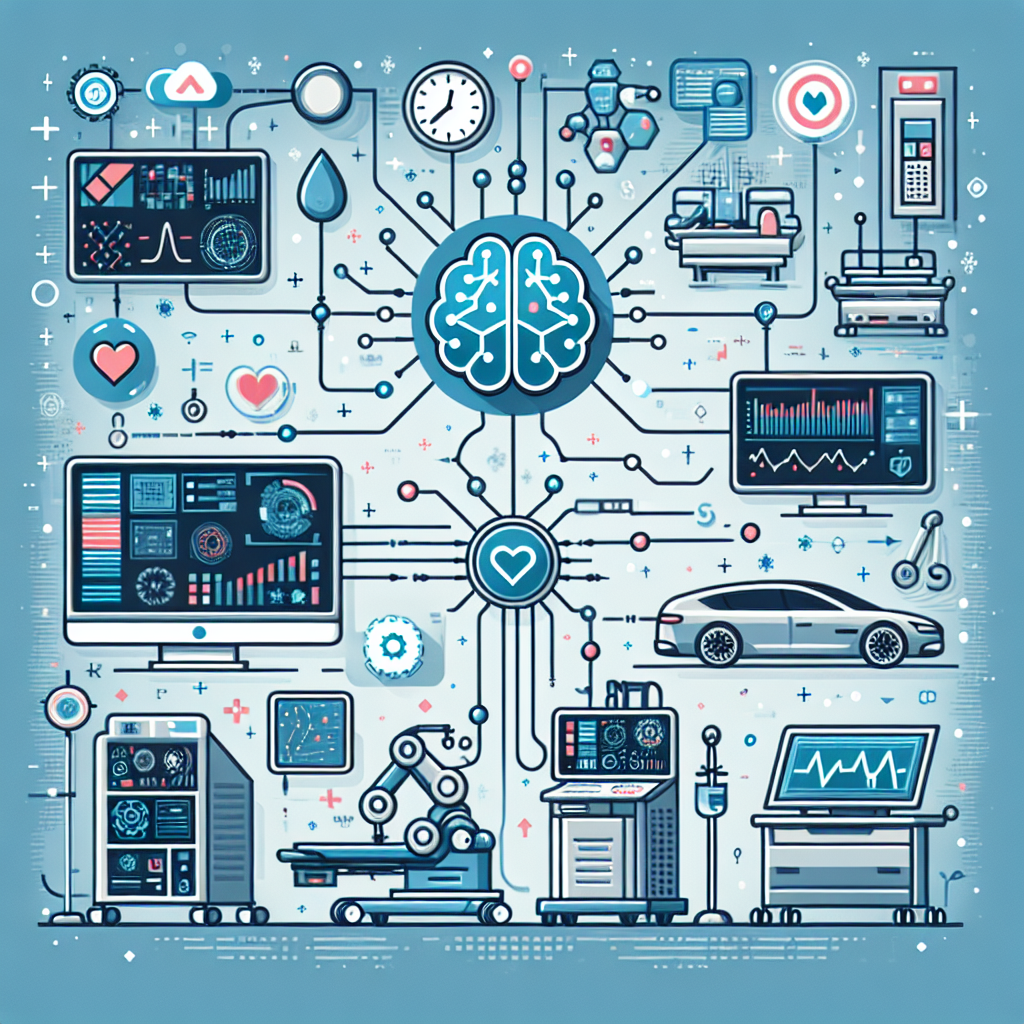
Artificial Intelligence (AI) and Predictive Maintenance in Healthcare Facilities
In recent years, there has been a significant increase in the use of artificial intelligence (AI) and predictive maintenance in various industries, including healthcare. These technologies have the potential to revolutionize the way healthcare facilities operate, by helping to predict and prevent equipment failures, optimize maintenance schedules, and improve overall efficiency.
What is Predictive Maintenance?
Predictive maintenance is a proactive maintenance strategy that uses data and analytics to predict when equipment is likely to fail, so that maintenance can be performed before a breakdown occurs. This approach is in contrast to traditional reactive maintenance, where equipment is only repaired or replaced after it has already failed.
Predictive maintenance uses a combination of sensors, data analytics, and machine learning algorithms to monitor the health of equipment in real-time, and identify patterns or anomalies that may indicate an impending failure. By analyzing historical data and identifying trends, AI algorithms can predict when equipment is likely to fail, allowing maintenance teams to take action before a breakdown occurs.
The Benefits of Predictive Maintenance in Healthcare Facilities
Predictive maintenance has several key benefits for healthcare facilities, including:
1. Improved equipment reliability: By predicting and preventing equipment failures, healthcare facilities can improve the reliability of critical medical equipment, reducing the risk of downtime and ensuring that equipment is available when needed.
2. Cost savings: Predictive maintenance can help healthcare facilities reduce maintenance costs by optimizing maintenance schedules and avoiding unnecessary repairs. By performing maintenance only when needed, facilities can save time and money, and extend the lifespan of equipment.
3. Increased efficiency: By monitoring equipment in real-time and predicting when maintenance is needed, healthcare facilities can improve operational efficiency and reduce the risk of unexpected downtime. This can help facilities provide better quality care to patients, and improve overall productivity.
4. Enhanced patient safety: Predictive maintenance can help healthcare facilities ensure that critical medical equipment is always in good working order, reducing the risk of equipment failures that could compromise patient safety.
How AI is Used in Predictive Maintenance
Artificial intelligence plays a key role in predictive maintenance by enabling healthcare facilities to analyze large amounts of data, identify patterns and trends, and predict when equipment is likely to fail. AI algorithms can ingest data from sensors, equipment logs, maintenance records, and other sources, and use machine learning techniques to detect anomalies and predict when maintenance is needed.
One of the key advantages of AI in predictive maintenance is its ability to learn and adapt over time. By continuously analyzing data and refining their models, AI algorithms can improve their predictive accuracy and provide more reliable insights into equipment health.
AI can also be used to optimize maintenance schedules, by analyzing historical data and predicting when maintenance is most likely to be needed. By scheduling maintenance at the optimal time, healthcare facilities can reduce costs, minimize downtime, and ensure that equipment is always in good working order.
Challenges and Considerations for Implementing Predictive Maintenance in Healthcare Facilities
While predictive maintenance offers many benefits for healthcare facilities, there are also challenges and considerations to keep in mind when implementing these technologies:
1. Data quality: Predictive maintenance relies on high-quality data to make accurate predictions. Healthcare facilities must ensure that they have access to reliable data sources, and that their data is clean, accurate, and up-to-date.
2. Integration with existing systems: Implementing predictive maintenance in healthcare facilities may require integrating with existing systems, such as electronic health records, inventory management systems, and other IT infrastructure. Facilities must ensure that their predictive maintenance solutions can seamlessly integrate with these systems to maximize their impact.
3. Skills and expertise: Implementing AI and predictive maintenance in healthcare facilities requires specialized skills and expertise. Facilities may need to invest in training their staff, or hire external consultants with the necessary knowledge and experience to implement these technologies effectively.
4. Regulatory compliance: Healthcare facilities must also consider regulatory compliance when implementing predictive maintenance, particularly with regards to data privacy and security. Facilities must ensure that their predictive maintenance solutions comply with relevant regulations, such as HIPAA in the United States, to protect patient data and ensure compliance with legal requirements.
FAQs
Q: How can predictive maintenance help healthcare facilities improve patient safety?
A: Predictive maintenance can help healthcare facilities improve patient safety by ensuring that critical medical equipment is always in good working order. By predicting and preventing equipment failures, facilities can reduce the risk of downtime and ensure that equipment is available when needed, reducing the risk of errors or delays in patient care.
Q: What types of equipment can benefit from predictive maintenance in healthcare facilities?
A: A wide range of medical equipment can benefit from predictive maintenance, including imaging systems, patient monitors, ventilators, and other critical care equipment. By monitoring the health of this equipment in real-time and predicting when maintenance is needed, healthcare facilities can ensure that their equipment is always in good working order and reduce the risk of downtime.
Q: How can healthcare facilities get started with predictive maintenance?
A: Healthcare facilities interested in implementing predictive maintenance can start by assessing their current maintenance practices and identifying areas where predictive maintenance could provide the most value. Facilities can then explore predictive maintenance solutions from vendors, or work with consultants to develop a custom solution tailored to their specific needs and requirements.
In conclusion, AI and predictive maintenance offer exciting opportunities for healthcare facilities to improve equipment reliability, reduce costs, and enhance patient safety. By leveraging these technologies, facilities can optimize maintenance schedules, predict and prevent equipment failures, and improve overall operational efficiency. While there are challenges and considerations to keep in mind when implementing predictive maintenance, the potential benefits make it a worthwhile investment for healthcare facilities looking to improve their maintenance practices and provide better quality care to patients.