
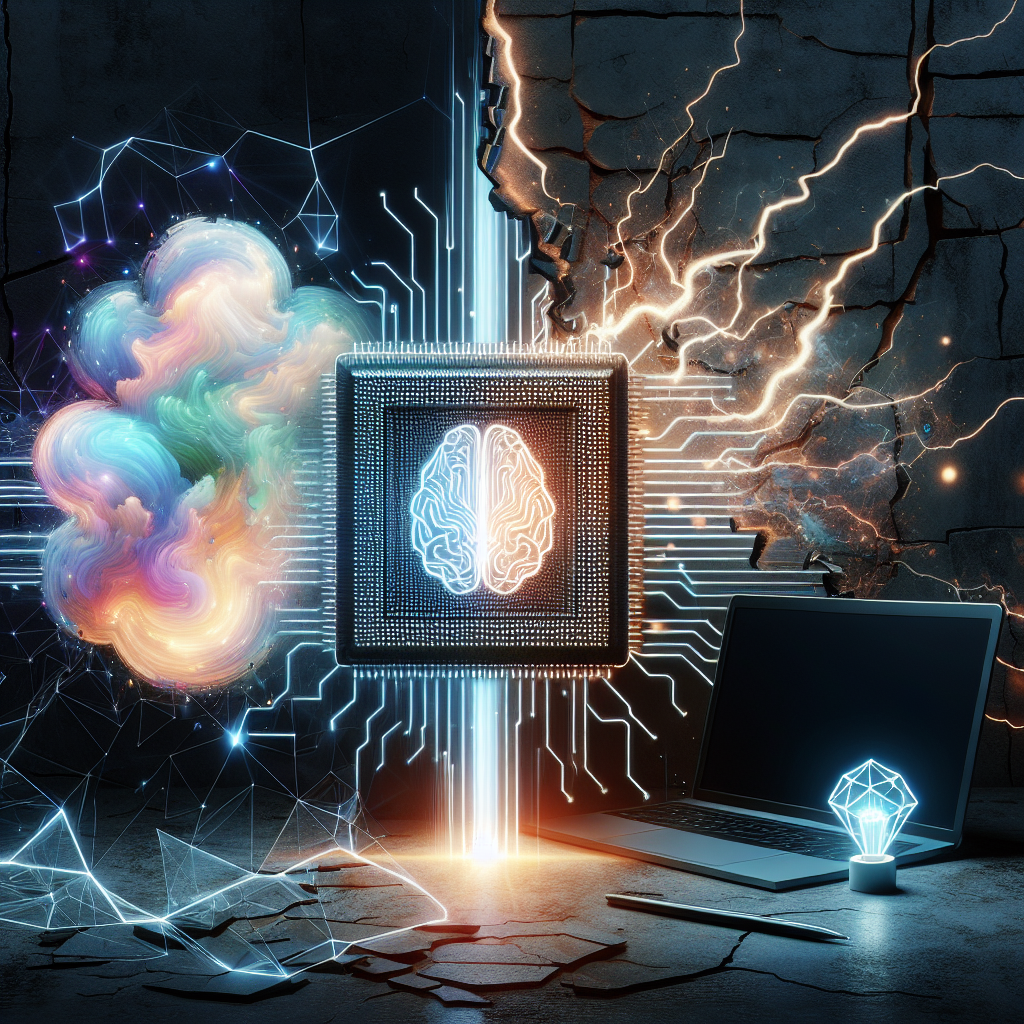
Artificial Intelligence (AI) has come a long way in recent years, pushing the boundaries of what was once thought possible. One area where AI is making significant strides is in the realm of creativity. Traditionally, creativity has been seen as a uniquely human trait, but AI is challenging that notion by demonstrating its ability to create art, music, literature, and more. In this article, we will explore how AI is breaking barriers and pushing boundaries in the realm of creativity.
One of the ways in which AI is breaking barriers in creativity is through the creation of art. AI algorithms have been developed that can generate paintings, sculptures, and even entire art installations. These algorithms analyze vast amounts of data on art history, styles, and techniques to create new works of art that are often indistinguishable from those created by human artists. For example, the AI program created by the creative agency AKQA, called “Ada,” created a series of portraits that were displayed in a gallery alongside works by human artists. Many visitors were unable to tell the difference between Ada’s work and that of the human artists.
AI is also making waves in the world of music. AI algorithms have been developed that can compose original pieces of music, ranging from classical symphonies to pop songs. These algorithms analyze existing music to understand patterns and structures, and then use that information to create new compositions. Some AI-generated music has even been performed by orchestras and received critical acclaim. For example, the AI program created by the music company Amper has been used to create music for commercials, movies, and video games.
In the realm of literature, AI is also making its mark. AI algorithms have been developed that can generate stories, poems, and even entire novels. These algorithms analyze vast amounts of text to understand language, plot structures, and character development, and then use that information to create new works of literature. Some AI-generated stories have been published in literary magazines and even shortlisted for prestigious awards. For example, the AI program created by the publishing company Bravely has been used to generate short stories that have been published in magazines such as The New Yorker.
AI is also being used to push boundaries in other creative fields, such as design, architecture, and fashion. AI algorithms have been developed that can generate new designs for buildings, clothing, and products. These algorithms analyze data on design principles, materials, and aesthetics to create innovative and groundbreaking designs. For example, the AI program created by the design company Autodesk has been used to generate new concepts for buildings that are both functional and visually stunning.
Despite the many advancements in AI creativity, there are still some barriers that need to be overcome. One of the main challenges is the issue of originality. Some critics argue that AI-generated art, music, and literature lack the emotional depth and personal touch that human creativity brings. They argue that AI is simply mimicking existing styles and techniques, rather than creating something truly original. However, proponents of AI creativity argue that the technology is still in its infancy and has the potential to evolve and innovate in ways that we cannot yet imagine.
Another challenge is the issue of ownership and authorship. When AI generates a piece of art, music, or literature, who owns the rights to that work? Is it the programmer who created the algorithm, the company that developed the AI, or the AI itself? These questions raise complex legal and ethical issues that need to be addressed as AI continues to push boundaries in creativity.
Despite these challenges, AI is poised to revolutionize the creative industries in ways that we have never seen before. By breaking barriers and pushing boundaries, AI is opening up new possibilities for artistic expression and innovation. As AI continues to evolve and improve, we can expect to see even more groundbreaking creations that challenge our perceptions of what is possible in the realm of creativity.
FAQs:
Q: Can AI truly be creative?
A: While AI may not possess the same emotional depth and personal touch as human creativity, it has shown the ability to generate original and innovative works of art, music, and literature. As the technology continues to evolve, we can expect to see even more creative outputs from AI algorithms.
Q: How does AI generate creative works?
A: AI algorithms analyze vast amounts of data on art history, music theory, literature, design principles, and more to understand patterns and structures. They then use this information to create new works of art, music, literature, and design that are often indistinguishable from those created by humans.
Q: What are the ethical implications of AI creativity?
A: The ethical implications of AI creativity are complex and multifaceted. Questions of ownership, authorship, originality, and intellectual property rights need to be carefully considered as AI continues to push boundaries in creativity. It is important for policymakers, artists, and technologists to engage in thoughtful discussions about the ethical implications of AI creativity.
Q: How can AI benefit the creative industries?
A: AI has the potential to revolutionize the creative industries by automating repetitive tasks, generating new ideas and concepts, and pushing the boundaries of what is possible in art, music, literature, design, and more. By harnessing the power of AI, artists and creators can explore new avenues of expression and innovation.