
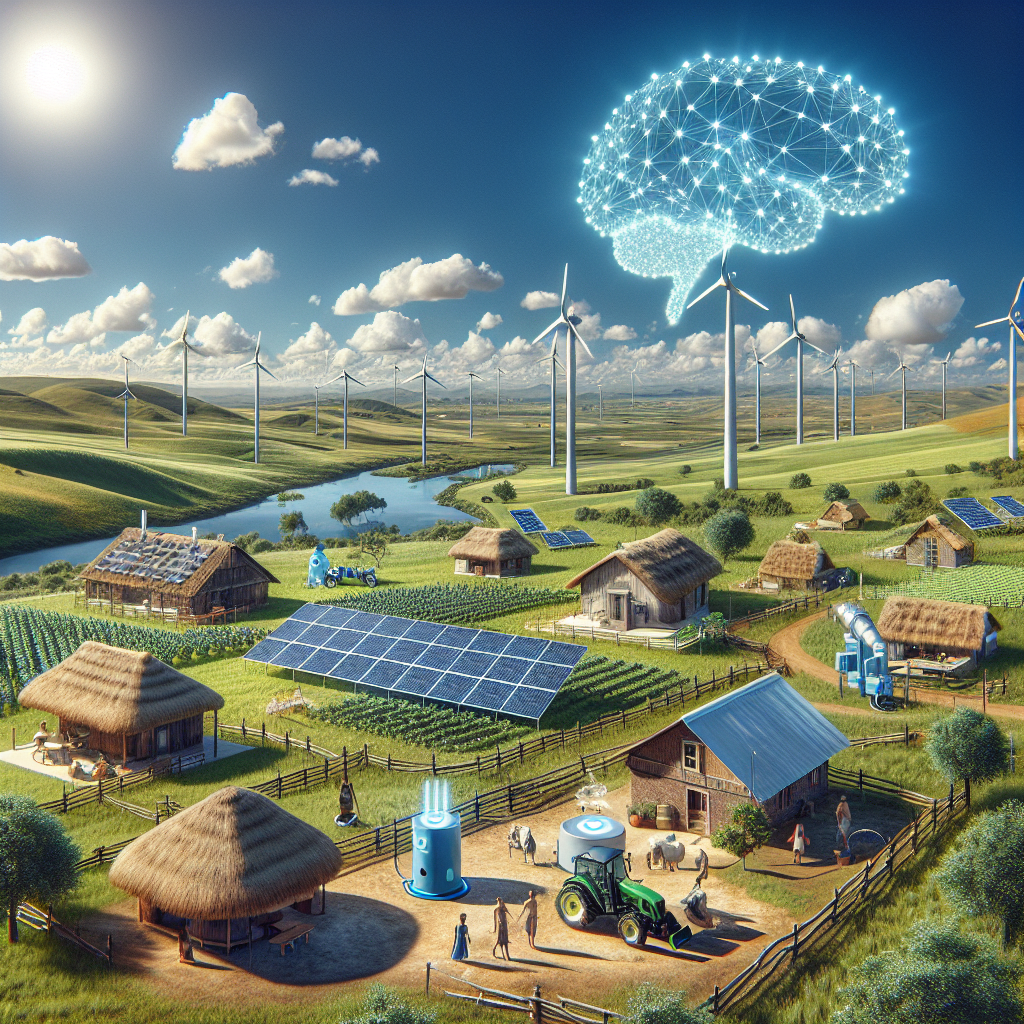
The Potential of AI in Promoting Sustainable Energy Access in Rural Areas
Access to reliable and sustainable energy is a fundamental requirement for economic development, social progress, and quality of life. However, millions of people in rural areas around the world still lack access to electricity. The use of artificial intelligence (AI) holds great potential in addressing this issue by making energy systems more efficient, reliable, and accessible.
AI can play a crucial role in promoting sustainable energy access in rural areas by optimizing energy generation, distribution, and consumption. By analyzing large amounts of data, AI algorithms can identify patterns, forecast energy demand, and optimize energy production and distribution processes. This can lead to more efficient use of resources, reduced energy costs, and increased reliability of energy supply in rural areas.
One of the key challenges in rural electrification is the high cost of extending the electricity grid to remote areas. AI can help overcome this challenge by enabling the use of off-grid renewable energy systems, such as solar panels and wind turbines, which can provide electricity to rural communities without the need for expensive grid infrastructure. AI algorithms can optimize the operation of these off-grid systems, maximize energy production, and ensure reliable power supply to rural areas.
AI can also help in promoting energy efficiency in rural areas by optimizing energy consumption in households, businesses, and industries. By analyzing energy usage patterns and identifying areas for improvement, AI algorithms can recommend energy-saving measures, such as upgrading appliances, improving insulation, and implementing smart energy management systems. This can lead to significant reductions in energy consumption and greenhouse gas emissions in rural areas.
Furthermore, AI can facilitate the integration of renewable energy sources into the existing energy grid, making it more resilient and sustainable. By forecasting renewable energy generation, optimizing grid operation, and managing energy storage systems, AI algorithms can help utilities balance supply and demand, reduce curtailment of renewable energy, and increase the share of renewable energy in the energy mix. This can lead to a more sustainable and environmentally friendly energy system in rural areas.
In addition to optimizing energy systems, AI can also improve access to energy services in rural areas by enabling the development of innovative solutions, such as pay-as-you-go solar systems, mobile-based energy services, and community-based energy cooperatives. By leveraging AI technologies, these solutions can provide affordable, reliable, and clean energy access to underserved communities, empowering them to improve their quality of life, create economic opportunities, and enhance their resilience to climate change.
Overall, the potential of AI in promoting sustainable energy access in rural areas is vast. By leveraging the power of AI, we can overcome the challenges of rural electrification, improve energy efficiency, increase the share of renewable energy, and empower communities to access clean and reliable energy services. With the right policies, investments, and partnerships, we can harness the potential of AI to accelerate the transition to a sustainable energy future for all.
Frequently Asked Questions (FAQs):
Q: How can AI help in promoting sustainable energy access in rural areas?
A: AI can help in promoting sustainable energy access in rural areas by optimizing energy generation, distribution, and consumption, enabling the use of off-grid renewable energy systems, promoting energy efficiency, facilitating the integration of renewable energy sources, and enabling the development of innovative energy solutions.
Q: What are the key benefits of using AI in promoting sustainable energy access in rural areas?
A: The key benefits of using AI in promoting sustainable energy access in rural areas include increased energy efficiency, reduced energy costs, improved reliability of energy supply, increased access to clean energy services, empowerment of underserved communities, and acceleration of the transition to a sustainable energy future.
Q: What are the challenges of using AI in promoting sustainable energy access in rural areas?
A: Some of the challenges of using AI in promoting sustainable energy access in rural areas include the high initial costs of implementing AI technologies, the need for technical expertise to deploy and operate AI systems, concerns about data privacy and security, and the potential for AI to exacerbate existing inequalities in access to energy services.
Q: What are some examples of AI applications in promoting sustainable energy access in rural areas?
A: Some examples of AI applications in promoting sustainable energy access in rural areas include optimizing the operation of off-grid renewable energy systems, analyzing energy consumption patterns to identify energy-saving opportunities, forecasting renewable energy generation to optimize grid operation, and developing innovative energy solutions using AI technologies.
Q: How can policymakers, investors, and stakeholders support the use of AI in promoting sustainable energy access in rural areas?
A: Policymakers, investors, and stakeholders can support the use of AI in promoting sustainable energy access in rural areas by developing supportive policies and regulations, providing funding and incentives for AI projects, fostering collaboration and partnerships, and promoting capacity building and knowledge sharing in the field of AI and energy access.