
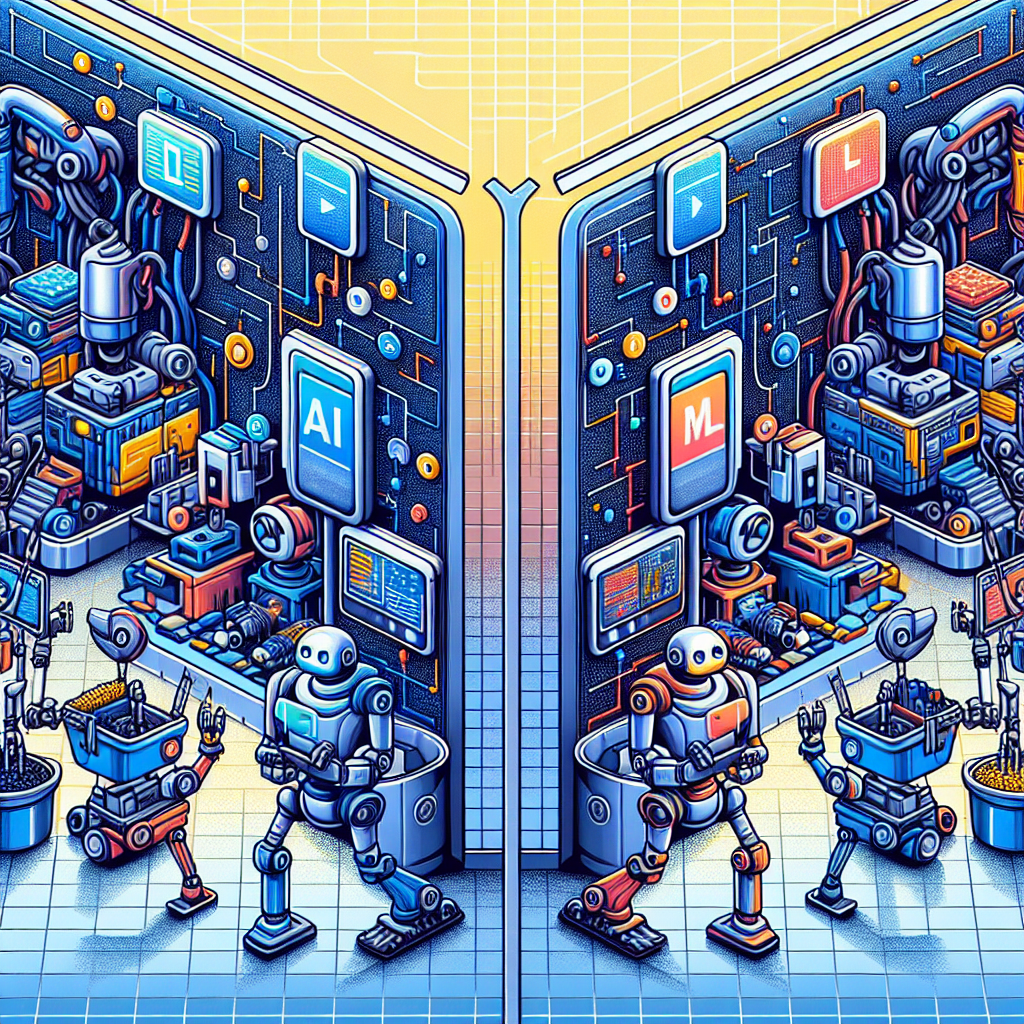
Artificial Intelligence (AI) and Machine Learning (ML) are two of the most talked-about technologies in the world today. Both have the potential to revolutionize the way we live, work, and interact with our surroundings. When it comes to robotics, AI and ML play a crucial role in enabling machines to perform tasks that were once thought to be the exclusive domain of humans. But which of these technologies is driving the future of robotics? In this article, we will explore the differences between AI and ML, their applications in robotics, and how they are shaping the future of automation.
AI vs ML: What’s the Difference?
Artificial Intelligence is a broad field of study that aims to create machines that can perform tasks that typically require human intelligence, such as understanding natural language, recognizing patterns, and making decisions. AI encompasses a wide range of techniques, including machine learning, natural language processing, computer vision, and robotics.
Machine Learning, on the other hand, is a subset of AI that focuses on developing algorithms that enable machines to learn from data and improve their performance over time. ML algorithms are trained on large datasets to identify patterns and make predictions without being explicitly programmed to do so. This allows machines to perform complex tasks without human intervention.
In essence, AI is the overarching field that encompasses various techniques and approaches to creating intelligent machines, while ML is a specific subset of AI that focuses on developing algorithms that can learn from data.
Applications of AI and ML in Robotics
AI and ML have a wide range of applications in robotics, from autonomous vehicles and drones to industrial robots and healthcare robots. Here are some examples of how these technologies are being used in the field of robotics:
1. Autonomous Vehicles: AI and ML are driving the development of autonomous vehicles, such as self-driving cars, trucks, and drones. These vehicles use sensors, cameras, and GPS to navigate their surroundings and make decisions in real-time. ML algorithms are used to analyze data from these sensors and learn from past experiences to improve their performance.
2. Industrial Robots: AI and ML are revolutionizing the manufacturing industry by enabling the development of smart robots that can perform complex tasks with precision and efficiency. These robots use computer vision and ML algorithms to adapt to changing environments, detect defects, and optimize production processes.
3. Healthcare Robots: AI and ML are being used in the development of healthcare robots that can assist doctors and nurses in diagnosing and treating patients. These robots can analyze medical images, monitor vital signs, and even perform surgery with a high level of precision.
4. Service Robots: AI and ML are also driving the development of service robots that can assist with tasks such as cleaning, delivery, and customer service. These robots use natural language processing and computer vision to interact with humans and perform tasks autonomously.
The Future of Robotics: AI or ML?
So, which of these technologies is driving the future of robotics? The answer is both. AI and ML are complementary technologies that work together to create intelligent machines that can perform a wide range of tasks. While AI provides the overarching framework for creating intelligent systems, ML enables machines to learn from data and improve their performance over time.
In the future, we can expect to see even more advanced robots that can perform complex tasks with a high level of autonomy and efficiency. These robots will be able to adapt to changing environments, learn from past experiences, and interact with humans in a natural and intuitive way.
FAQs
Q: What is the difference between AI and ML?
A: AI is a broad field of study that aims to create machines that can perform tasks that typically require human intelligence, such as understanding natural language, recognizing patterns, and making decisions. ML is a subset of AI that focuses on developing algorithms that enable machines to learn from data and improve their performance over time.
Q: How are AI and ML used in robotics?
A: AI and ML are used in robotics to enable machines to perform tasks that were once thought to be the exclusive domain of humans, such as autonomous navigation, object recognition, and decision-making. These technologies are driving the development of smart robots that can perform a wide range of tasks with precision and efficiency.
Q: What is the future of robotics?
A: The future of robotics is bright, with AI and ML playing a crucial role in driving innovation and advancement in the field. We can expect to see even more advanced robots that can perform complex tasks with a high level of autonomy and efficiency, revolutionizing industries such as manufacturing, healthcare, and transportation.
In conclusion, AI and ML are both driving the future of robotics by enabling the development of intelligent machines that can perform a wide range of tasks with precision and efficiency. These technologies are revolutionizing industries such as manufacturing, healthcare, and transportation, and we can expect to see even more advanced robots in the future. By harnessing the power of AI and ML, we can create a world where machines work alongside humans to make our lives easier and more productive.