
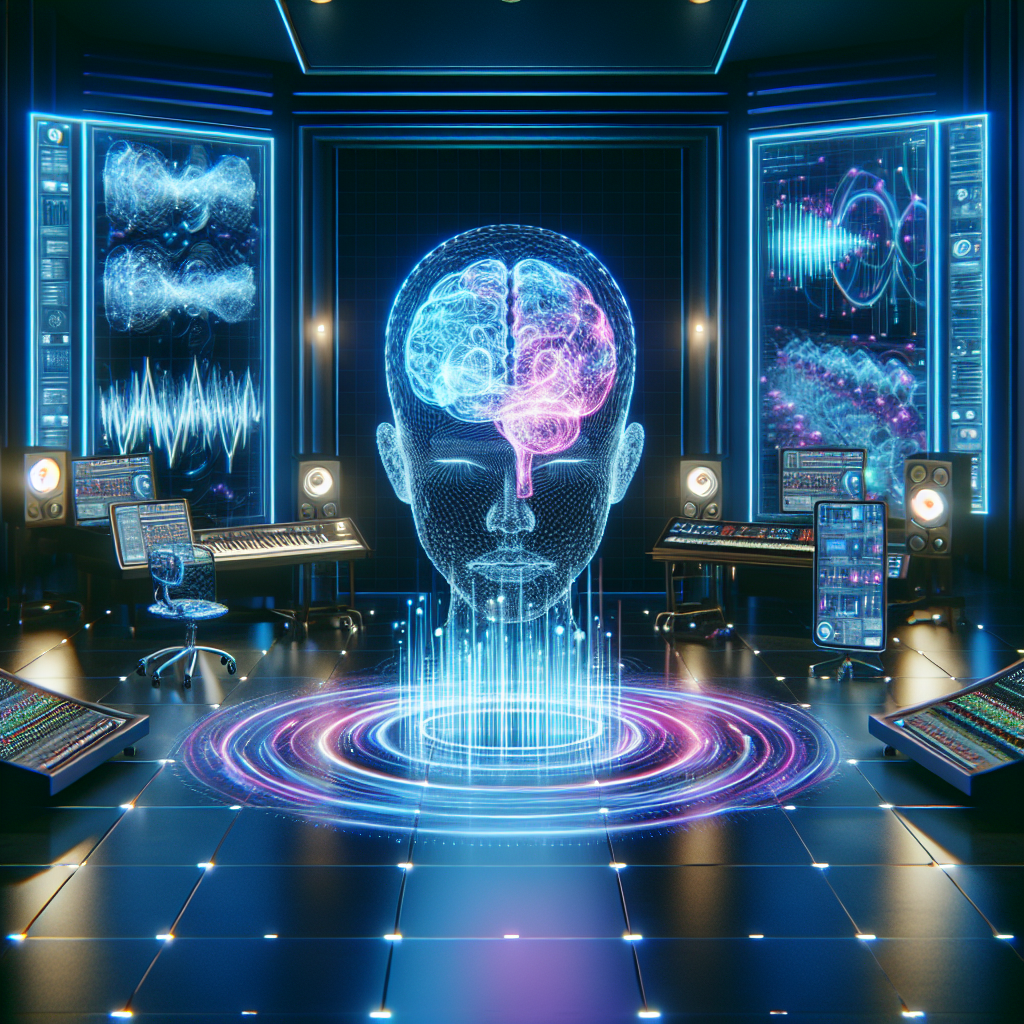
The Influence of AI on Music Production Efficiency
In recent years, artificial intelligence (AI) has been making significant strides in various industries, and the music production sector is no exception. AI technology is revolutionizing the way music is created, produced, and distributed, leading to increased efficiency and innovation in the field. From composing and arranging music to mixing and mastering tracks, AI is transforming every aspect of the music production process.
AI in Music Composition
One of the most significant applications of AI in music production is in composition. AI algorithms can analyze vast amounts of musical data and create original compositions based on patterns and trends in existing music. This can be particularly useful for artists and producers who are looking for inspiration or struggling with writer’s block.
AI-powered composition tools can generate melodies, harmonies, and chord progressions that can be used as a starting point for a new song. These tools can also help musicians explore different musical styles and genres, allowing them to experiment with new sounds and ideas.
AI in Arrangement and Production
AI can also be used to assist in the arrangement and production of music. AI algorithms can analyze the structure of a song and suggest changes to improve its flow and dynamics. This can be particularly helpful for producers who are looking to create more dynamic and engaging tracks.
AI can also be used to automate repetitive tasks in the production process, such as editing and mixing. AI-powered tools can analyze audio tracks and make adjustments to levels, EQ, and effects to create a polished and professional sound. This can save producers valuable time and allow them to focus on the creative aspects of music production.
AI in Mixing and Mastering
Mixing and mastering are crucial stages in the music production process, where the final polish is applied to a track before it is released. AI algorithms can analyze audio tracks and make intelligent decisions about levels, panning, EQ, and compression to create a balanced and cohesive mix.
AI-powered mastering tools can also analyze the sonic characteristics of a track and apply appropriate processing to enhance its sound quality. This can help producers achieve a professional and radio-ready sound without the need for expensive mastering engineers.
FAQs
Q: How does AI generate music compositions?
A: AI algorithms analyze vast amounts of musical data to identify patterns and trends in existing music. Based on this analysis, AI can generate original compositions that are inspired by the musical styles and genres in the dataset.
Q: Can AI replace human musicians and producers?
A: While AI technology is advancing rapidly, it is unlikely to replace human musicians and producers entirely. AI can assist in the creative process and help musicians and producers work more efficiently, but the human touch and creativity are still essential in music production.
Q: Are AI-generated compositions considered original works?
A: The question of whether AI-generated compositions are considered original works is a subject of debate. While AI algorithms can create music that is inspired by existing works, the legal and ethical implications of AI-generated music are still being explored.
Q: How can musicians and producers incorporate AI into their workflow?
A: Musicians and producers can incorporate AI into their workflow by using AI-powered tools and software to assist in composition, arrangement, production, mixing, and mastering. By leveraging AI technology, musicians and producers can work more efficiently and creatively in the music production process.
In conclusion, AI is having a profound impact on music production efficiency, enabling artists and producers to create innovative and high-quality music more efficiently than ever before. As AI technology continues to advance, we can expect to see even more exciting developments in the field of music production in the years to come.