
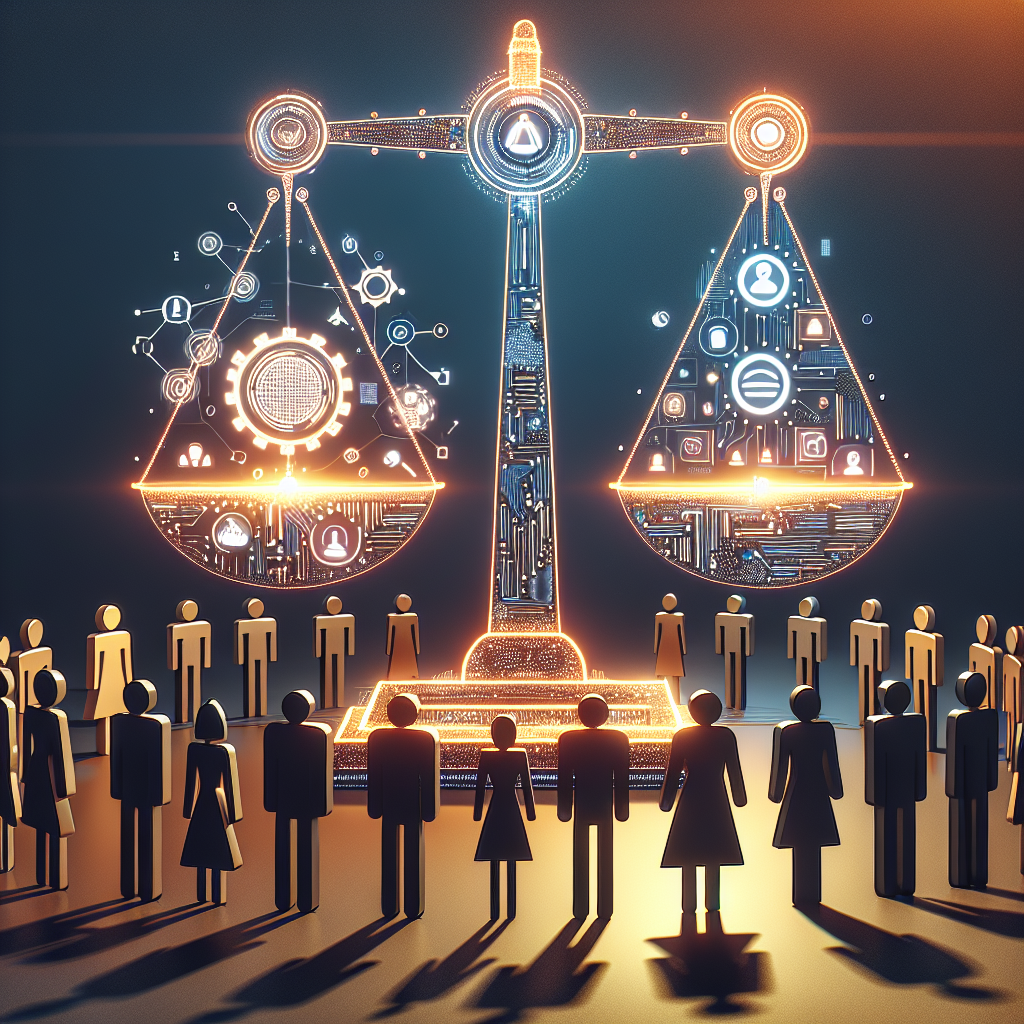
Artificial intelligence (AI) has the potential to revolutionize many aspects of society, including the way we approach social justice. By democratizing access to justice, AI can help level the playing field for marginalized communities and ensure that everyone has equal access to legal resources and support. In this article, we will explore the role of AI in the future of social justice, the benefits it can bring, and the challenges that must be addressed to ensure that it is used ethically and responsibly.
The Role of AI in Social Justice
AI has the potential to transform the way we approach social justice in several key ways. One of the most significant benefits of AI is its ability to analyze large amounts of data quickly and efficiently. This can be particularly useful in the legal system, where access to information is crucial for ensuring a fair and just outcome.
For example, AI can be used to analyze court cases and legal precedents to help lawyers build stronger cases for their clients. It can also be used to identify patterns of discrimination or bias in legal decisions, helping to hold judges and other decision-makers accountable for their actions.
AI can also help to democratize access to justice by providing legal information and resources to those who may not be able to afford a lawyer. Chatbots and other AI-powered tools can provide legal advice, guidance, and support to individuals who are navigating the legal system on their own.
Additionally, AI can help to streamline the legal process, reducing the time and cost associated with resolving legal disputes. This can make justice more accessible to everyone, regardless of their financial or social status.
Benefits of AI in Social Justice
There are several key benefits to using AI in the pursuit of social justice. One of the most significant benefits is the potential for AI to help address systemic issues of bias and discrimination in the legal system. By analyzing data and identifying patterns of bias, AI can help to hold decision-makers accountable and ensure that justice is administered fairly and impartially.
AI can also help to increase access to justice for marginalized communities. By providing legal information and resources in a more accessible and affordable way, AI can help to level the playing field for those who may not have the financial means to hire a lawyer.
Additionally, AI can help to streamline the legal process and reduce the time and cost associated with resolving legal disputes. This can help to ensure that justice is more efficient and accessible to everyone, regardless of their background or social status.
Challenges of AI in Social Justice
While AI has the potential to bring many benefits to the pursuit of social justice, there are also several challenges that must be addressed to ensure that it is used ethically and responsibly. One of the main challenges is the potential for bias in AI algorithms. If AI is trained on biased data, it can perpetuate and even amplify existing inequalities in the legal system.
Another challenge is the potential for AI to replace human judgment and empathy in the legal process. While AI can be a powerful tool for analyzing data and identifying patterns, it is not capable of understanding the complex emotions and motivations that are often at play in legal disputes. This can lead to a lack of empathy and understanding in the legal process, which can have negative consequences for marginalized communities.
Finally, there is a risk that AI could be used to further automate and depersonalize the legal process, reducing the role of human judgment and discretion in legal decision-making. This could lead to a loss of accountability and transparency in the legal system, making it more difficult for individuals to challenge unfair or discriminatory decisions.
FAQs about AI and the Future of Social Justice
Q: How can AI help to increase access to justice for marginalized communities?
A: AI can provide legal information and resources in a more accessible and affordable way, helping to level the playing field for those who may not have the financial means to hire a lawyer.
Q: What are some of the challenges of using AI in social justice?
A: Some of the main challenges include the potential for bias in AI algorithms, the risk of AI replacing human judgment and empathy in the legal process, and the possibility of further automating and depersonalizing the legal system.
Q: How can we ensure that AI is used ethically and responsibly in the pursuit of social justice?
A: It is crucial to train AI on unbiased data, ensure that human judgment and empathy are still central to the legal process, and maintain accountability and transparency in the use of AI in the legal system.
In conclusion, AI has the potential to revolutionize the way we approach social justice by democratizing access to justice and helping to address systemic issues of bias and discrimination in the legal system. By leveraging the power of AI in a responsible and ethical way, we can ensure that everyone has equal access to legal resources and support, regardless of their background or social status.