
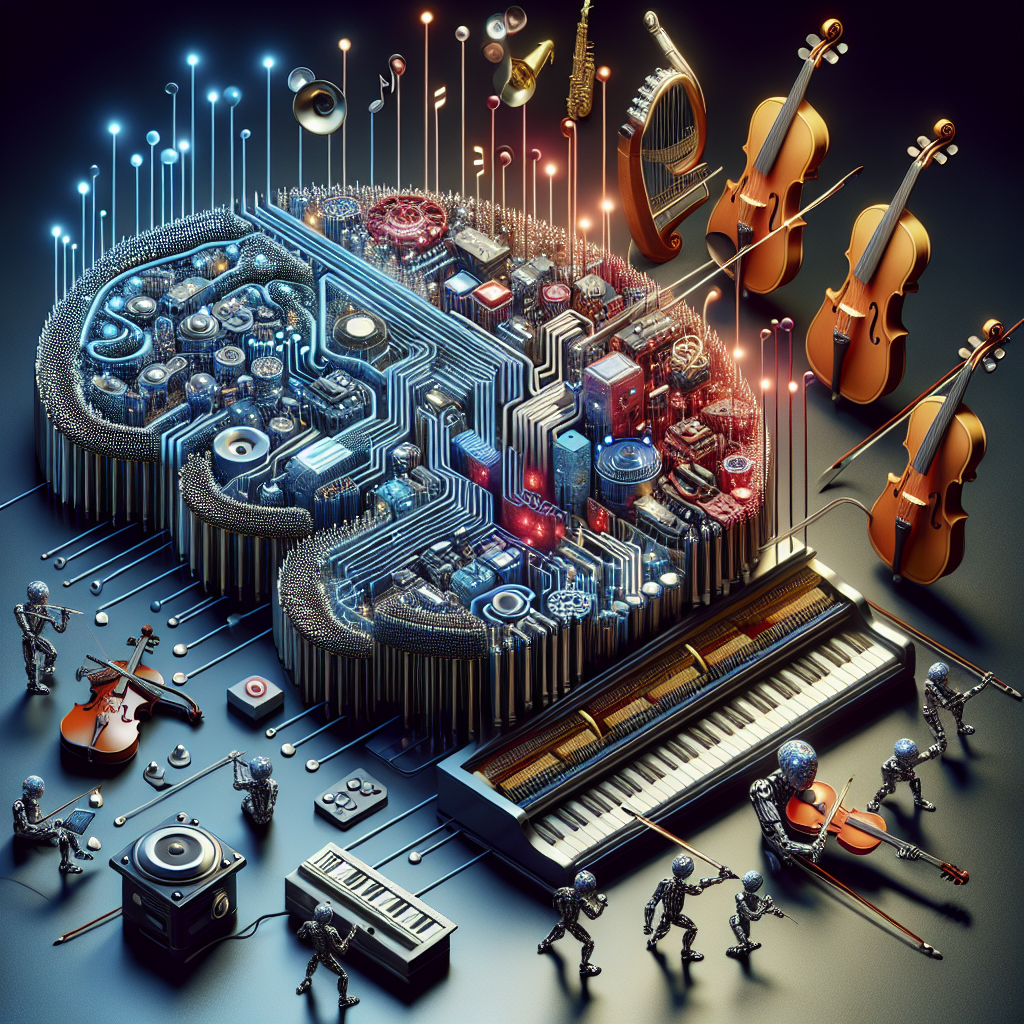
Artificial Intelligence (AI) has been making waves in various industries, and the world of music composition is no exception. In recent years, AI has been used to compose music in various genres, including game music. This has led to a revolution in how game developers create soundtracks for their games, with AI offering new possibilities and capabilities that were previously unimaginable.
AI-powered music composition tools are capable of generating complex and original music tracks that can enhance the gaming experience. These tools use algorithms to analyze and learn from existing music compositions, allowing them to create new pieces that are inspired by the style and structure of the original works. This technology has the potential to revolutionize the way game music is composed, making it easier and more efficient for developers to create immersive and engaging soundtracks for their games.
One of the key advantages of using AI for game music composition is the speed and efficiency with which it can generate music. Traditional music composition can be a time-consuming process, requiring composers to spend hours or even days crafting each individual note and melody. AI-powered tools, on the other hand, can generate music tracks in a matter of minutes, freeing up developers to focus on other aspects of game development.
Another advantage of using AI for game music composition is the ability to create music that is tailored to the specific needs of a game. AI algorithms can analyze the gameplay and mood of a game, allowing them to generate music that is perfectly suited to the action on screen. This can enhance the immersion of players in the game world, making the overall experience more engaging and memorable.
Despite the many advantages of using AI for game music composition, there are also some challenges and limitations to consider. One of the main challenges is the potential for AI-generated music to lack the emotional depth and nuance of music created by human composers. While AI algorithms can analyze and replicate musical patterns, they may struggle to capture the emotional nuances and subtleties that are often present in human-composed music.
Another limitation of AI-generated music is the potential for it to lack originality and creativity. While AI algorithms can generate music that is inspired by existing compositions, they may struggle to create truly unique and innovative pieces. This can result in game soundtracks that feel generic or derivative, lacking the distinctiveness and personality that comes from human creativity.
Despite these challenges, many game developers are embracing AI-powered music composition tools as a valuable addition to their creative toolkit. By leveraging the capabilities of AI, developers can streamline the music composition process, allowing them to create high-quality soundtracks that enhance the overall gaming experience.
FAQs:
Q: How does AI generate music for games?
A: AI-powered music composition tools use algorithms to analyze and learn from existing music compositions, allowing them to generate new pieces that are inspired by the style and structure of the original works.
Q: Can AI-generated music capture the emotional depth of human-composed music?
A: While AI algorithms can replicate musical patterns, they may struggle to capture the emotional nuances and subtleties that are often present in human-composed music.
Q: Is AI-generated music original and creative?
A: AI-generated music can lack originality and creativity, as algorithms may struggle to create truly unique and innovative pieces. However, AI can still be a valuable tool for generating music that is inspired by existing compositions.
Q: How can game developers benefit from using AI for music composition?
A: Game developers can benefit from using AI for music composition by streamlining the composition process and creating high-quality soundtracks that enhance the overall gaming experience. AI can also generate music that is tailored to the specific needs of a game, enhancing player immersion and engagement.
In conclusion, AI has the potential to revolutionize game music composition, offering new possibilities and capabilities that were previously unimaginable. While there are challenges and limitations to consider, many game developers are embracing AI-powered music composition tools as a valuable addition to their creative toolkit. By leveraging the capabilities of AI, developers can create immersive and engaging game soundtracks that enhance the overall gaming experience.