
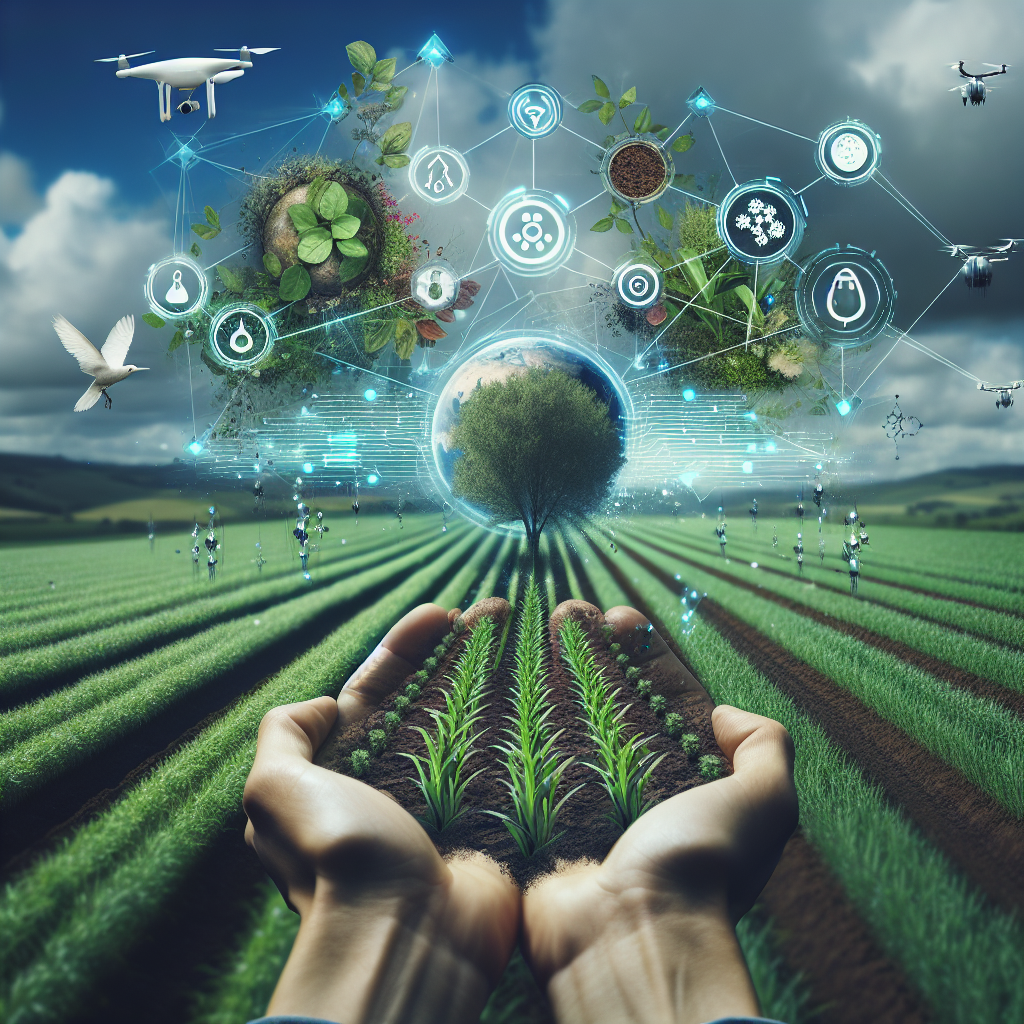
The Role of AI in Enhancing Agroecological Farming
Agroecology is a scientific approach to agriculture that integrates ecological principles into the design and management of food production systems. It aims to create sustainable and resilient farming systems that work in harmony with nature, rather than against it. One of the key challenges in agroecological farming is the need to optimize production while minimizing the use of synthetic inputs and preserving biodiversity. Artificial intelligence (AI) has the potential to revolutionize agroecological farming by providing farmers with the tools and knowledge they need to make more informed decisions and improve their practices.
AI can be used in a variety of ways to enhance agroecological farming. One of the most important applications of AI in agriculture is in the field of precision farming. Precision farming involves the use of technology, such as sensors, drones, and GPS, to collect data on soil conditions, weather patterns, crop health, and other factors that can affect crop production. AI can analyze this data and provide farmers with insights and recommendations on how to optimize their farming practices. For example, AI can help farmers determine the optimal timing and amount of irrigation, fertilization, and pest control measures, leading to more efficient use of resources and reduced environmental impact.
Another important application of AI in agroecological farming is in the field of crop breeding and genetics. By analyzing vast amounts of genetic data, AI can help breeders identify traits that are desirable for agroecological farming, such as disease resistance, drought tolerance, and nutrient efficiency. This can lead to the development of new crop varieties that are better suited to agroecological farming practices and can help farmers increase their yields while reducing the need for synthetic inputs.
AI can also be used to monitor and manage biodiversity on farms. By analyzing data on plant and animal populations, AI can help farmers identify areas of their farms that are rich in biodiversity and areas that may be lacking in diversity. This information can help farmers make decisions about how to enhance biodiversity on their farms, such as by planting cover crops, creating wildlife habitats, or implementing agroforestry practices. By promoting biodiversity, farmers can improve soil health, reduce pest pressure, and enhance the resilience of their farming systems.
In addition to these applications, AI can also be used to monitor and predict the impacts of climate change on agriculture. By analyzing data on temperature, precipitation, and other climate variables, AI can help farmers anticipate changes in weather patterns and adjust their farming practices accordingly. This can help farmers mitigate the impacts of climate change on their crops, such as by planting drought-tolerant varieties or adjusting planting dates to avoid heat stress.
Despite the potential benefits of AI in agroecological farming, there are also challenges and limitations to consider. One of the main challenges is the availability and accessibility of data. In order for AI to be effective, it requires large amounts of high-quality data on soil, weather, crops, and other factors. However, many small-scale farmers in developing countries may not have access to this data, limiting the potential impact of AI on their farming practices.
Another challenge is the cost of implementing AI technologies on farms. While the cost of AI technologies has been decreasing in recent years, they can still be prohibitive for small-scale farmers with limited resources. In order to maximize the benefits of AI in agroecological farming, there is a need for greater investment in research and development, as well as policies and programs that support the adoption of AI technologies by farmers.
Despite these challenges, the potential benefits of AI in agroecological farming are significant. By providing farmers with the tools and knowledge they need to make more informed decisions and improve their practices, AI can help promote sustainable and resilient farming systems that work in harmony with nature. As the technology continues to advance and become more accessible, the role of AI in enhancing agroecological farming is likely to grow in importance in the years to come.
FAQs
Q: How can AI help farmers improve their practices in agroecological farming?
A: AI can analyze data on soil conditions, weather patterns, crop health, and other factors to provide farmers with insights and recommendations on how to optimize their farming practices. This can lead to more efficient use of resources, reduced environmental impact, and increased yields.
Q: What are some of the challenges of implementing AI in agroecological farming?
A: Some of the main challenges include the availability and accessibility of data, the cost of implementing AI technologies on farms, and the need for greater investment in research and development. These challenges need to be addressed in order to maximize the benefits of AI in agroecological farming.
Q: How can AI help farmers mitigate the impacts of climate change on agriculture?
A: By analyzing data on temperature, precipitation, and other climate variables, AI can help farmers anticipate changes in weather patterns and adjust their farming practices accordingly. This can help farmers mitigate the impacts of climate change on their crops and enhance the resilience of their farming systems.
Q: What are some potential benefits of AI in agroecological farming?
A: Some potential benefits include more efficient use of resources, reduced environmental impact, increased yields, enhanced biodiversity, and improved resilience to climate change. AI has the potential to revolutionize agroecological farming and help farmers create sustainable and resilient farming systems.