
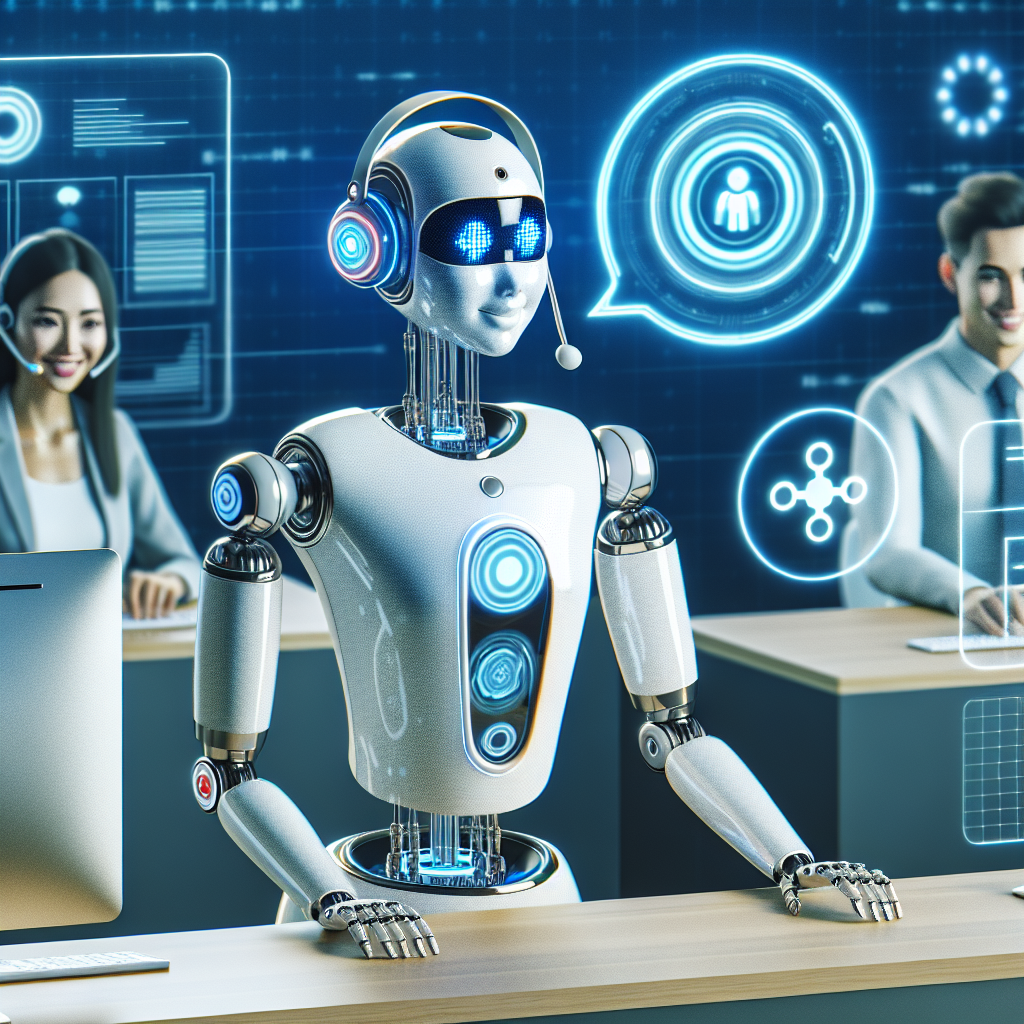
In recent years, Artificial Intelligence (AI) chatbots have become increasingly popular in the world of customer service. These virtual assistants are designed to interact with customers in a conversational manner, providing them with information, answering their questions, and even resolving their issues. AI chatbots are revolutionizing the way businesses interact with their customers, offering a more efficient and cost-effective alternative to traditional customer service methods. In this article, we will explore the role of AI chatbots in the future of customer service, as well as their benefits and challenges.
**The Rise of AI Chatbots**
AI chatbots have gained popularity in recent years due to advancements in AI technology and the increasing demand for more personalized and efficient customer service. These virtual assistants are powered by machine learning algorithms that enable them to understand and respond to natural language input from users. This allows AI chatbots to engage in conversations with customers, providing them with relevant information and assistance in real-time.
One of the key advantages of AI chatbots is their ability to handle a large volume of customer inquiries simultaneously, without the need for human intervention. This makes them an ideal solution for businesses looking to streamline their customer service operations and provide round-the-clock support to their customers. AI chatbots can be integrated into various communication channels, such as websites, messaging apps, and social media platforms, making it easy for customers to interact with them wherever they are.
**Benefits of AI Chatbots in Customer Service**
There are several benefits of using AI chatbots in customer service, including:
1. Improved efficiency: AI chatbots can handle a high volume of customer inquiries simultaneously, reducing the need for human agents to handle repetitive tasks. This allows businesses to provide faster and more efficient customer service, leading to higher customer satisfaction rates.
2. 24/7 support: AI chatbots can provide round-the-clock support to customers, allowing them to get assistance at any time of the day or night. This ensures that customers can get help when they need it, without having to wait for business hours.
3. Personalized interactions: AI chatbots can analyze customer data and preferences to provide personalized recommendations and assistance. This helps businesses to build stronger relationships with their customers and improve their overall customer experience.
4. Cost-effective: Using AI chatbots can help businesses reduce their customer service costs by automating repetitive tasks and reducing the need for human agents. This can result in significant cost savings for businesses, while also improving the quality of customer service.
5. Scalability: AI chatbots can easily scale to handle a large volume of customer inquiries, making them an ideal solution for businesses with fluctuating customer service demands. This ensures that businesses can provide consistent support to their customers, no matter how busy they are.
**Challenges of AI Chatbots in Customer Service**
While AI chatbots offer many benefits to businesses, there are also some challenges that need to be addressed:
1. Limited understanding: AI chatbots may struggle to understand complex or ambiguous customer inquiries, leading to inaccurate responses or misunderstandings. This can frustrate customers and result in a negative customer experience.
2. Lack of empathy: AI chatbots lack the ability to empathize with customers, which can make them seem cold and impersonal. This can be a barrier to building strong relationships with customers and may lead to dissatisfaction with the service provided.
3. Security concerns: AI chatbots may store sensitive customer data, such as personal information and payment details, which can raise security concerns. Businesses need to ensure that their chatbots are compliant with data protection regulations and have robust security measures in place to protect customer data.
4. Integration with existing systems: Integrating AI chatbots with existing customer service systems and processes can be complex and time-consuming. Businesses need to ensure that their chatbots are compatible with their existing infrastructure and can seamlessly communicate with other systems.
5. Maintenance and updates: AI chatbots require regular maintenance and updates to ensure they are functioning properly and providing accurate responses to customer inquiries. Businesses need to allocate resources to monitor and optimize their chatbots to ensure they are delivering a high-quality customer service experience.
**FAQs**
1. How do AI chatbots work?
AI chatbots are powered by machine learning algorithms that enable them to understand and respond to natural language input from users. These algorithms analyze the text input from users, identify the intent behind the query, and generate an appropriate response based on predefined rules or training data.
2. What are the different types of AI chatbots?
There are two main types of AI chatbots: rule-based chatbots and machine learning chatbots. Rule-based chatbots follow predefined rules to generate responses to user queries, while machine learning chatbots use algorithms to analyze and learn from user interactions to improve their responses over time.
3. How can businesses benefit from using AI chatbots in customer service?
Businesses can benefit from using AI chatbots in customer service by improving efficiency, providing 24/7 support, delivering personalized interactions, reducing costs, and scaling to handle a large volume of customer inquiries. AI chatbots can help businesses streamline their customer service operations and provide a better overall customer experience.
4. What are the challenges of using AI chatbots in customer service?
Some of the challenges of using AI chatbots in customer service include limited understanding of complex inquiries, lack of empathy, security concerns, integration with existing systems, and the need for regular maintenance and updates. Businesses need to address these challenges to ensure their AI chatbots are providing a high-quality customer service experience.
5. What are some best practices for implementing AI chatbots in customer service?
Some best practices for implementing AI chatbots in customer service include defining clear objectives and use cases, training the chatbot with relevant data and information, monitoring and optimizing performance, integrating with existing systems, ensuring security and data protection, and providing a seamless user experience. By following these best practices, businesses can maximize the benefits of using AI chatbots in customer service.
In conclusion, AI chatbots are poised to revolutionize the future of customer service by providing businesses with a more efficient and cost-effective way to interact with their customers. While there are challenges to overcome, the benefits of using AI chatbots in customer service far outweigh the drawbacks. By implementing AI chatbots effectively and addressing key challenges, businesses can improve their customer service operations and provide a better overall experience for their customers.