
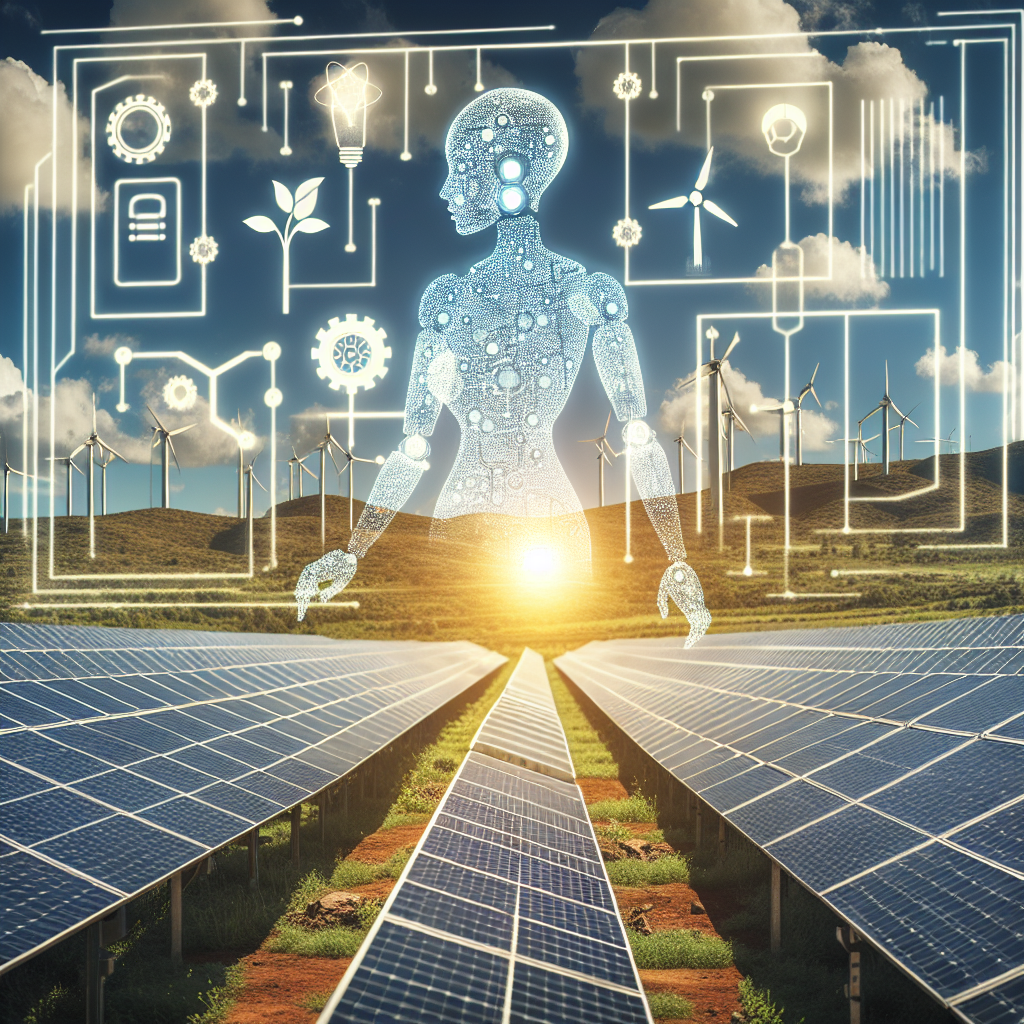
In recent years, the world has seen a growing interest in sustainable energy solutions as the global climate crisis continues to worsen. One of the key technologies that is being leveraged to address this challenge is artificial intelligence (AI). AI has the potential to revolutionize the way we produce, distribute, and consume energy, making the transition to sustainable sources easier and more efficient.
AI has the ability to analyze vast amounts of data in real-time, allowing for more accurate predictions and optimizations in energy production and consumption. This can help to increase the efficiency of renewable energy sources such as solar and wind power, as well as improve the reliability of the energy grid. AI can also help to reduce energy waste by optimizing the operation of buildings, factories, and other energy-consuming systems.
One of the key applications of AI in sustainable energy solutions is in the field of smart grids. Smart grids use advanced sensors, meters, and communication technologies to monitor and control the flow of electricity in real-time. AI algorithms can analyze data from these devices to detect patterns, predict energy demand, and optimize the distribution of electricity. This can help to reduce energy costs, improve grid stability, and increase the integration of renewable energy sources.
Another important application of AI in sustainable energy solutions is in the development of energy storage systems. Energy storage is a critical component of a sustainable energy system, as it allows for the storage of excess energy from renewable sources for use during times of high demand. AI can help to optimize the operation of energy storage systems, improving their efficiency and reliability. AI can also be used to develop new materials and technologies for energy storage, leading to more cost-effective and environmentally friendly solutions.
AI can also play a key role in the optimization of energy consumption in buildings and other facilities. By analyzing data from sensors and other devices, AI algorithms can identify opportunities for energy savings, such as adjusting heating and cooling systems, optimizing lighting, and scheduling energy-intensive tasks during off-peak hours. This can help to reduce energy costs, lower carbon emissions, and improve the overall sustainability of buildings.
In addition to these applications, AI can also be used to optimize the design and operation of renewable energy systems. For example, AI algorithms can be used to optimize the placement and orientation of solar panels, increasing their efficiency and output. AI can also be used to predict and mitigate the impact of weather events on renewable energy systems, improving their reliability and performance.
Overall, the integration of AI into sustainable energy solutions has the potential to transform the way we produce and consume energy, making it more efficient, reliable, and sustainable. By leveraging AI technologies, we can accelerate the transition to a low-carbon energy system and help mitigate the impacts of climate change.
FAQs:
Q: How does AI help to increase the efficiency of renewable energy sources?
A: AI can analyze data from renewable energy systems in real-time, allowing for more accurate predictions and optimizations in energy production. This can help to increase the efficiency of renewable energy sources such as solar and wind power.
Q: What is a smart grid and how does AI play a role in its development?
A: A smart grid uses advanced sensors, meters, and communication technologies to monitor and control the flow of electricity in real-time. AI algorithms can analyze data from these devices to detect patterns, predict energy demand, and optimize the distribution of electricity, improving grid stability and integrating renewable energy sources.
Q: How can AI optimize energy storage systems?
A: AI can optimize the operation of energy storage systems by analyzing data from sensors and other devices, improving their efficiency and reliability. AI can also be used to develop new materials and technologies for energy storage, leading to more cost-effective and environmentally friendly solutions.
Q: How does AI help to optimize energy consumption in buildings?
A: AI algorithms can analyze data from sensors and other devices in buildings to identify opportunities for energy savings, such as adjusting heating and cooling systems, optimizing lighting, and scheduling energy-intensive tasks during off-peak hours. This can help to reduce energy costs and lower carbon emissions.
Q: How can AI be used to optimize the design and operation of renewable energy systems?
A: AI algorithms can be used to optimize the placement and orientation of solar panels, predict and mitigate the impact of weather events on renewable energy systems, and improve their overall performance and reliability.