
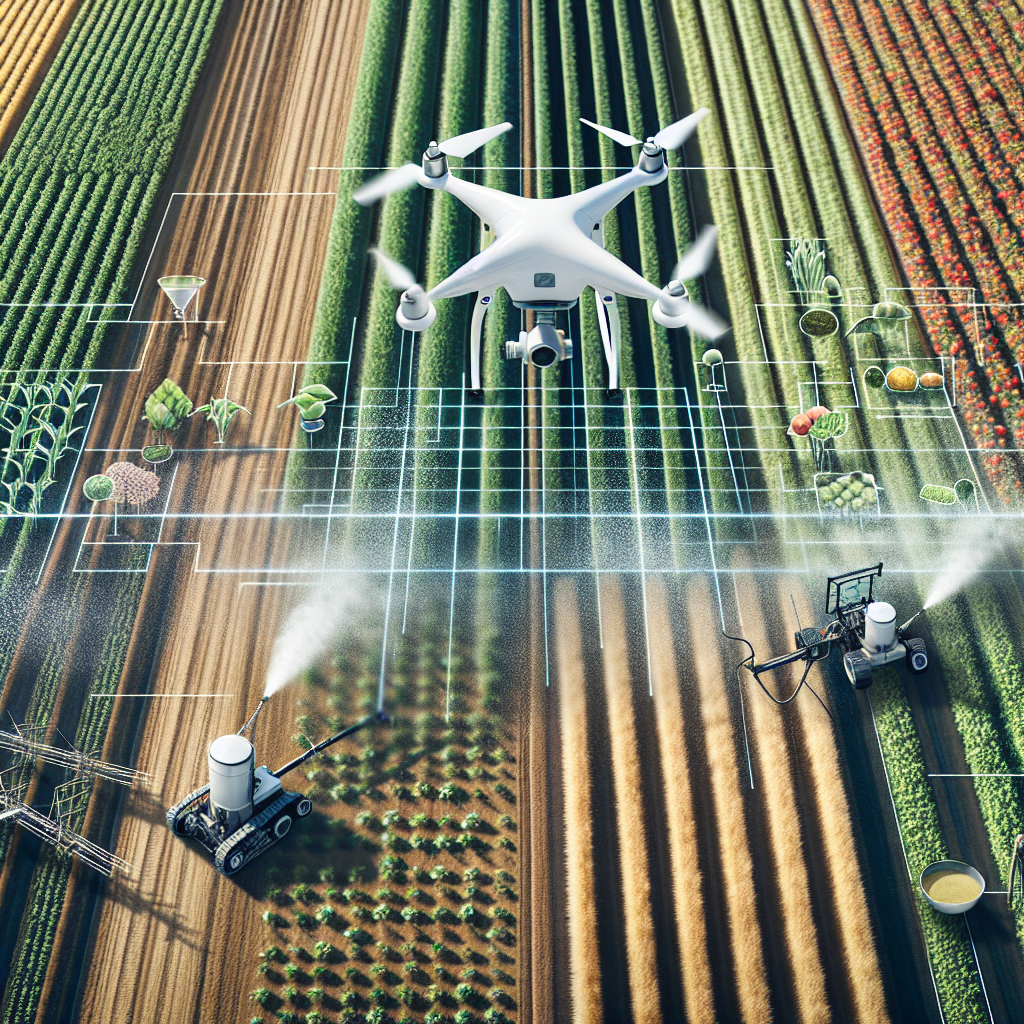
Artificial Intelligence (AI) is revolutionizing various industries, and agriculture is no exception. With the world’s population expected to reach 9.7 billion by 2050, the demand for food is only going to increase. To meet this growing demand, farmers are turning to AI to improve crop monitoring and pest control. In this article, we will explore how AI is being deployed in agriculture and the benefits it brings to the industry.
AI Deployment in Agriculture
AI is being used in agriculture in a variety of ways, from crop monitoring to pest control. One of the main areas where AI is making a significant impact is in crop monitoring. By using AI-powered drones and satellites, farmers can gather real-time data on their crops, such as soil health, moisture levels, and crop health. This data allows farmers to make more informed decisions about when to plant, fertilize, and harvest their crops, leading to higher yields and better quality produce.
In addition to crop monitoring, AI is also being used to improve pest control in agriculture. Pests can wreak havoc on crops, leading to significant losses for farmers. By using AI-powered sensors and cameras, farmers can detect pests early and take action to control them before they cause too much damage. AI can also be used to predict pest outbreaks, allowing farmers to take preventative measures to protect their crops.
Benefits of AI in Agriculture
There are several benefits to using AI in agriculture, including:
1. Increased efficiency: AI allows farmers to monitor their crops more effectively and make data-driven decisions about when to plant, fertilize, and harvest. This leads to higher yields and better quality produce.
2. Cost savings: By using AI to monitor crops and control pests, farmers can reduce the amount of pesticides and fertilizers they use, leading to cost savings and a more sustainable farming practice.
3. Environmental benefits: AI can help farmers reduce their environmental impact by using fewer chemicals and resources. This can lead to healthier soil, water, and air quality, benefiting both farmers and the environment.
4. Improved crop quality: By using AI to monitor crops, farmers can ensure that their produce meets quality standards, leading to higher prices and better market opportunities.
5. Predictive analytics: AI can be used to predict crop yields, pest outbreaks, and other factors that can impact farming operations. This allows farmers to plan ahead and take preventative measures to protect their crops.
Frequently Asked Questions
1. How does AI help with crop monitoring?
AI helps with crop monitoring by using drones, satellites, and sensors to gather real-time data on crops. This data can include information on soil health, moisture levels, and crop health, allowing farmers to make more informed decisions about their farming practices.
2. How does AI improve pest control in agriculture?
AI improves pest control in agriculture by using sensors and cameras to detect pests early and take action to control them before they cause too much damage. AI can also be used to predict pest outbreaks, allowing farmers to take preventative measures to protect their crops.
3. Is AI expensive to implement in agriculture?
While the initial cost of implementing AI in agriculture can be expensive, the long-term benefits can outweigh the costs. AI can help farmers increase efficiency, reduce costs, and improve crop quality, leading to higher yields and better profits.
4. Are there any risks associated with using AI in agriculture?
There are some risks associated with using AI in agriculture, such as data privacy concerns and the potential for job displacement. However, with proper safeguards and regulations in place, these risks can be mitigated.
5. How can farmers get started with using AI in agriculture?
Farmers can get started with using AI in agriculture by researching different AI technologies and providers, attending workshops and training sessions, and partnering with experts in the field. By starting small and gradually implementing AI into their farming practices, farmers can reap the benefits of this innovative technology.
In conclusion, AI deployment in agriculture is improving crop monitoring and pest control, leading to higher yields, better quality produce, and more sustainable farming practices. By using AI-powered drones, satellites, sensors, and cameras, farmers can gather real-time data on their crops and make more informed decisions about their farming practices. The benefits of using AI in agriculture are numerous, including increased efficiency, cost savings, environmental benefits, improved crop quality, and predictive analytics. While there are some risks associated with using AI in agriculture, with proper safeguards and regulations in place, these risks can be mitigated. Farmers looking to get started with using AI in agriculture can research different AI technologies, attend workshops and training sessions, and partner with experts in the field. Overall, AI is transforming the agriculture industry and helping farmers meet the growing demand for food in a more sustainable and efficient way.