
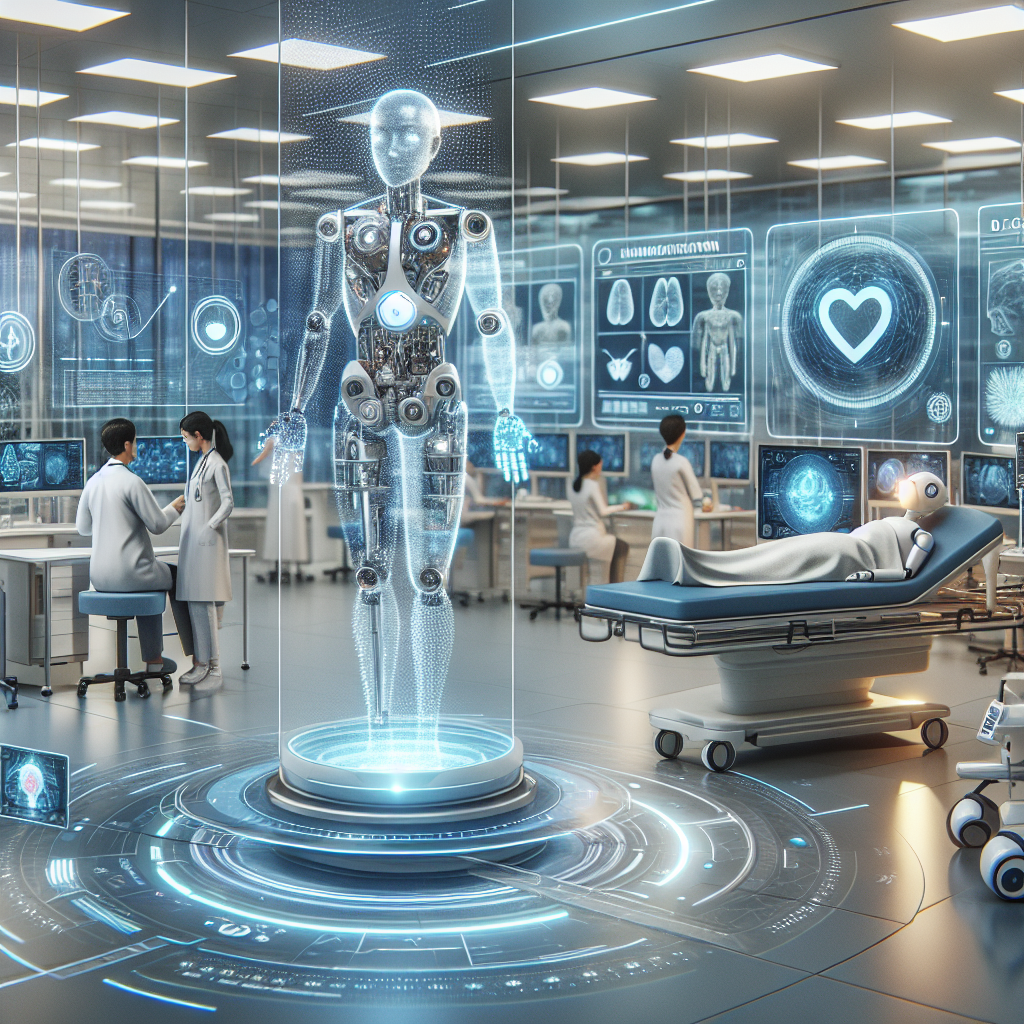
Artificial intelligence (AI) has been making waves in the healthcare industry in recent years, revolutionizing the way medical professionals diagnose, treat, and manage diseases. AI-driven solutions are changing the landscape of healthcare by providing faster, more accurate diagnoses, personalized treatment plans, and improved patient outcomes. From enhancing medical imaging to predicting patient outcomes, AI is transforming the way healthcare is delivered.
One of the key areas where AI is making a significant impact is in medical imaging. AI algorithms are being trained to analyze medical images such as X-rays, MRIs, and CT scans to detect abnormalities and diagnose diseases more efficiently than humans. This not only saves time for medical professionals but also improves accuracy and reduces the likelihood of misdiagnosis. For example, AI-powered algorithms have been shown to detect breast cancer in mammograms with a higher accuracy rate than radiologists.
Another area where AI is revolutionizing healthcare is in personalized medicine. AI algorithms can analyze vast amounts of patient data, including genetic information, medical history, and lifestyle factors, to create personalized treatment plans tailored to each individual’s unique needs. This allows for more targeted and effective treatments, reducing the risk of adverse reactions and improving patient outcomes. For example, AI can help oncologists determine the most effective cancer treatment for a particular patient based on their genetic profile, increasing the chances of successful treatment.
AI is also being used to predict patient outcomes and identify high-risk patients who may require intensive monitoring or intervention. By analyzing patient data in real-time, AI algorithms can flag potential complications before they occur, allowing medical professionals to intervene proactively and improve patient outcomes. For example, AI-powered predictive analytics can help hospitals identify patients at risk of sepsis or other life-threatening conditions, enabling early intervention and reducing mortality rates.
In addition to improving patient care, AI-driven solutions are also helping to streamline healthcare operations and reduce costs. AI-powered algorithms can automate routine administrative tasks, such as scheduling appointments, processing insurance claims, and managing medical records, freeing up time for medical professionals to focus on patient care. This not only improves efficiency but also reduces the likelihood of errors and delays in healthcare delivery.
Despite the many benefits of AI-driven solutions in healthcare, there are also challenges and concerns that need to be addressed. One of the main concerns is the potential for bias in AI algorithms, which can lead to disparities in healthcare outcomes for certain populations. For example, if the training data used to develop an AI algorithm is not representative of the diverse patient population, the algorithm may produce biased results that disproportionately affect certain groups. It is crucial for developers to ensure that AI algorithms are trained on diverse and inclusive datasets to mitigate the risk of bias and ensure equitable healthcare outcomes for all patients.
Another challenge is the issue of data privacy and security. As AI algorithms rely on vast amounts of patient data to make accurate predictions and recommendations, there is a risk of sensitive information being compromised or misused. Healthcare organizations must implement robust data security measures to protect patient privacy and comply with regulations such as the Health Insurance Portability and Accountability Act (HIPAA) to safeguard patient data from unauthorized access or breaches.
Despite these challenges, the potential of AI-driven solutions to revolutionize healthcare is immense. By harnessing the power of AI, medical professionals can improve diagnosis accuracy, personalize treatment plans, predict patient outcomes, and streamline healthcare operations. As AI technology continues to advance, we can expect to see even more innovative applications in healthcare that will transform the way we deliver and receive medical care.
FAQs:
1. What is AI-driven healthcare?
AI-driven healthcare refers to the use of artificial intelligence (AI) technology to improve diagnosis, treatment, and management of diseases in the healthcare industry. AI algorithms are trained to analyze vast amounts of patient data, including medical images, genetic information, and clinical records, to provide faster, more accurate diagnoses, personalized treatment plans, and predictive analytics for patient outcomes.
2. How is AI used in medical imaging?
AI algorithms are used in medical imaging to analyze images such as X-rays, MRIs, and CT scans to detect abnormalities and diagnose diseases. By training AI algorithms on large datasets of medical images, healthcare professionals can improve accuracy, reduce the likelihood of misdiagnosis, and expedite the diagnosis process for patients.
3. What are the benefits of AI-driven solutions in healthcare?
AI-driven solutions offer several benefits in healthcare, including faster and more accurate diagnoses, personalized treatment plans, predictive analytics for patient outcomes, and streamlined healthcare operations. By harnessing the power of AI technology, medical professionals can improve patient care, reduce costs, and enhance overall healthcare delivery.
4. What are the challenges of AI-driven healthcare?
Some of the challenges of AI-driven healthcare include the potential for bias in AI algorithms, data privacy and security concerns, and the need for regulatory compliance to protect patient data. It is crucial for developers and healthcare organizations to address these challenges to ensure that AI-driven solutions in healthcare are ethical, inclusive, and secure.
5. How can healthcare organizations implement AI-driven solutions?
Healthcare organizations can implement AI-driven solutions by partnering with AI technology providers, investing in AI training and infrastructure, and integrating AI algorithms into existing healthcare systems. By collaborating with experts in AI technology and data science, healthcare organizations can leverage the power of AI to improve patient care, streamline operations, and drive innovation in healthcare delivery.