
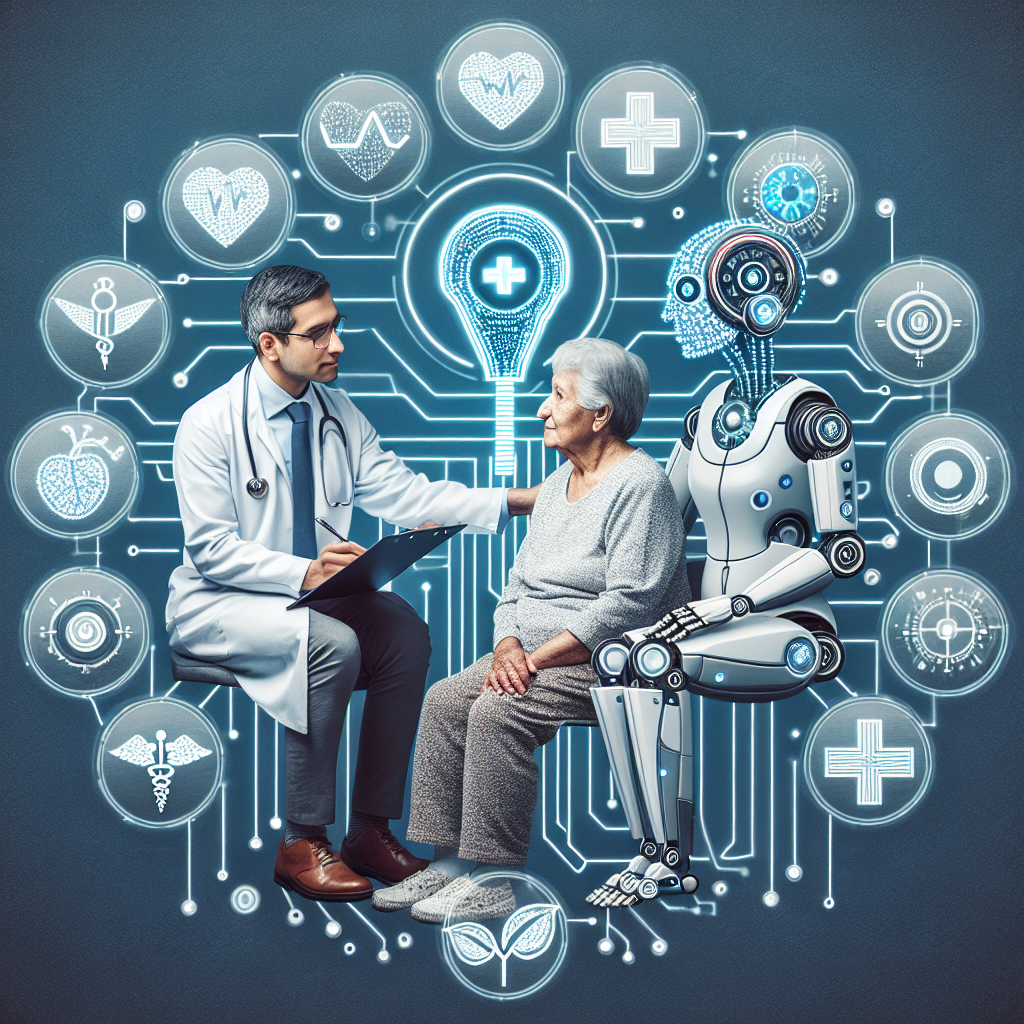
Artificial intelligence (AI) has been revolutionizing various industries, and healthcare is no exception. With an aging population posing significant challenges to healthcare systems worldwide, AI has emerged as a powerful tool to help address these challenges. In this article, we will explore how AI is being utilized in healthcare to improve care for the elderly and enhance the overall quality of healthcare services.
The aging population is a global phenomenon, with the number of individuals aged 65 and older expected to double by 2050. This demographic shift presents unique challenges for healthcare systems, including an increased demand for healthcare services, rising healthcare costs, and a shortage of healthcare professionals. AI has the potential to address these challenges by improving the efficiency, accuracy, and quality of healthcare services for the elderly.
One of the key ways in which AI is being used in healthcare is through predictive analytics. By analyzing vast amounts of data, AI algorithms can predict the likelihood of various health conditions in elderly patients, allowing healthcare providers to proactively address potential issues before they become serious. For example, AI can analyze a patient’s medical history, lifestyle factors, and genetic information to predict the risk of developing conditions such as heart disease, diabetes, or Alzheimer’s disease. This information can help healthcare providers develop personalized treatment plans and interventions to prevent or manage these conditions more effectively.
AI is also being used to improve diagnostic accuracy in healthcare. For example, AI-powered imaging technologies can analyze medical images such as X-rays, MRIs, and CT scans to detect signs of disease or abnormalities that may be missed by human radiologists. This can lead to earlier detection of health issues, more accurate diagnoses, and better treatment outcomes for elderly patients. Additionally, AI can help healthcare providers interpret complex medical data, such as genetic information or laboratory test results, to make more informed decisions about patient care.
Another area where AI is making a significant impact in healthcare is in the field of remote monitoring and telehealth. With the increasing prevalence of chronic conditions among the elderly population, remote monitoring technologies powered by AI can help healthcare providers track patients’ vital signs, medication adherence, and overall health status from a distance. This can reduce the need for frequent in-person visits, improve patient outcomes, and enhance the overall quality of care for elderly patients who may have difficulty accessing traditional healthcare services.
AI is also being used to enhance the efficiency of healthcare operations and reduce administrative burden on healthcare providers. For example, AI-powered chatbots and virtual assistants can handle routine administrative tasks such as appointment scheduling, medication reminders, and insurance claims processing, freeing up healthcare professionals to focus on more complex patient care activities. Additionally, AI algorithms can analyze healthcare data to identify patterns and trends that can help healthcare providers optimize resource allocation, streamline workflows, and improve overall efficiency in healthcare delivery.
Despite the numerous benefits of AI in healthcare, there are also challenges and concerns that need to be addressed. One of the main concerns is the ethical implications of using AI in healthcare, such as data privacy, patient consent, and bias in AI algorithms. Healthcare providers and policymakers must establish clear guidelines and regulations to ensure that AI technologies are used ethically and responsibly in patient care.
Another challenge is the potential for AI to replace human healthcare professionals. While AI can enhance the efficiency and accuracy of healthcare services, it is not a substitute for the expertise and empathy of human healthcare providers. It is essential for healthcare professionals to collaborate with AI technologies to maximize the benefits of both human intelligence and artificial intelligence in patient care.
In conclusion, AI has the potential to revolutionize healthcare for the aging population by improving the efficiency, accuracy, and quality of healthcare services. By leveraging AI technologies for predictive analytics, diagnostic accuracy, remote monitoring, and operational efficiency, healthcare providers can enhance patient outcomes and address the unique challenges posed by an aging population. With proper oversight and ethical considerations, AI has the power to transform healthcare delivery and improve the quality of life for elderly patients around the world.
FAQs:
Q: How can AI improve healthcare for the aging population?
A: AI can improve healthcare for the aging population by enhancing predictive analytics, diagnostic accuracy, remote monitoring, and operational efficiency in healthcare services. By analyzing vast amounts of data and leveraging AI algorithms, healthcare providers can proactively address health issues in elderly patients, improve diagnostic accuracy, track patient health remotely, and streamline healthcare operations.
Q: What are some ethical concerns related to using AI in healthcare?
A: Some ethical concerns related to using AI in healthcare include data privacy, patient consent, and bias in AI algorithms. Healthcare providers and policymakers must establish clear guidelines and regulations to ensure that AI technologies are used ethically and responsibly in patient care.
Q: Can AI replace human healthcare professionals?
A: While AI can enhance the efficiency and accuracy of healthcare services, it is not a substitute for the expertise and empathy of human healthcare providers. It is essential for healthcare professionals to collaborate with AI technologies to maximize the benefits of both human intelligence and artificial intelligence in patient care.