
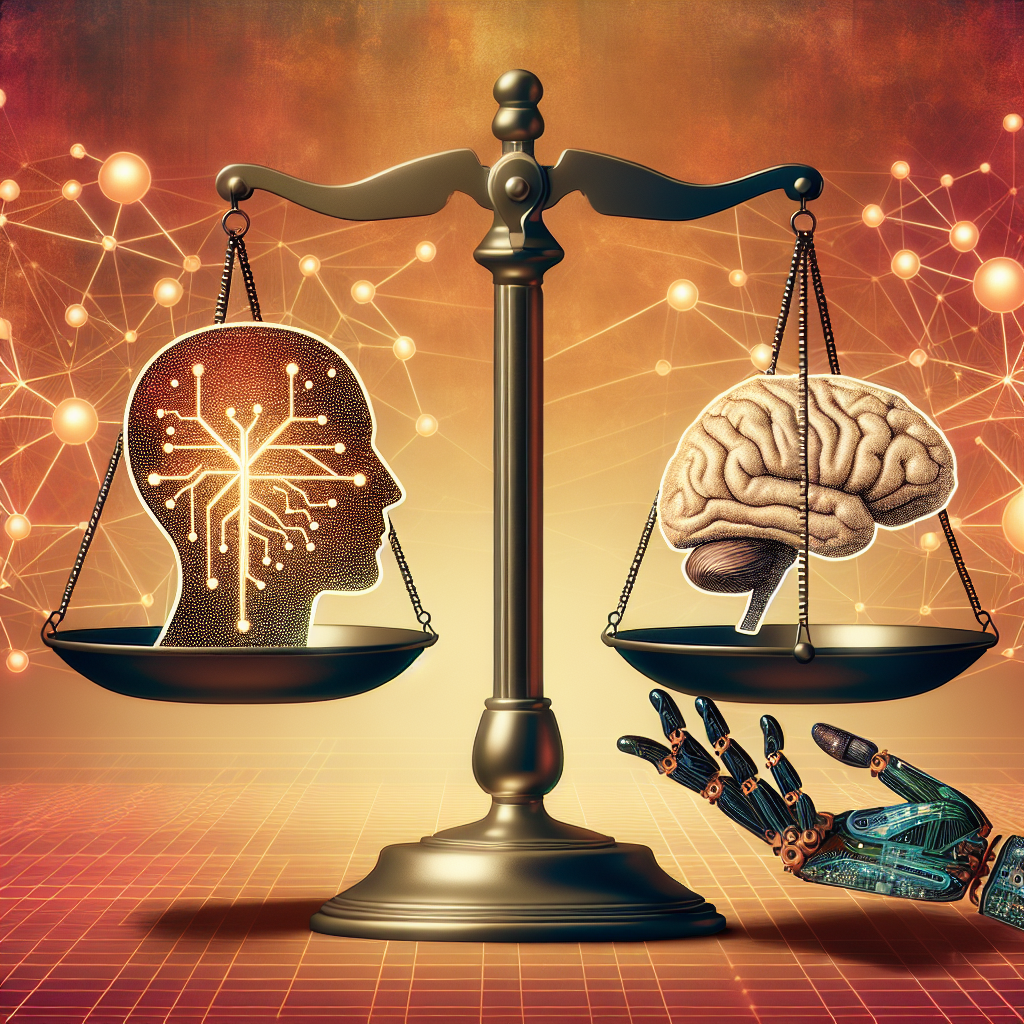
In recent years, the rapid advancement of artificial intelligence (AI) technology has brought about numerous benefits and opportunities across various industries. From autonomous vehicles to virtual assistants, AI has the potential to revolutionize the way we live and work. However, as AI becomes increasingly integrated into our daily lives, it is crucial to address the ethical implications of this technology, particularly when it comes to bias in decision-making.
Bias in AI refers to the unfair or discriminatory treatment of individuals or groups based on their characteristics, such as race, gender, or age. This bias can manifest in various ways, from flawed algorithms that perpetuate stereotypes to biased data sets that reflect historical inequalities. As a result, AI systems can produce discriminatory outcomes that harm marginalized communities and reinforce existing social disparities.
To address the impact of bias in decision-making, it is essential to develop and implement ethical AI frameworks that prioritize fairness, transparency, and accountability. By doing so, we can ensure that AI technologies are used responsibly and ethically, without perpetuating harmful biases or discrimination. In this article, we will explore the ethical considerations surrounding AI bias and discuss strategies for mitigating its negative effects.
Understanding Bias in AI
Bias in AI can arise from various sources, including biased data sets, flawed algorithms, and human biases that are inadvertently encoded into AI systems. For example, if a data set used to train an AI model is skewed towards a particular demographic group, the model may learn to make biased predictions that favor that group over others. Similarly, if the algorithms used to process data are not designed to account for diverse perspectives or experiences, they may inadvertently perpetuate stereotypes or discriminatory practices.
Moreover, human biases can also influence the development and deployment of AI technologies. For instance, if the individuals responsible for designing and implementing AI systems hold certain biases or assumptions about different groups of people, those biases may be reflected in the technology they create. This can lead to discriminatory outcomes that harm marginalized communities and reinforce existing inequalities.
The Impact of Bias in Decision-Making
The impact of bias in AI decision-making can be profound and far-reaching, affecting individuals, organizations, and society as a whole. For example, biased AI algorithms used in hiring processes can perpetuate gender or racial disparities by favoring certain groups over others. Similarly, biased predictive policing algorithms can lead to the over-policing of minority communities and the unjust targeting of individuals based on their race or ethnicity.
Furthermore, bias in AI decision-making can undermine trust in AI technologies and erode public confidence in their use. If individuals believe that AI systems are making decisions based on unfair or discriminatory criteria, they may be less likely to trust or rely on those systems, leading to a lack of adoption and acceptance of AI technologies in various contexts.
Addressing Bias in AI
To address the impact of bias in AI decision-making, it is essential to adopt a proactive and comprehensive approach that incorporates ethical considerations at every stage of the AI development and deployment process. This includes:
1. Data collection and selection: Ensure that the data used to train AI models is representative, diverse, and free from bias. This may require collecting additional data sources, auditing existing data sets for biases, and actively seeking out diverse perspectives and experiences.
2. Algorithm design and development: Design algorithms that are transparent, interpretable, and accountable. This includes incorporating fairness metrics into the design process, testing algorithms for bias, and continuously monitoring and evaluating their performance for discriminatory outcomes.
3. Model evaluation and validation: Evaluate AI models for bias and fairness using standardized metrics and techniques. This may involve conducting bias audits, sensitivity analyses, and impact assessments to identify and mitigate any potential biases in the model.
4. Stakeholder engagement and transparency: Involve diverse stakeholders, including community members, experts, and policymakers, in the development and deployment of AI technologies. This can help ensure that AI systems reflect a wide range of perspectives and values, leading to more inclusive and equitable outcomes.
5. Continuous monitoring and feedback: Monitor AI systems for bias and discrimination on an ongoing basis and solicit feedback from users and stakeholders to identify and address any issues that arise. This may involve setting up mechanisms for reporting and addressing bias-related concerns, such as bias reporting tools or feedback channels.
By taking these proactive steps to address bias in AI decision-making, we can help ensure that AI technologies are used responsibly and ethically, without perpetuating harmful biases or discrimination. Moreover, by promoting fairness, transparency, and accountability in AI development and deployment, we can build trust in AI technologies and promote their acceptance and adoption in various contexts.
FAQs
Q: How can bias in AI decision-making be detected and mitigated?
A: Bias in AI decision-making can be detected and mitigated through a combination of techniques, including bias audits, sensitivity analyses, and impact assessments. By evaluating AI models for bias using standardized metrics and techniques, developers can identify and address any potential biases in the model before deployment.
Q: What are some examples of bias in AI decision-making?
A: Examples of bias in AI decision-making include biased hiring algorithms that favor certain demographic groups over others, biased predictive policing algorithms that target minority communities unjustly, and biased loan approval systems that discriminate against marginalized individuals. These examples highlight the need to address bias in AI technologies to ensure fair and equitable outcomes.
Q: How can stakeholders be involved in addressing bias in AI decision-making?
A: Stakeholders, including community members, experts, and policymakers, can be involved in addressing bias in AI decision-making through active engagement, feedback mechanisms, and transparency measures. By involving diverse perspectives and values in the development and deployment of AI technologies, stakeholders can help ensure that AI systems reflect a wide range of perspectives and values, leading to more inclusive and equitable outcomes.
Q: What are some best practices for promoting fairness and transparency in AI decision-making?
A: Best practices for promoting fairness and transparency in AI decision-making include ensuring that data sets are representative and diverse, designing algorithms that are interpretable and accountable, evaluating AI models for bias using standardized metrics and techniques, and engaging diverse stakeholders in the development and deployment of AI technologies. By incorporating these best practices into the AI development process, developers can help ensure that AI technologies are used responsibly and ethically, without perpetuating harmful biases or discrimination.