
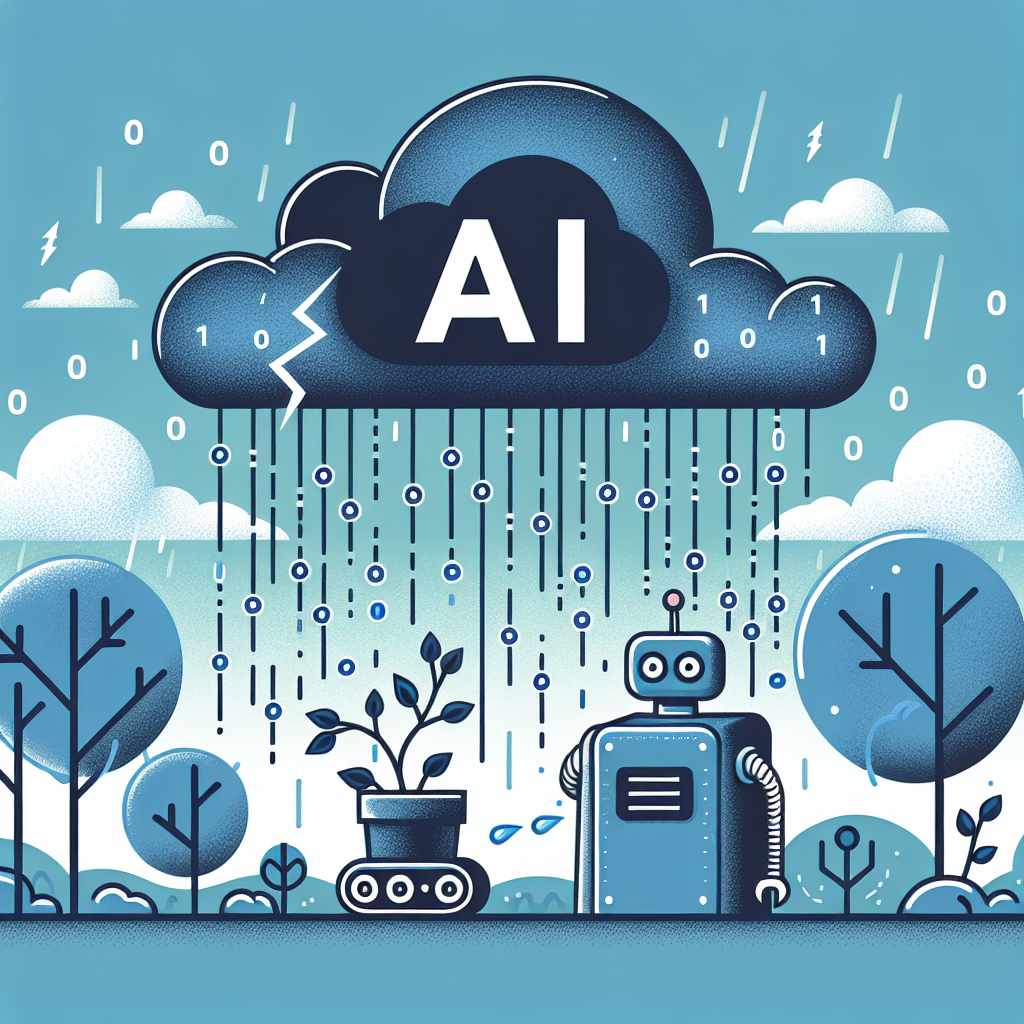
Artificial Intelligence (AI) has become an integral part of many aspects of our lives, from personal assistants like Siri and Alexa to self-driving cars and autonomous environmental systems. While AI has the potential to revolutionize industries and make our lives easier, it also comes with its own set of risks and challenges, particularly when it comes to autonomous environmental systems.
Autonomous environmental systems, such as smart grid systems, autonomous drones, and autonomous water management systems, rely on AI to make decisions and operate independently. While these systems have the potential to improve efficiency, reduce costs, and help address environmental challenges, they also come with a number of risks that need to be carefully considered and managed.
One of the primary risks of AI in autonomous environmental systems is the potential for system failures. AI systems are only as good as the data they are trained on, and if the data is incomplete, biased, or inaccurate, it can lead to errors in decision-making. For example, if an autonomous water management system is trained on historical data that does not accurately reflect current conditions, it may make incorrect decisions that could have serious consequences for the environment and human health.
Another risk is the potential for AI systems to be hacked or manipulated. As autonomous environmental systems become more interconnected and reliant on data from external sources, they also become more vulnerable to cyber attacks. Hackers could potentially gain control of these systems and manipulate them for malicious purposes, such as causing environmental disasters or disrupting critical infrastructure.
Furthermore, there is a risk of AI systems making decisions that are ethically or morally questionable. For example, an autonomous drone system tasked with monitoring wildlife populations may inadvertently harm endangered species if it is not programmed to prioritize conservation efforts over other objectives. This raises important questions about how AI systems should be designed and programmed to ensure that they align with ethical and moral standards.
In addition to these risks, there are also concerns about the potential for AI systems to exacerbate existing inequalities and biases. AI systems are only as good as the data they are trained on, and if the data is biased or reflects existing inequalities, the AI system may perpetuate these biases in its decision-making. For example, if an autonomous environmental system is trained on data that disproportionately impacts marginalized communities, it may lead to decisions that further disadvantage these communities.
To address these risks, it is essential for developers and policymakers to carefully consider the design, implementation, and regulation of AI in autonomous environmental systems. This includes ensuring that AI systems are transparent, accountable, and designed to prioritize ethical considerations. It also requires robust cybersecurity measures to protect these systems from potential attacks and ensure the integrity of the data they rely on.
In conclusion, while AI has the potential to revolutionize autonomous environmental systems and help address pressing environmental challenges, it also comes with its own set of risks and challenges that need to be carefully considered and managed. By prioritizing transparency, accountability, ethical considerations, and cybersecurity, we can harness the power of AI to create sustainable and resilient autonomous environmental systems that benefit both people and the planet.
FAQs:
Q: What are some examples of autonomous environmental systems that rely on AI?
A: Some examples of autonomous environmental systems that rely on AI include smart grid systems, autonomous drones for monitoring wildlife populations, autonomous water management systems, and autonomous farming systems.
Q: How can AI systems be vulnerable to cyber attacks?
A: AI systems can be vulnerable to cyber attacks if they are not properly secured or if they rely on data from external sources that could be manipulated by malicious actors. Hackers could potentially gain control of these systems and manipulate them for malicious purposes, such as causing environmental disasters or disrupting critical infrastructure.
Q: How can developers and policymakers address the risks of AI in autonomous environmental systems?
A: Developers and policymakers can address the risks of AI in autonomous environmental systems by prioritizing transparency, accountability, ethical considerations, and cybersecurity. This includes ensuring that AI systems are designed to prioritize ethical considerations, are transparent in their decision-making processes, and have robust cybersecurity measures in place to protect against potential attacks.