
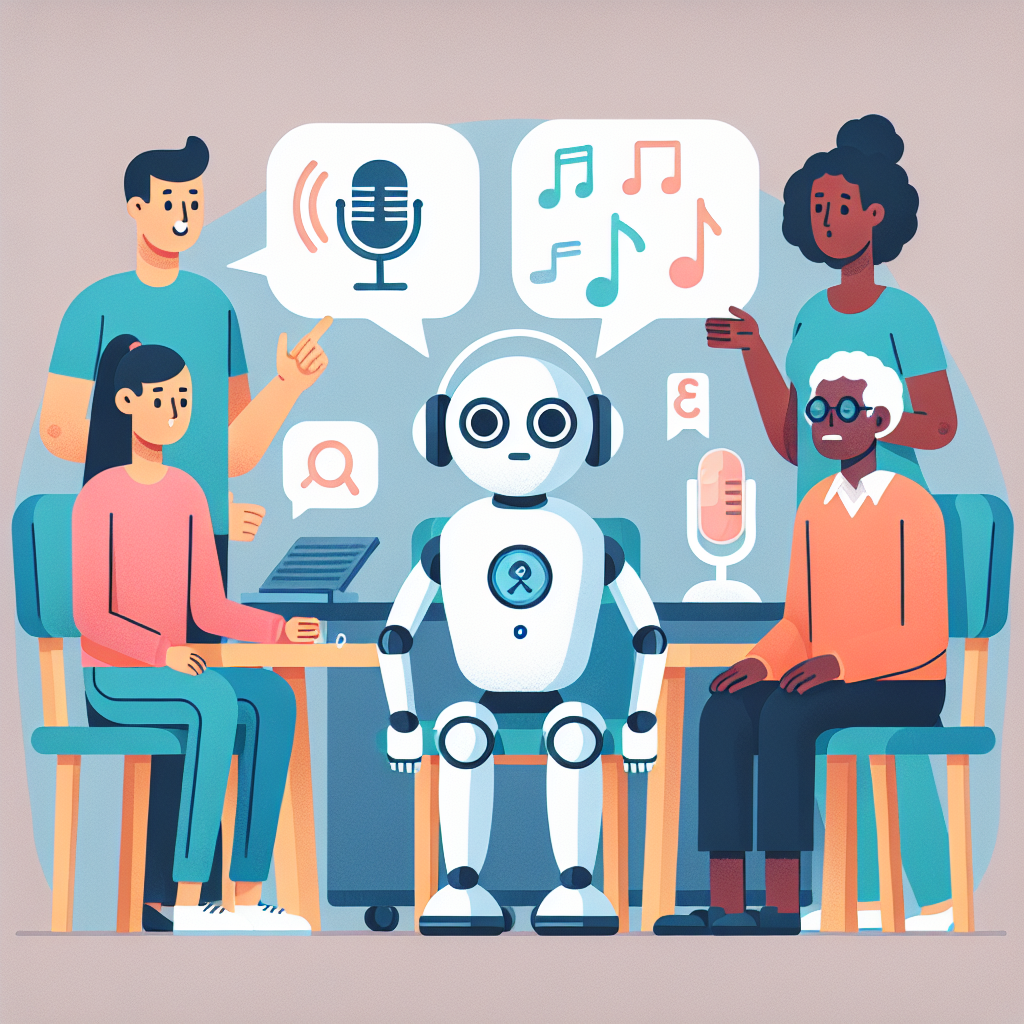
Speech therapy is a crucial intervention for individuals who struggle with communication disorders such as speech delays, stuttering, or articulation difficulties. Traditionally, speech therapy has been a labor-intensive process, requiring one-on-one sessions with a speech therapist. However, with the advancement of technology, Artificial Intelligence (AI) tools are now playing an increasingly important role in speech therapy.
AI tools are being used in speech therapy to provide personalized, interactive, and engaging therapy sessions for individuals of all ages. These tools can help individuals improve their speech and language skills through exercises, games, and activities that are tailored to their specific needs. AI tools can also provide real-time feedback and progress tracking, allowing speech therapists to monitor their clients’ progress more effectively.
One of the key benefits of using AI tools in speech therapy is the ability to provide continuous support and practice outside of traditional therapy sessions. This is particularly important for individuals who may not have access to regular therapy sessions due to cost, availability, or other barriers. AI tools can be used at home, school, or on the go, allowing individuals to practice their speech and language skills at their own pace and convenience.
AI tools can also help to bridge the gap between therapy sessions by providing ongoing support and reinforcement of therapy goals. For example, a speech therapy app may include daily exercises and activities that reinforce the skills learned in therapy sessions. This can help individuals maintain their progress and continue to improve their speech and language skills over time.
In addition to providing support and practice, AI tools in speech therapy can also help to improve the efficiency and effectiveness of therapy sessions. By automating certain tasks, such as data collection and analysis, AI tools can free up time for speech therapists to focus on more personalized and interactive interventions. This can lead to faster progress and better outcomes for individuals receiving speech therapy.
Overall, the role of AI tools in speech therapy is to enhance the therapeutic process, improve outcomes, and increase access to therapy for individuals with communication disorders. By leveraging the power of AI, speech therapists can provide more personalized, engaging, and effective therapy for their clients.
FAQs:
Q: Are AI tools in speech therapy effective?
A: Yes, AI tools in speech therapy have been shown to be effective in improving speech and language skills in individuals with communication disorders. These tools provide personalized, interactive, and engaging therapy sessions that can help individuals make progress in their speech therapy goals.
Q: How do AI tools in speech therapy work?
A: AI tools in speech therapy use algorithms and machine learning techniques to analyze speech patterns, provide feedback, and track progress. These tools can be used on a computer, tablet, or smartphone to deliver therapy exercises, games, and activities that are tailored to the individual’s specific needs.
Q: Can AI tools in speech therapy replace traditional therapy sessions?
A: AI tools in speech therapy are not meant to replace traditional therapy sessions, but rather to complement them. These tools can provide ongoing support, practice, and reinforcement of therapy goals between sessions, helping individuals to maintain their progress and continue to improve their speech and language skills over time.
Q: Are AI tools in speech therapy suitable for all ages?
A: Yes, AI tools in speech therapy can be used by individuals of all ages, from children to adults. These tools can be tailored to the individual’s specific needs and can provide support and practice for individuals at any stage of their speech therapy journey.
In conclusion, AI tools are playing an increasingly important role in speech therapy by providing personalized, interactive, and engaging therapy sessions for individuals with communication disorders. These tools can help to improve the efficiency and effectiveness of therapy sessions, provide ongoing support and practice, and increase access to therapy for individuals of all ages. The future of speech therapy is bright with the integration of AI tools, offering new possibilities for individuals to improve their speech and language skills.