
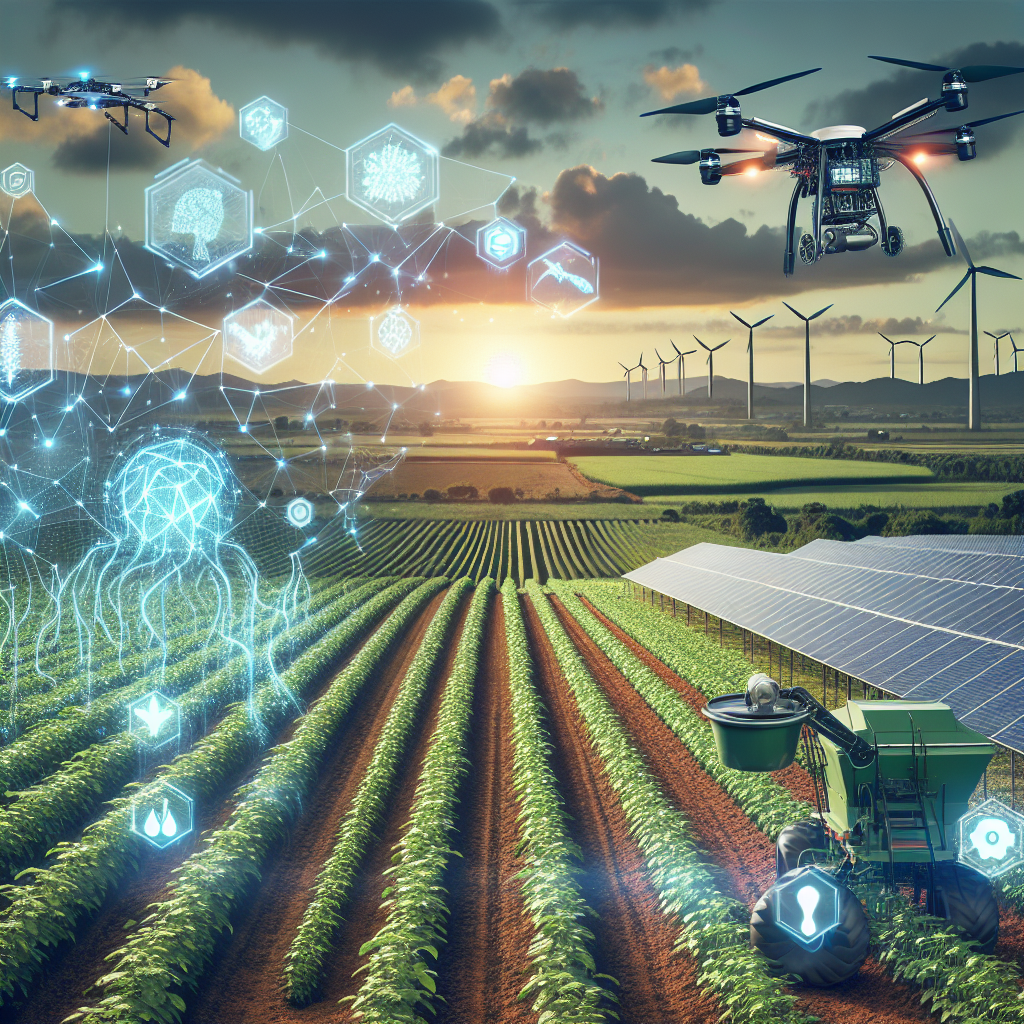
AI-Driven Solutions for Sustainable Agriculture
Introduction
In recent years, the agriculture industry has been undergoing a transformation with the adoption of AI-driven solutions. These technologies are revolutionizing the way farmers grow crops, manage livestock, and make decisions about their operations. AI-driven solutions offer the potential to increase productivity, reduce costs, and improve sustainability in agriculture. In this article, we will explore the various applications of AI in agriculture and how they are being used to create a more sustainable future for the industry.
Applications of AI in Agriculture
1. Precision Agriculture
Precision agriculture is a farming management concept that uses AI and other technologies to optimize the use of resources such as water, fertilizer, and pesticides. By collecting data from sensors, drones, and satellites, AI algorithms can analyze the information and provide farmers with insights on how to best manage their fields. For example, AI can help farmers identify areas of the field that need more or less irrigation, leading to more efficient water usage and higher crop yields.
2. Crop Monitoring
AI-driven solutions are being used to monitor crop health and detect diseases early on. By analyzing images from drones or satellites, AI algorithms can identify signs of stress or disease in crops, allowing farmers to take action before the problem spreads. This not only helps farmers save time and money but also reduces the need for chemical treatments, making agriculture more sustainable.
3. Predictive Analytics
AI can also be used to predict crop yields, weather patterns, and market trends. By analyzing historical data and current conditions, AI algorithms can provide farmers with insights on when to plant, harvest, and sell their crops. This helps farmers make informed decisions that maximize their profits and reduce waste.
4. Autonomous Vehicles
AI-driven autonomous vehicles are revolutionizing the way farmers manage their fields. These vehicles can plant, weed, and harvest crops without human intervention, leading to increased efficiency and reduced labor costs. Autonomous vehicles also reduce the need for chemical inputs, making agriculture more sustainable in the long run.
5. Livestock Management
AI is also being used to monitor the health and well-being of livestock. By analyzing data from sensors and cameras, AI algorithms can detect signs of illness or stress in animals, allowing farmers to take action before the problem escalates. This not only improves animal welfare but also increases productivity on the farm.
Benefits of AI in Agriculture
1. Increased Productivity: AI-driven solutions help farmers optimize their operations, leading to higher crop yields and increased profits.
2. Reduced Costs: By using AI to monitor crops and livestock, farmers can reduce the need for chemical inputs and labor, resulting in lower operating costs.
3. Improved Sustainability: AI-driven solutions help farmers use resources more efficiently, reducing waste and environmental impact.
4. Better Decision-Making: AI provides farmers with real-time insights and recommendations, allowing them to make informed decisions that improve their bottom line.
FAQs
Q: How can AI help farmers reduce the use of chemical inputs?
A: AI-driven solutions can help farmers monitor crop health and detect diseases early on, reducing the need for chemical treatments. By using data from sensors and drones, AI algorithms can provide farmers with insights on when and where to apply pesticides or fertilizers, leading to more targeted and sustainable practices.
Q: Are AI-driven solutions affordable for small-scale farmers?
A: While the initial cost of implementing AI-driven solutions may be high, the long-term benefits can outweigh the investment. Many companies offer affordable subscription-based services that cater to small-scale farmers, making it easier for them to access AI technology.
Q: How can farmers ensure the data collected by AI-driven solutions is secure and private?
A: Farmers should work with reputable companies that prioritize data security and privacy. Before implementing any AI-driven solution, farmers should inquire about the company’s data protection policies and ensure that their data is encrypted and stored securely.
Conclusion
AI-driven solutions are revolutionizing the agriculture industry, offering farmers new tools to increase productivity, reduce costs, and improve sustainability. By leveraging AI technology, farmers can optimize their operations, monitor crops and livestock more effectively, and make informed decisions that benefit both their bottom line and the environment. As AI continues to advance, the future of sustainable agriculture looks promising, with a more efficient and environmentally friendly industry on the horizon.