
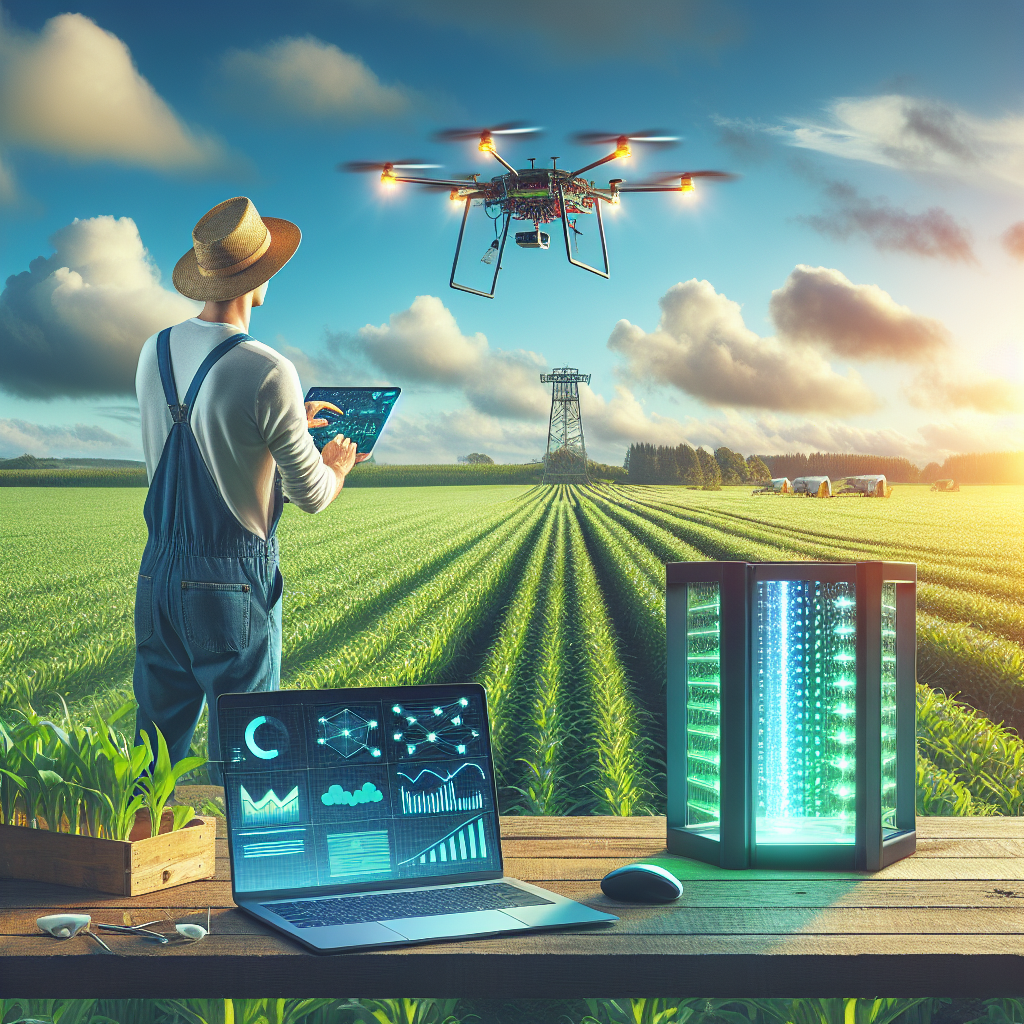
Agriculture is a critical industry that provides food and resources to sustain human life. With the world’s population projected to reach 9.7 billion by 2050, the demand for food is expected to increase significantly. To meet this growing demand, farmers need to optimize their operations by implementing modern technologies that can enhance agricultural data collection and analysis. One such technology that has shown great promise in revolutionizing the agricultural sector is artificial intelligence (AI).
AI-driven tools have the potential to transform the way farmers collect, analyze, and interpret data to make informed decisions. These tools can help farmers improve crop yield, optimize resource allocation, and reduce environmental impact. In this article, we will explore the various AI-driven tools that are being used in agriculture and how they are enhancing data collection and analysis.
AI-driven Tools for Agricultural Data Collection
1. Drones: Drones equipped with cameras and sensors can be used to collect aerial images of farmland. These images can provide valuable insights into crop health, soil moisture levels, and pest infestations. AI algorithms can analyze these images to identify areas that require attention, such as areas with nutrient deficiencies or signs of disease.
2. Sensors: Sensors can be deployed in fields to collect real-time data on soil moisture, temperature, and other environmental factors. AI algorithms can process this data to provide farmers with actionable insights, such as when to irrigate crops or apply fertilizers.
3. Robots: Robots are being used in agriculture to automate tasks such as planting, weeding, and harvesting. These robots are equipped with sensors and AI algorithms that enable them to navigate fields and perform tasks with precision. By collecting data on crop health and growth patterns, robots can help farmers make informed decisions to optimize their operations.
4. Satellite Imagery: Satellite imagery provides a bird’s eye view of farmland and can be used to monitor crop health, detect pests, and assess environmental conditions. AI algorithms can analyze this imagery to provide farmers with valuable information on crop performance and potential risks.
AI-driven Tools for Agricultural Data Analysis
1. Predictive Analytics: AI algorithms can analyze historical data on weather patterns, crop yields, and soil conditions to predict future outcomes. By using predictive analytics, farmers can anticipate crop failures, optimize planting schedules, and mitigate risks.
2. Disease Detection: AI algorithms can analyze images of crops to detect signs of disease or pest infestations. By identifying these issues early, farmers can take proactive measures to prevent the spread of disease and minimize crop losses.
3. Yield Mapping: AI algorithms can analyze data from sensors, drones, and other sources to create yield maps that show variations in crop yield across fields. By understanding these variations, farmers can optimize their planting strategies, adjust fertilizer applications, and improve overall crop yield.
4. Crop Monitoring: AI algorithms can monitor crop growth in real-time by analyzing data from sensors and drones. By tracking crop health and growth patterns, farmers can identify areas that require attention and take corrective actions to optimize yield.
FAQs:
Q: How can AI-driven tools help farmers improve crop yield?
A: AI-driven tools can help farmers improve crop yield by providing real-time data on crop health, soil conditions, and environmental factors. By analyzing this data, farmers can make informed decisions on when to irrigate crops, apply fertilizers, and take other measures to optimize yield.
Q: Are AI-driven tools expensive to implement?
A: While AI-driven tools may require an initial investment, the long-term benefits far outweigh the costs. By optimizing operations, improving crop yield, and reducing resource wastage, AI-driven tools can help farmers increase their profitability and sustainability.
Q: Can AI-driven tools help reduce environmental impact?
A: Yes, AI-driven tools can help farmers reduce environmental impact by optimizing resource allocation, minimizing pesticide use, and improving soil health. By using data-driven insights, farmers can make sustainable decisions that benefit both the environment and their bottom line.
Q: How can farmers integrate AI-driven tools into their existing operations?
A: Farmers can integrate AI-driven tools into their existing operations by working with technology providers who specialize in agricultural AI solutions. These providers can help farmers select the right tools, customize them to their specific needs, and provide training and support for implementation.
In conclusion, AI-driven tools have the potential to revolutionize the agricultural sector by enhancing data collection and analysis. By leveraging AI algorithms to analyze data from drones, sensors, robots, and other sources, farmers can make informed decisions to optimize crop yield, reduce environmental impact, and improve overall sustainability. As the adoption of AI-driven tools continues to grow, we can expect to see significant advancements in agriculture that will benefit both farmers and consumers alike.