
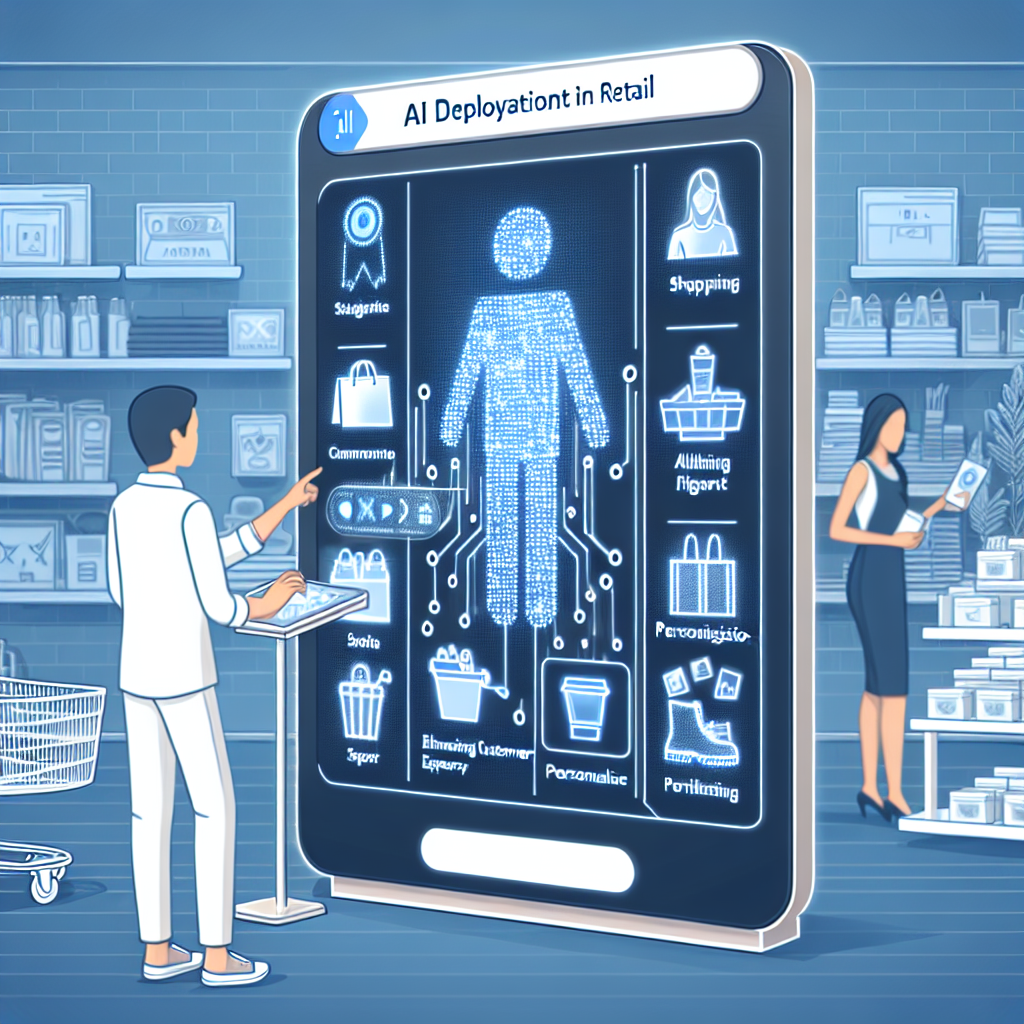
As technology continues to advance, the retail industry is constantly looking for ways to improve customer experience and personalization. One of the most promising technologies that has the potential to revolutionize the retail sector is Artificial Intelligence (AI). By leveraging AI tools and algorithms, retailers can enhance customer experience, provide personalized recommendations, and streamline operations. In this article, we will explore how AI deployment in retail is transforming the industry and the benefits it brings to both customers and retailers.
Enhancing Customer Experience:
One of the key areas where AI is making a significant impact in the retail industry is in enhancing customer experience. AI-powered tools can analyze customer data, predict buying patterns, and provide personalized recommendations to shoppers. For example, AI algorithms can analyze a customer’s past purchases, browsing history, and preferences to offer personalized product recommendations. This level of personalization can help retailers increase sales, improve customer loyalty, and create a more engaging shopping experience.
AI can also be used to improve customer service by automating routine tasks and providing quick and accurate responses to customer inquiries. Chatbots powered by AI can handle customer queries, provide product information, and assist with the purchase process. This not only improves the overall customer experience but also helps retailers save time and resources by reducing the need for human customer service agents.
Personalization:
Personalization is key in today’s retail landscape, as customers expect tailored recommendations and experiences. AI can help retailers achieve a high level of personalization by analyzing customer data in real-time and delivering personalized content and offers. For example, AI-powered recommendation engines can suggest products based on a customer’s browsing history, purchase behavior, and demographic information. This level of personalization can lead to higher conversion rates, increased customer satisfaction, and improved brand loyalty.
AI can also be used to personalize the shopping experience in-store. For example, retailers can use AI-powered facial recognition technology to identify customers as they enter the store and provide personalized recommendations and offers based on their past purchases and preferences. This level of personalization can enhance the in-store shopping experience and make customers feel valued and appreciated.
Streamlining Operations:
In addition to enhancing customer experience and personalization, AI can also help retailers streamline operations and improve efficiency. AI-powered tools can automate routine tasks, such as inventory management, pricing optimization, and demand forecasting. By analyzing large amounts of data in real-time, AI algorithms can help retailers make data-driven decisions and optimize their operations to reduce costs and improve profitability.
For example, AI-powered demand forecasting tools can analyze historical sales data, market trends, and other factors to predict future demand for products. This can help retailers optimize their inventory levels, reduce stockouts, and minimize overstocking. Similarly, AI-powered pricing optimization tools can analyze competitor pricing, market demand, and other factors to recommend optimal pricing strategies that maximize profits.
Overall, AI deployment in retail is transforming the industry by enhancing customer experience, providing personalized recommendations, and streamlining operations. By leveraging AI tools and algorithms, retailers can stay ahead of the competition, increase sales, and improve customer loyalty. As AI continues to evolve, we can expect to see even more innovative applications in the retail sector that further enhance the shopping experience for customers.
FAQs:
Q: How can AI enhance customer experience in retail?
A: AI can enhance customer experience in retail by analyzing customer data, predicting buying patterns, and providing personalized recommendations. AI-powered tools can help retailers understand customer preferences, offer personalized product recommendations, and improve customer service through chatbots and automation.
Q: What are some examples of AI applications in retail?
A: Some examples of AI applications in retail include recommendation engines, chatbots, facial recognition technology, demand forecasting tools, and pricing optimization algorithms. These AI-powered tools help retailers enhance customer experience, improve personalization, and streamline operations.
Q: How can AI help retailers improve operational efficiency?
A: AI can help retailers improve operational efficiency by automating routine tasks, such as inventory management, pricing optimization, and demand forecasting. By analyzing large amounts of data in real-time, AI algorithms can help retailers make data-driven decisions and optimize their operations to reduce costs and improve profitability.