
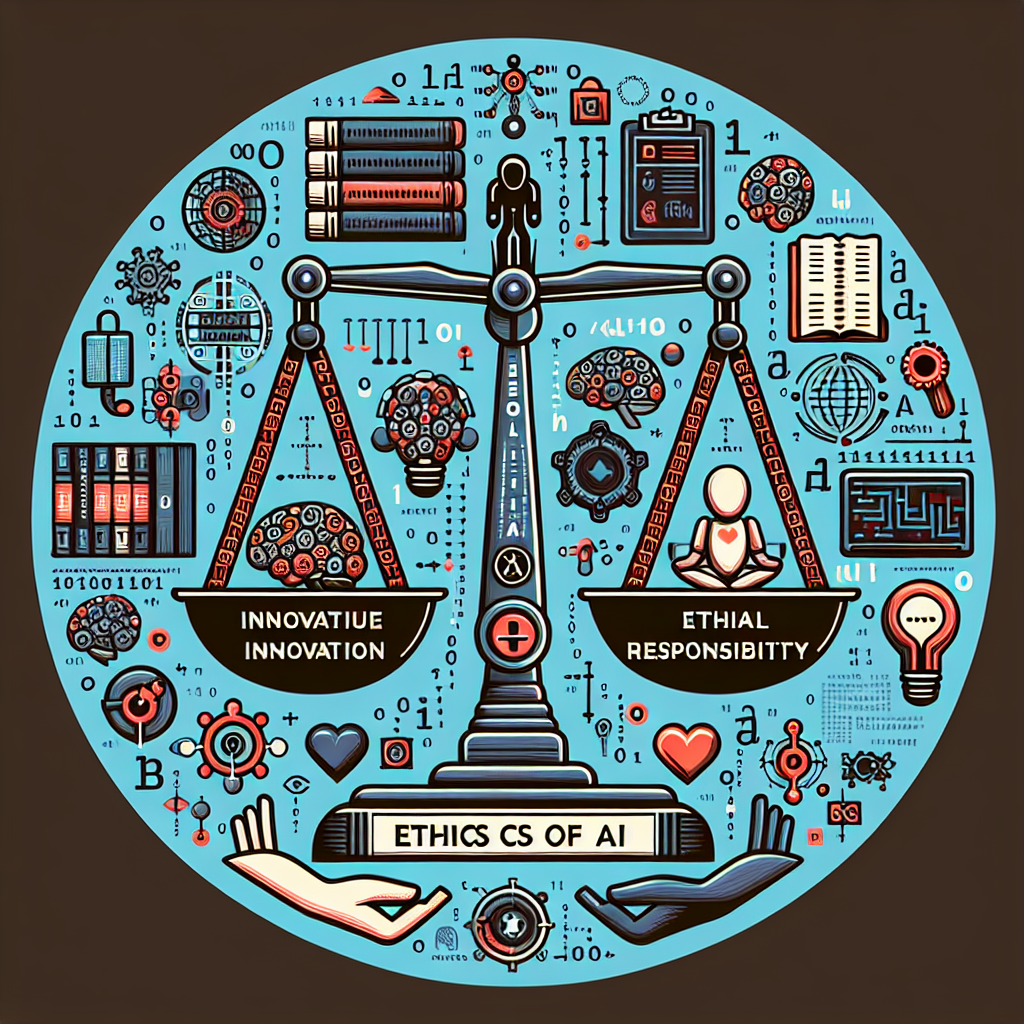
The Ethics of AI: Balancing Innovation and Responsibility
Artificial Intelligence (AI) is no longer just a concept from science fiction movies – it is now a reality that is shaping our world in profound ways. From self-driving cars to virtual assistants, AI technology is becoming increasingly integrated into our daily lives, offering new possibilities and opportunities for innovation. However, with this rapid advancement comes a host of ethical considerations that must be carefully navigated in order to ensure that AI is developed and used responsibly.
The Ethics of AI
One of the key ethical considerations surrounding AI is the potential impact it can have on jobs and the workforce. As AI technology becomes more advanced, there is concern that it will lead to widespread job displacement, as machines are able to perform tasks that were previously done by humans. This raises important questions about the responsibility of companies and governments to ensure that workers are not left behind in the age of AI.
Another ethical concern is the issue of bias in AI algorithms. AI systems are only as good as the data they are trained on, and if that data is biased or incomplete, it can lead to discriminatory outcomes. For example, a facial recognition system that is trained on a dataset that is predominantly white may have difficulty accurately identifying individuals with darker skin tones. This raises important questions about how to ensure that AI systems are fair and unbiased in their decision-making processes.
Privacy is another key ethical consideration when it comes to AI technology. As AI systems collect and analyze vast amounts of data about individuals, there is a risk that personal privacy could be compromised. For example, a smart home device that listens to conversations in the home could potentially be used to invade an individual’s privacy. This raises important questions about how to balance the benefits of AI technology with the need to protect individual privacy rights.
Balancing Innovation and Responsibility
In order to navigate these ethical considerations, it is essential that companies and governments take a proactive approach to the development and deployment of AI technology. This means considering the ethical implications of AI from the very beginning of the design process and taking steps to mitigate potential risks.
One way to address the ethical considerations of AI is through the development of ethical guidelines and standards for AI technology. These guidelines can help to ensure that AI systems are developed and deployed in a responsible and ethical manner. For example, the IEEE has developed a set of ethical guidelines for AI, which include principles such as transparency, accountability, and fairness.
Another way to address the ethical considerations of AI is through the use of ethical AI design principles. These principles can help to ensure that AI systems are designed in a way that prioritizes ethical considerations, such as fairness and transparency. For example, Google has developed a set of AI design principles that include guidelines such as avoiding bias, being accountable, and ensuring privacy.
FAQs
Q: What are some examples of AI technologies that raise ethical concerns?
A: Some examples of AI technologies that raise ethical concerns include facial recognition systems, predictive policing algorithms, and automated hiring systems. These technologies have the potential to impact individuals in significant ways, raising important questions about fairness, privacy, and accountability.
Q: How can companies and governments ensure that AI technology is developed and used responsibly?
A: Companies and governments can ensure that AI technology is developed and used responsibly by taking a proactive approach to ethical considerations. This includes developing ethical guidelines and standards for AI technology, using ethical AI design principles, and engaging with stakeholders to address their concerns.
Q: What are some of the key ethical considerations surrounding AI technology?
A: Some of the key ethical considerations surrounding AI technology include job displacement, bias in algorithms, and privacy concerns. These ethical considerations must be carefully navigated in order to ensure that AI technology is developed and used responsibly.
In conclusion, the ethics of AI is a complex and important issue that must be carefully navigated in order to ensure that AI technology is developed and used responsibly. By considering the ethical implications of AI from the very beginning of the design process and taking proactive steps to address potential risks, companies and governments can help to ensure that AI technology is a force for good in our world.