
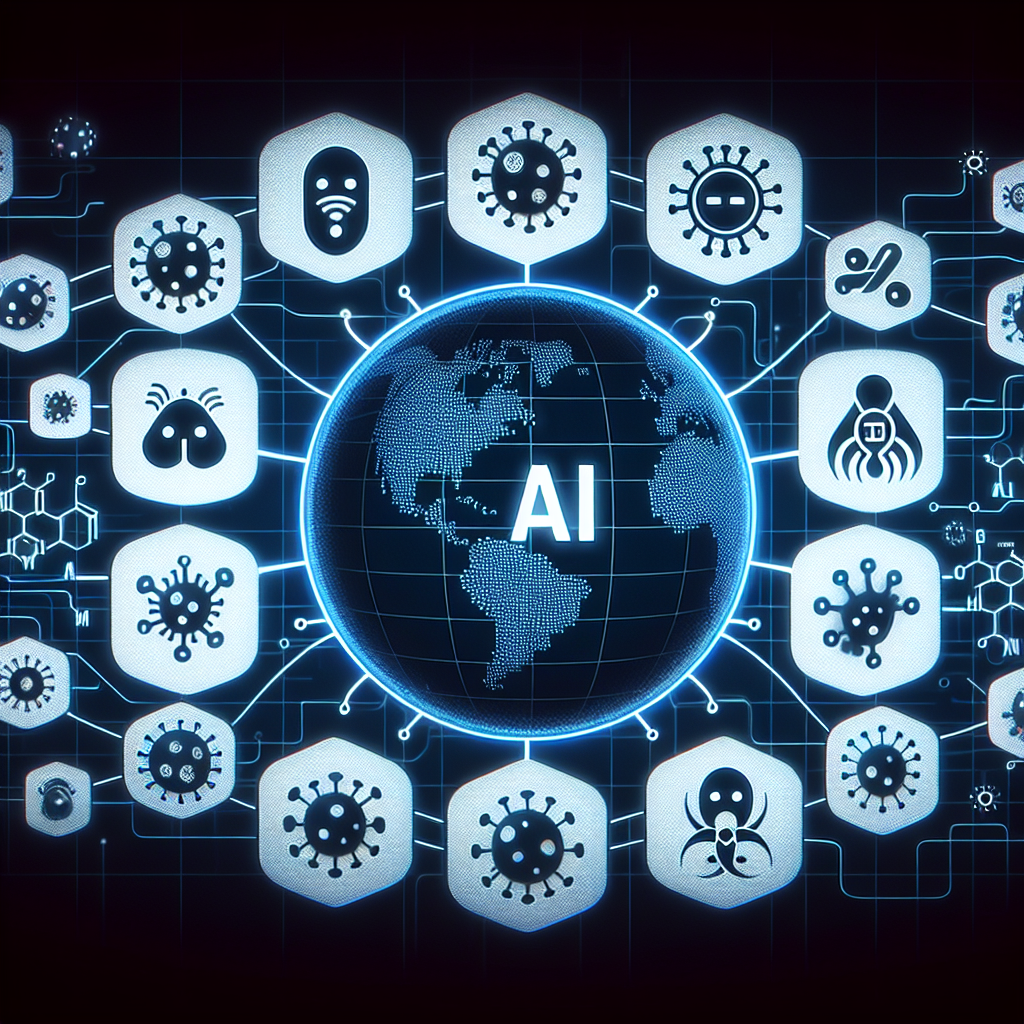
The Role of AI Software in Disease Surveillance
In recent years, the field of disease surveillance has seen significant advancements with the integration of artificial intelligence (AI) software. AI software has revolutionized the way we monitor and track diseases, allowing for faster and more accurate detection of outbreaks and potential public health threats. In this article, we will explore the role of AI software in disease surveillance and its impact on public health.
What is Disease Surveillance?
Disease surveillance is the systematic collection, analysis, interpretation, and dissemination of data regarding the occurrence of diseases in a population. The goal of disease surveillance is to monitor the spread of diseases, identify outbreaks, and implement control measures to prevent further transmission. Surveillance data is essential for public health officials to make informed decisions and allocate resources effectively.
Traditionally, disease surveillance has relied on manual data collection and analysis, which can be time-consuming and prone to errors. With the advent of AI software, the process of disease surveillance has been streamlined and improved, allowing for real-time monitoring and early detection of potential threats.
How AI Software is used in Disease Surveillance
AI software is used in disease surveillance in a variety of ways, including data analysis, pattern recognition, and predictive modeling. AI algorithms are trained on large datasets of epidemiological data, clinical records, and other relevant information to identify patterns and trends that may indicate the presence of a disease outbreak.
One of the key applications of AI software in disease surveillance is in the detection of anomalies in data. AI algorithms can analyze large volumes of data in real-time and flag any unusual patterns or outliers that may indicate the presence of a disease outbreak. This allows public health officials to respond quickly and implement control measures to prevent further spread of the disease.
AI software is also used in predictive modeling to forecast the spread of diseases and assess the impact of control measures. By analyzing historical data and current trends, AI algorithms can predict the future trajectory of a disease outbreak and help public health officials make informed decisions about resource allocation and intervention strategies.
Another important application of AI software in disease surveillance is in contact tracing. AI algorithms can analyze data from various sources, such as electronic health records and mobile phone data, to identify individuals who may have been exposed to a disease and track their movements to prevent further transmission.
Overall, AI software has revolutionized the field of disease surveillance by providing public health officials with the tools and resources they need to monitor and control the spread of diseases more effectively.
Benefits of AI Software in Disease Surveillance
There are several benefits of using AI software in disease surveillance, including:
1. Real-time monitoring: AI algorithms can analyze large volumes of data in real-time, allowing public health officials to detect disease outbreaks early and respond quickly to prevent further transmission.
2. Improved accuracy: AI software can analyze data more accurately and efficiently than traditional methods, reducing the risk of errors and false positives in disease surveillance.
3. Predictive modeling: AI algorithms can forecast the spread of diseases and assess the impact of control measures, helping public health officials make informed decisions about resource allocation and intervention strategies.
4. Contact tracing: AI software can analyze data from various sources to identify individuals who may have been exposed to a disease and track their movements to prevent further transmission.
5. Resource allocation: AI software can help public health officials allocate resources more effectively by identifying areas at high risk of disease outbreaks and prioritizing intervention strategies.
FAQs
Q: How accurate is AI software in disease surveillance?
A: AI software is highly accurate in disease surveillance, as it can analyze large volumes of data in real-time and detect anomalies that may indicate the presence of a disease outbreak. However, like any technology, AI software is not infallible and may require human oversight to ensure the accuracy of the results.
Q: How is AI software trained to detect diseases?
A: AI software is trained on large datasets of epidemiological data, clinical records, and other relevant information to identify patterns and trends that may indicate the presence of a disease outbreak. The software is then tested on new data to validate its performance and accuracy.
Q: What are the limitations of AI software in disease surveillance?
A: While AI software has many benefits in disease surveillance, there are some limitations to consider. For example, AI algorithms may be biased or make errors if the training data is not representative of the population being studied. Additionally, AI software may require significant computational resources and expertise to implement effectively.
In conclusion, AI software plays a crucial role in disease surveillance by providing public health officials with the tools and resources they need to monitor and control the spread of diseases more effectively. By analyzing large volumes of data in real-time, detecting anomalies, and predicting the spread of diseases, AI software has revolutionized the field of disease surveillance and has the potential to improve public health outcomes worldwide.