
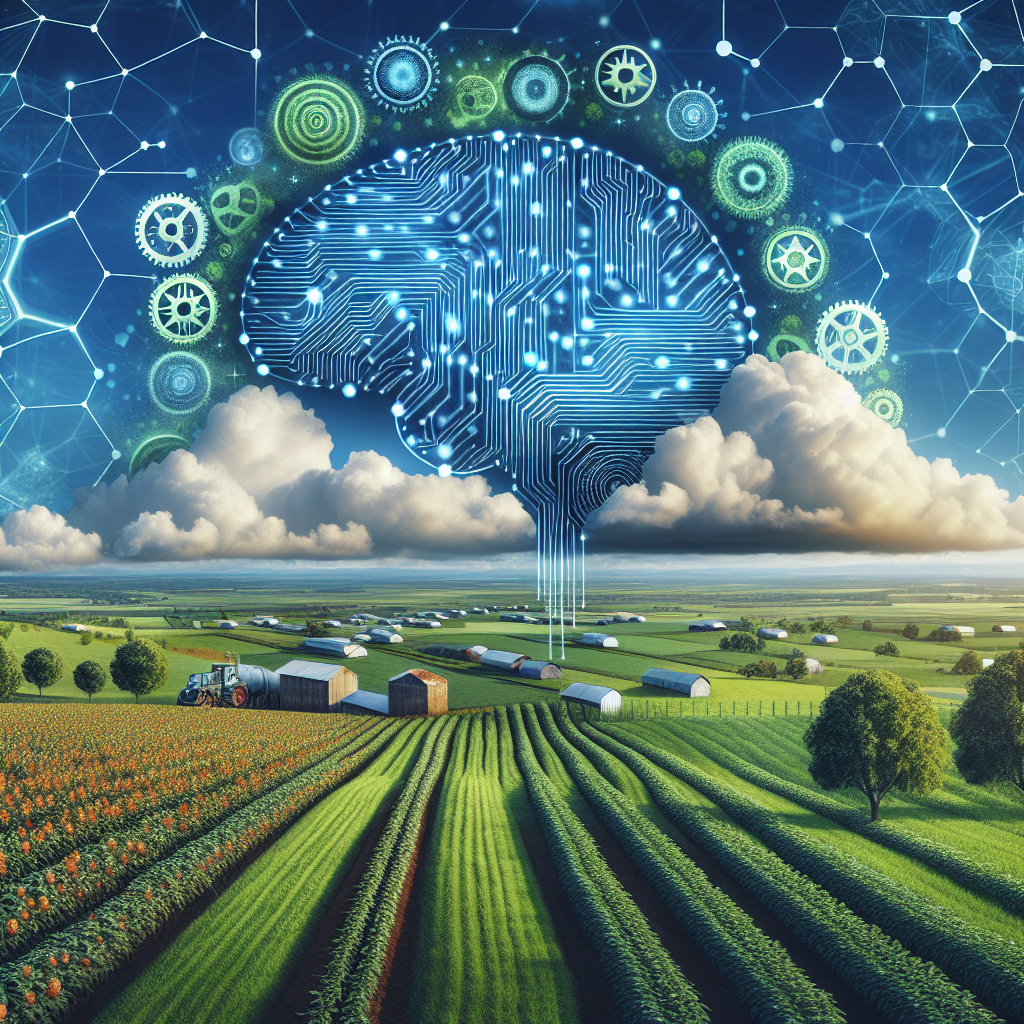
Utilizing AI for Enhancing Agricultural Extension Services
Introduction
Agricultural extension services play a crucial role in disseminating information, providing technical assistance, and training to farmers to improve their productivity and sustainability. With the advancement of technology, there is a growing interest in leveraging artificial intelligence (AI) to enhance agricultural extension services. AI can help to analyze large amounts of data, provide personalized recommendations, and automate tasks, making extension services more efficient and effective. In this article, we will explore how AI can be used to revolutionize agricultural extension services and address some common questions about this emerging technology.
How AI Can Enhance Agricultural Extension Services
1. Data Analysis: AI can analyze vast amounts of data from various sources such as weather patterns, soil conditions, crop performance, and market trends. By using machine learning algorithms, AI can identify patterns and trends that can help extension workers make informed decisions and provide tailored recommendations to farmers. For example, AI can analyze satellite imagery to monitor crop health and detect pests and diseases early on, allowing farmers to take timely action to prevent crop damage.
2. Personalized Recommendations: AI can provide personalized recommendations to farmers based on their specific needs and circumstances. By analyzing data on individual farms, such as soil type, crop rotation practices, and input usage, AI can suggest optimal crop varieties, planting dates, and fertilization levels to maximize yields and reduce inputs. This personalized approach can help farmers improve their productivity and profitability while minimizing environmental impacts.
3. Remote Sensing: AI-powered drones and sensors can collect real-time data on crop conditions, soil moisture levels, and pest infestations. This data can be analyzed using AI algorithms to generate actionable insights for farmers and extension workers. For example, drones equipped with multispectral cameras can identify water stress in crops, allowing farmers to adjust irrigation schedules accordingly. This real-time monitoring can help farmers respond quickly to changing conditions and prevent crop losses.
4. Chatbots and Virtual Assistants: AI-powered chatbots and virtual assistants can provide instant support to farmers by answering their questions, providing technical information, and guiding them through various agricultural practices. These virtual assistants can be accessed through mobile apps or websites, allowing farmers to get timely assistance regardless of their location. By leveraging natural language processing and machine learning, chatbots can understand farmers’ queries and provide accurate and relevant information to help them make informed decisions.
5. Decision Support Systems: AI can be used to develop decision support systems that help farmers optimize their decision-making processes. By integrating data on weather forecasts, market prices, input costs, and crop performance, AI algorithms can generate recommendations on planting schedules, input applications, and marketing strategies. These decision support systems can help farmers plan their operations more effectively, reduce risks, and improve their overall profitability.
Frequently Asked Questions about AI in Agricultural Extension Services
1. Is AI replacing human extension workers?
AI is not meant to replace human extension workers but to augment their capabilities and improve the effectiveness of extension services. Human expertise and experience are still essential in understanding local contexts, building relationships with farmers, and providing personalized advice. AI can assist extension workers by analyzing data, generating insights, and automating routine tasks, allowing them to focus on more strategic activities and provide higher-value services to farmers.
2. How can smallholder farmers benefit from AI in agricultural extension services?
Smallholder farmers can benefit from AI in agricultural extension services by gaining access to personalized recommendations, real-time information, and technical support that can help them improve their productivity and livelihoods. AI can help smallholder farmers overcome challenges such as limited access to resources, information asymmetry, and climate variability, by providing tailored solutions and empowering them to make informed decisions.
3. What are the challenges of implementing AI in agricultural extension services?
Some challenges of implementing AI in agricultural extension services include the high cost of technology, limited access to reliable data, and the need for capacity building and training. Additionally, there may be concerns about data privacy, transparency, and ethics in using AI algorithms for decision-making. Addressing these challenges requires collaboration between governments, research institutions, technology providers, and extension organizations to ensure that AI is deployed responsibly and effectively to benefit farmers.
4. How can farmers trust the recommendations generated by AI algorithms?
Trust in AI recommendations can be built through transparency, accountability, and validation of results. Extension workers can explain the rationale behind AI recommendations, demonstrate the accuracy of predictions, and solicit feedback from farmers to improve the performance of algorithms. Farmers should also be involved in the decision-making process and have the option to override AI recommendations based on their local knowledge and preferences. Building trust in AI requires open communication, continuous evaluation, and a collaborative approach between farmers and extension services.
Conclusion
AI has the potential to revolutionize agricultural extension services by providing data-driven insights, personalized recommendations, and real-time support to farmers. By leveraging AI technologies such as data analysis, remote sensing, chatbots, and decision support systems, extension workers can enhance their effectiveness, reach more farmers, and improve agricultural outcomes. However, the successful implementation of AI in agricultural extension services requires addressing challenges such as data privacy, trust building, and capacity building. By collaborating with stakeholders and adopting a responsible approach to AI deployment, extension services can harness the power of technology to empower farmers, promote sustainable agriculture, and achieve food security.