
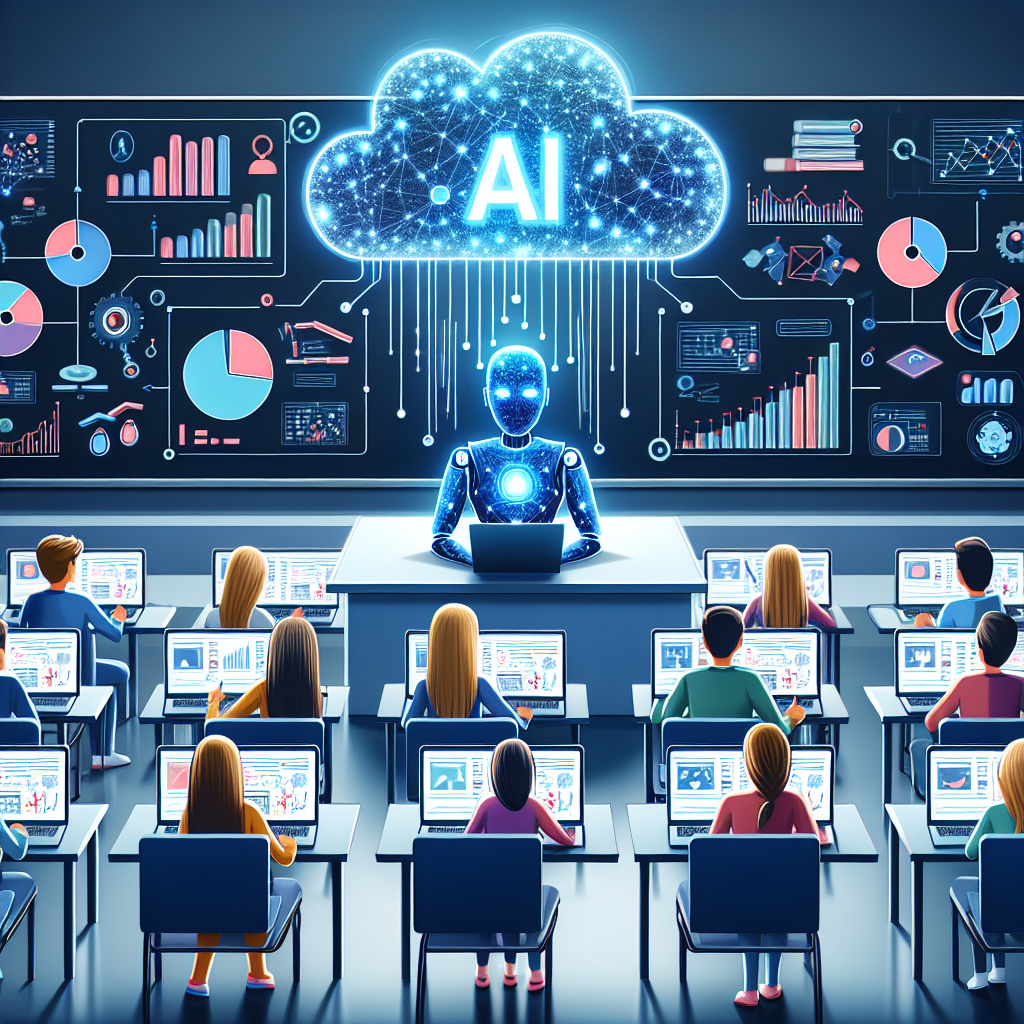
In recent years, the use of artificial intelligence (AI) in business intelligence has been rapidly evolving, with significant implications for educational analytics. AI has the potential to revolutionize the way educational institutions collect, analyze, and utilize data to improve student outcomes and streamline operations. By harnessing the power of AI in educational analytics, institutions can gain valuable insights into student performance, predict future trends, and personalize learning experiences.
One of the key benefits of using AI in educational analytics is its ability to process large amounts of data quickly and accurately. Traditional methods of data analysis often involve manual entry and manipulation of data, which can be time-consuming and prone to human error. AI, on the other hand, can automatically collect, clean, and analyze data from various sources, providing institutions with real-time insights that can inform decision-making.
AI can also help educators identify at-risk students and intervene early to prevent them from falling behind. By analyzing student data, such as attendance records, grades, and behavior patterns, AI can flag students who may be struggling academically or socially. Educators can then use this information to provide targeted interventions, such as tutoring or counseling, to help these students succeed.
Furthermore, AI can be used to personalize learning experiences for students by analyzing their individual learning styles and preferences. By leveraging AI algorithms, educators can create personalized learning paths for each student, tailoring content and assignments to their specific needs and interests. This can help students stay engaged and motivated, leading to improved academic performance.
In addition to enhancing student outcomes, AI in educational analytics can also help institutions optimize their operations and resources. By analyzing data on student enrollment, course offerings, and faculty workload, institutions can identify areas for improvement and make data-driven decisions to enhance efficiency and effectiveness. For example, AI can help institutions predict future enrollment trends and allocate resources accordingly, ensuring that they are prepared to meet demand.
Despite the many benefits of using AI in educational analytics, there are also challenges and considerations that institutions must be aware of. One of the primary concerns is data privacy and security. AI systems rely on vast amounts of data to generate insights, and institutions must ensure that this data is stored and handled securely to protect student confidentiality.
Another consideration is the potential for bias in AI algorithms. AI systems are only as good as the data they are trained on, and if the data used to train these systems is biased, the results can also be biased. Institutions must be vigilant in monitoring AI algorithms for bias and taking steps to mitigate it to ensure fair and equitable outcomes for all students.
In terms of implementation, institutions may face challenges in integrating AI systems with existing technologies and workflows. Educators and staff may require training to effectively use AI tools, and institutions may need to invest in infrastructure upgrades to support AI capabilities. Additionally, institutions must consider the ethical implications of using AI in educational analytics and establish clear guidelines for its use to ensure transparency and accountability.
Overall, the potential benefits of using AI in educational analytics far outweigh the challenges. By harnessing the power of AI, institutions can gain valuable insights into student performance, personalize learning experiences, and optimize operations to improve overall outcomes. As AI technology continues to advance, the possibilities for enhancing educational analytics are endless, and institutions that embrace this technology will be well-positioned to lead in the rapidly evolving educational landscape.
FAQs:
Q: How can AI improve educational analytics?
A: AI can improve educational analytics by processing large amounts of data quickly and accurately, identifying at-risk students, personalizing learning experiences, and optimizing operations and resources.
Q: What are the challenges of using AI in educational analytics?
A: Challenges of using AI in educational analytics include data privacy and security concerns, potential bias in AI algorithms, integration with existing technologies and workflows, and ethical implications of AI use.
Q: How can institutions mitigate bias in AI algorithms?
A: Institutions can mitigate bias in AI algorithms by monitoring algorithms for bias, diversifying training data, and implementing transparency and accountability measures in AI use.
Q: What are the benefits of using AI in educational analytics?
A: Benefits of using AI in educational analytics include improved student outcomes, personalized learning experiences, optimized operations and resources, and data-driven decision-making.