
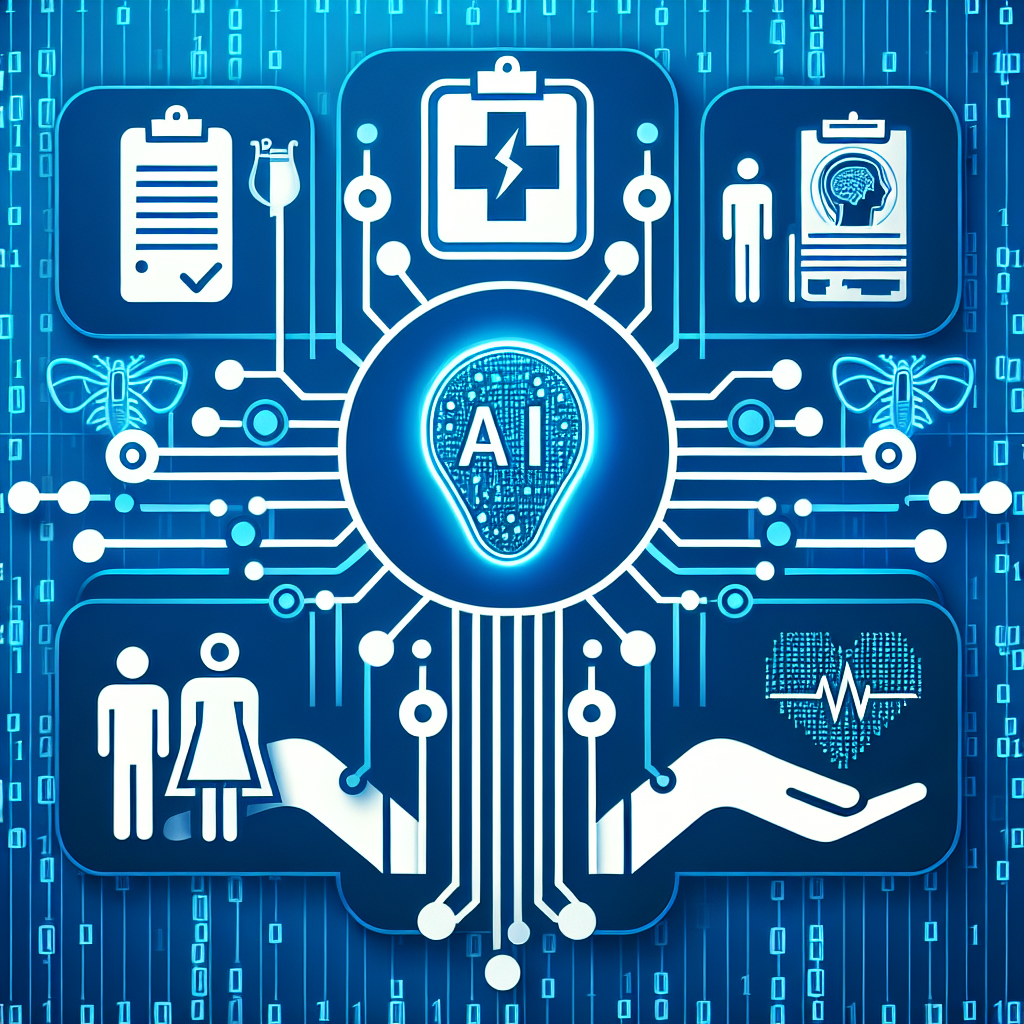
Artificial Intelligence (AI) has revolutionized numerous industries, and healthcare is no exception. In recent years, the integration of AI in healthcare data management has transformed the way medical information is collected, analyzed, and utilized. From diagnosis to treatment, AI has had a profound impact on healthcare data management, leading to improved patient outcomes, cost savings, and more efficient healthcare delivery.
The utilization of AI in healthcare data management has led to a number of benefits, including:
1. Improved accuracy in diagnosis: AI algorithms can analyze vast amounts of patient data, including medical images, genetic information, and electronic health records, to identify patterns and make more accurate diagnoses. This has led to earlier detection of diseases, more personalized treatment plans, and improved patient outcomes.
2. Enhanced patient care: AI can be used to track patient data in real-time, allowing healthcare providers to monitor patients remotely and intervene quickly when necessary. This has improved the quality of care for patients, especially those with chronic conditions who require ongoing monitoring.
3. Cost savings: By streamlining healthcare data management processes, AI has led to cost savings for healthcare organizations. AI algorithms can automate tasks such as data entry, billing, and scheduling, reducing the administrative burden on healthcare providers and allowing them to focus more on patient care.
4. Predictive analytics: AI algorithms can analyze historical patient data to predict future health outcomes, identify high-risk patients, and recommend preventive measures. This has allowed healthcare providers to take a proactive approach to patient care, ultimately leading to better health outcomes.
5. Drug discovery: AI has the potential to revolutionize the drug discovery process by analyzing vast amounts of biological and chemical data to identify potential drug candidates. This has the potential to accelerate the development of new treatments and improve patient access to innovative therapies.
Despite the numerous benefits of AI in healthcare data management, there are also challenges and concerns that need to be addressed. These include:
1. Data privacy and security: The use of AI in healthcare data management raises concerns about patient privacy and data security. Healthcare organizations must ensure that patient data is protected and that AI algorithms are developed and implemented in a way that complies with data protection regulations.
2. Bias and fairness: AI algorithms are only as good as the data they are trained on, and there is a risk that biases in the data can lead to biased outcomes. Healthcare organizations must be vigilant in ensuring that AI algorithms are fair and unbiased in their decision-making.
3. Integration with existing systems: Healthcare organizations often have complex IT systems that are not easily compatible with AI technologies. Integrating AI into existing healthcare data management systems can be a challenge and may require significant investment in infrastructure and training.
4. Ethical considerations: The use of AI in healthcare data management raises ethical questions about the role of technology in decision-making, the impact on patient autonomy, and the potential for AI to replace human judgment. Healthcare organizations must consider these ethical implications when implementing AI technologies.
Despite these challenges, the potential of AI in healthcare data management is vast, and the benefits far outweigh the risks. As technology continues to evolve, healthcare organizations must continue to adapt and innovate to harness the power of AI for improved patient care and outcomes.
FAQs:
Q: How is AI used in healthcare data management?
A: AI is used in healthcare data management to analyze vast amounts of patient data, including medical images, genetic information, and electronic health records, to identify patterns and make more accurate diagnoses, track patient data in real-time, and predict future health outcomes.
Q: What are the benefits of AI in healthcare data management?
A: The benefits of AI in healthcare data management include improved accuracy in diagnosis, enhanced patient care, cost savings, predictive analytics, and drug discovery.
Q: What are the challenges of AI in healthcare data management?
A: The challenges of AI in healthcare data management include data privacy and security concerns, bias and fairness issues, integration with existing systems, and ethical considerations.
Q: How can healthcare organizations address the challenges of AI in healthcare data management?
A: Healthcare organizations can address the challenges of AI in healthcare data management by ensuring patient data privacy and security, mitigating bias in AI algorithms, investing in infrastructure and training for AI integration, and considering the ethical implications of AI technologies.