
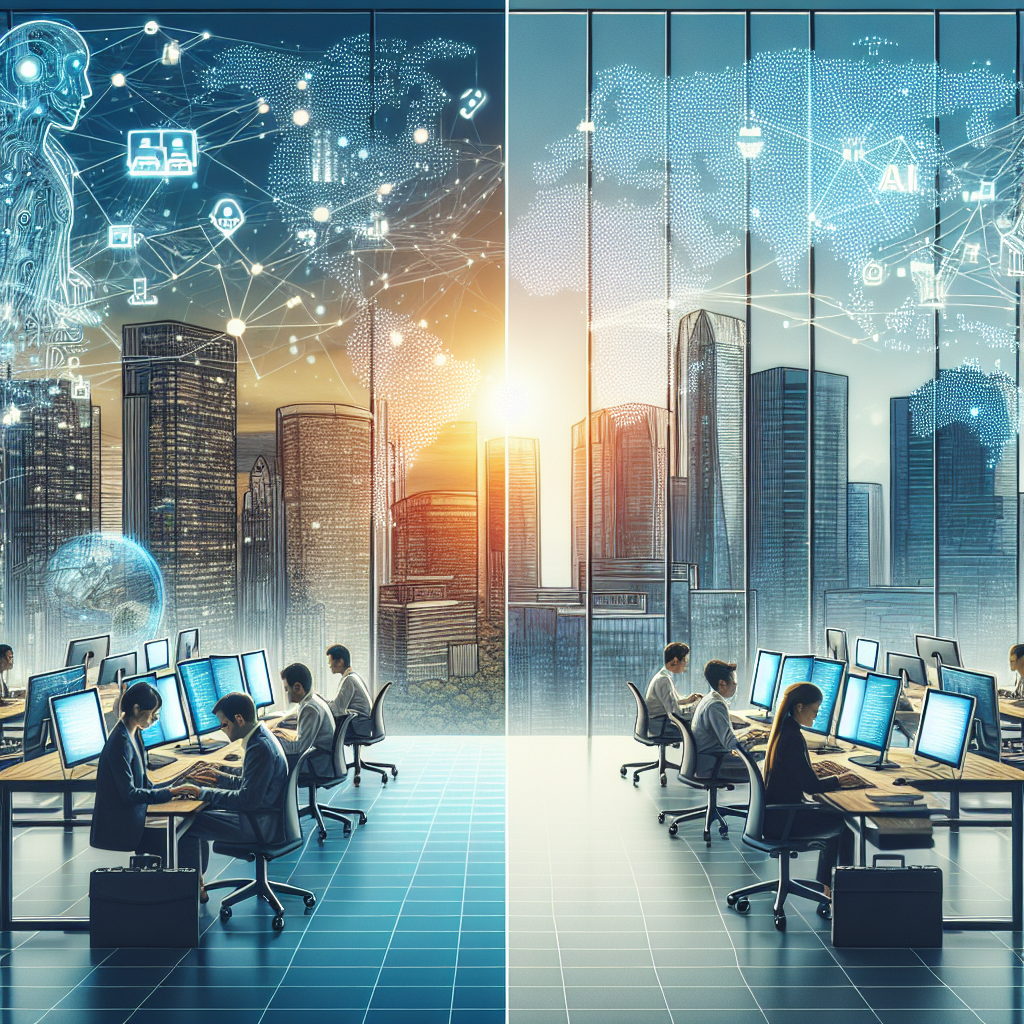
Outsourcing vs In-house AI Development: Which is Better?
Artificial Intelligence (AI) has become an integral part of businesses across various industries. From improving customer service to automating tasks, AI technology has the potential to transform how companies operate and compete in the modern business landscape. However, when it comes to developing AI solutions, businesses are faced with a critical decision: whether to outsource the development of AI projects or keep them in-house.
Outsourcing AI Development
Outsourcing AI development involves hiring a third-party vendor or a team of experts to build AI solutions for your business. This approach can be beneficial for companies that do not have the necessary expertise or resources to develop AI solutions internally. Here are some key advantages of outsourcing AI development:
1. Access to Expertise: Outsourcing AI development allows companies to tap into a pool of specialized talent with expertise in AI technologies. These external teams often have a deep understanding of AI algorithms, machine learning models, and data processing techniques, which can lead to more innovative and efficient AI solutions.
2. Cost-Effective: Outsourcing AI development can be a cost-effective option for businesses, especially for small and medium-sized enterprises with limited budgets. By outsourcing, companies can avoid the high costs associated with hiring and training in-house AI experts.
3. Faster Time-to-Market: Outsourcing AI development can help companies accelerate the development process and bring AI solutions to market faster. External teams are often equipped with the necessary tools and resources to streamline the development process and deliver results in a timely manner.
4. Flexibility and Scalability: Outsourcing AI development provides companies with the flexibility to scale their projects up or down based on their changing business needs. External teams can quickly adjust their resources and manpower to accommodate the company’s requirements, making it easier to adapt to market changes.
In-House AI Development
On the other hand, in-house AI development involves building AI solutions using internal resources and expertise. While this approach may require a significant investment in terms of time and resources, it offers several benefits that outsourcing may not provide. Here are some advantages of in-house AI development:
1. Greater Control and Customization: In-house AI development gives companies greater control over the development process and allows them to customize AI solutions to meet their specific business requirements. Companies can tailor AI algorithms and models to their unique needs, resulting in more personalized and effective solutions.
2. Data Security and Confidentiality: Keeping AI development in-house helps companies maintain control over their sensitive data and intellectual property. By working with internal teams, companies can ensure that their data is secure and protected from external threats.
3. Enhanced Collaboration and Communication: In-house AI development fosters collaboration and communication among team members, leading to a more cohesive and efficient development process. Internal teams can work closely together to brainstorm ideas, solve problems, and iterate on AI solutions in real-time.
4. Long-Term Investment: In-house AI development is a long-term investment that can pay off in the form of sustainable competitive advantage. By building internal expertise and capabilities in AI technologies, companies can stay ahead of the curve and drive innovation within their industry.
FAQs
1. What factors should companies consider when deciding between outsourcing and in-house AI development?
When deciding between outsourcing and in-house AI development, companies should consider factors such as their budget, timeline, expertise, and strategic objectives. Companies with limited resources and tight deadlines may benefit from outsourcing AI development, while those looking for greater control and customization may prefer in-house development.
2. How can companies ensure the success of their AI projects, whether outsourced or in-house?
To ensure the success of their AI projects, companies should establish clear goals and objectives, communicate effectively with their development teams, and regularly monitor and evaluate the progress of their projects. Companies should also invest in training and upskilling their employees to build internal expertise in AI technologies.
3. What are some common challenges companies face when developing AI solutions?
Some common challenges companies face when developing AI solutions include data quality issues, lack of expertise, scalability constraints, and ethical considerations. Companies should address these challenges proactively by implementing robust data governance practices, hiring or training AI experts, and adhering to ethical guidelines and regulations.
4. How can companies leverage the benefits of both outsourcing and in-house AI development?
Companies can leverage the benefits of both outsourcing and in-house AI development by adopting a hybrid approach. For example, companies can outsource certain aspects of their AI projects, such as data processing or model training, while keeping other components in-house for greater control and customization. This approach allows companies to maximize the strengths of both outsourcing and in-house development while mitigating their respective weaknesses.
In conclusion, the decision between outsourcing and in-house AI development ultimately depends on the specific needs and goals of each company. While outsourcing AI development can offer cost-effective solutions and access to specialized expertise, in-house development provides greater control and customization over AI projects. By carefully evaluating the pros and cons of each approach, companies can determine the best strategy to drive innovation and growth through AI technology.