
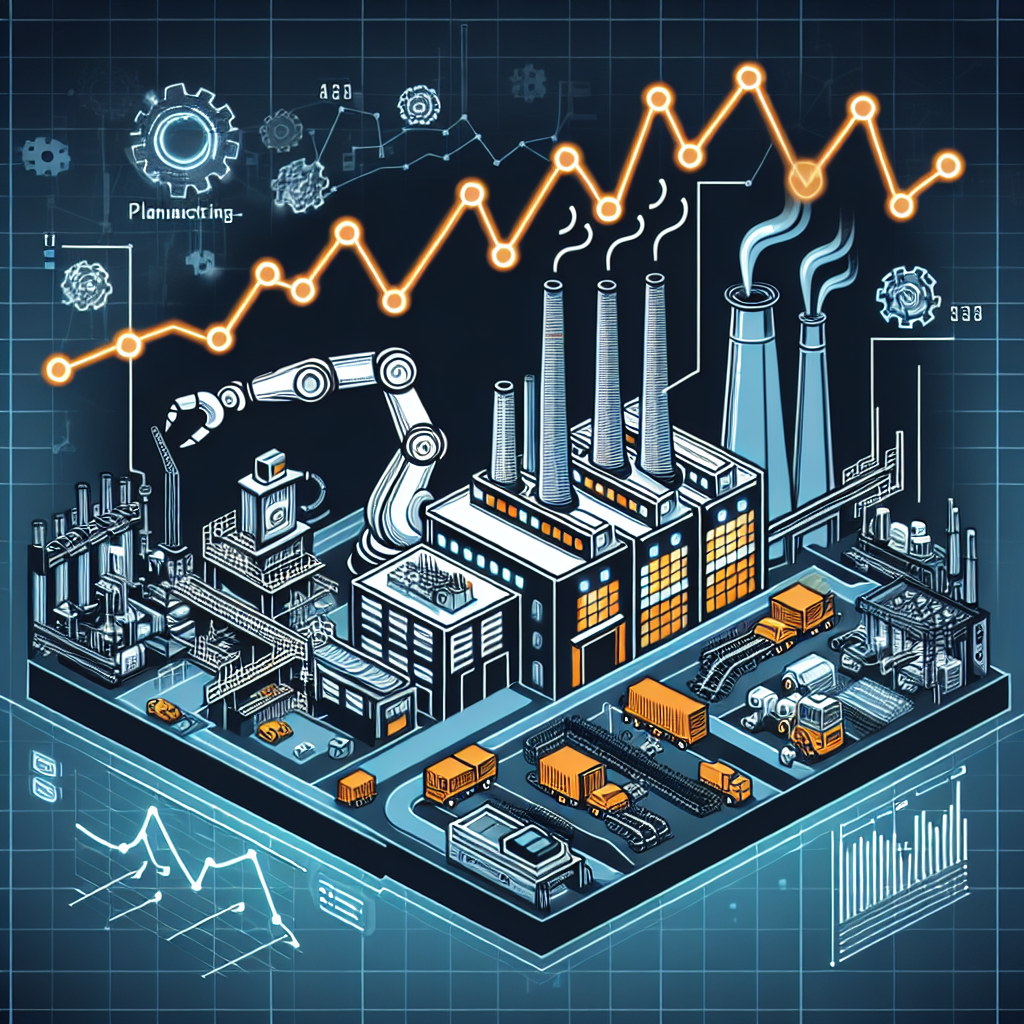
In today’s fast-paced and competitive manufacturing environment, companies are constantly looking for ways to improve their operations and stay ahead of the competition. One of the key areas where technological advancements are making a significant impact is demand planning.
Demand planning is the process of forecasting customer demand for products and services in order to optimize production schedules, inventory levels, and supply chain management. Traditionally, demand planning has been a manual and time-consuming process that is prone to errors and inefficiencies. However, with the advent of artificial intelligence (AI) technology, manufacturers now have the ability to automate and improve their demand planning processes in ways that were previously unimaginable.
AI-powered demand planning systems use advanced algorithms and machine learning capabilities to analyze historical sales data, market trends, seasonal patterns, and other relevant factors in order to generate accurate demand forecasts. These systems can quickly adapt to changing market conditions and provide manufacturers with real-time visibility into demand fluctuations, enabling them to make more informed decisions and respond quickly to changes in customer demand.
There are several key benefits of implementing AI-powered demand planning in manufacturing, including:
1. Improved accuracy: AI-powered demand planning systems are able to analyze large volumes of data and identify patterns and trends that humans may not be able to detect. This results in more accurate demand forecasts and helps manufacturers avoid stockouts or excess inventory, leading to improved customer satisfaction and reduced costs.
2. Increased efficiency: By automating the demand planning process, manufacturers can save time and resources that would have been spent on manual forecasting and data analysis. This allows employees to focus on more strategic tasks and decision-making, leading to improved efficiency and productivity.
3. Enhanced visibility: AI-powered demand planning systems provide manufacturers with real-time visibility into demand trends, inventory levels, and supply chain performance. This allows them to quickly identify potential issues and take proactive measures to address them, such as adjusting production schedules or reallocating inventory.
4. Better decision-making: With accurate and timely demand forecasts, manufacturers can make more informed decisions about production planning, inventory management, and supply chain optimization. This leads to improved decision-making and better outcomes for the business.
5. Competitive advantage: By leveraging AI-powered demand planning technology, manufacturers can gain a competitive edge in the market by responding quickly to changing customer demand and market trends. This allows them to deliver products to customers faster and more efficiently, leading to increased customer satisfaction and loyalty.
Overall, AI-powered demand planning offers significant benefits for manufacturers looking to optimize their operations and improve their competitive position in the market. By harnessing the power of AI technology, companies can streamline their demand planning processes, reduce costs, and enhance their ability to meet customer demand effectively.
FAQs:
Q: How does AI-powered demand planning differ from traditional demand planning methods?
A: Traditional demand planning methods rely on manual data analysis and forecasting techniques, which can be time-consuming and prone to errors. AI-powered demand planning systems use advanced algorithms and machine learning capabilities to analyze large volumes of data and generate accurate demand forecasts quickly and efficiently.
Q: How can AI-powered demand planning help manufacturers reduce costs?
A: By providing accurate demand forecasts and real-time visibility into demand trends, AI-powered demand planning systems help manufacturers avoid stockouts or excess inventory, which can lead to reduced costs associated with carrying inventory and fulfilling rush orders.
Q: Is AI-powered demand planning suitable for all types of manufacturing industries?
A: AI-powered demand planning can be beneficial for a wide range of manufacturing industries, including automotive, consumer goods, electronics, and pharmaceuticals. However, the specific benefits and implementation considerations may vary depending on the industry and the company’s unique requirements.
Q: What are the key considerations for implementing AI-powered demand planning in manufacturing?
A: When implementing AI-powered demand planning, manufacturers should consider factors such as data quality, integration with existing systems, employee training, and change management. It is important to work closely with technology providers and internal stakeholders to ensure a successful implementation and maximize the benefits of AI-powered demand planning.