
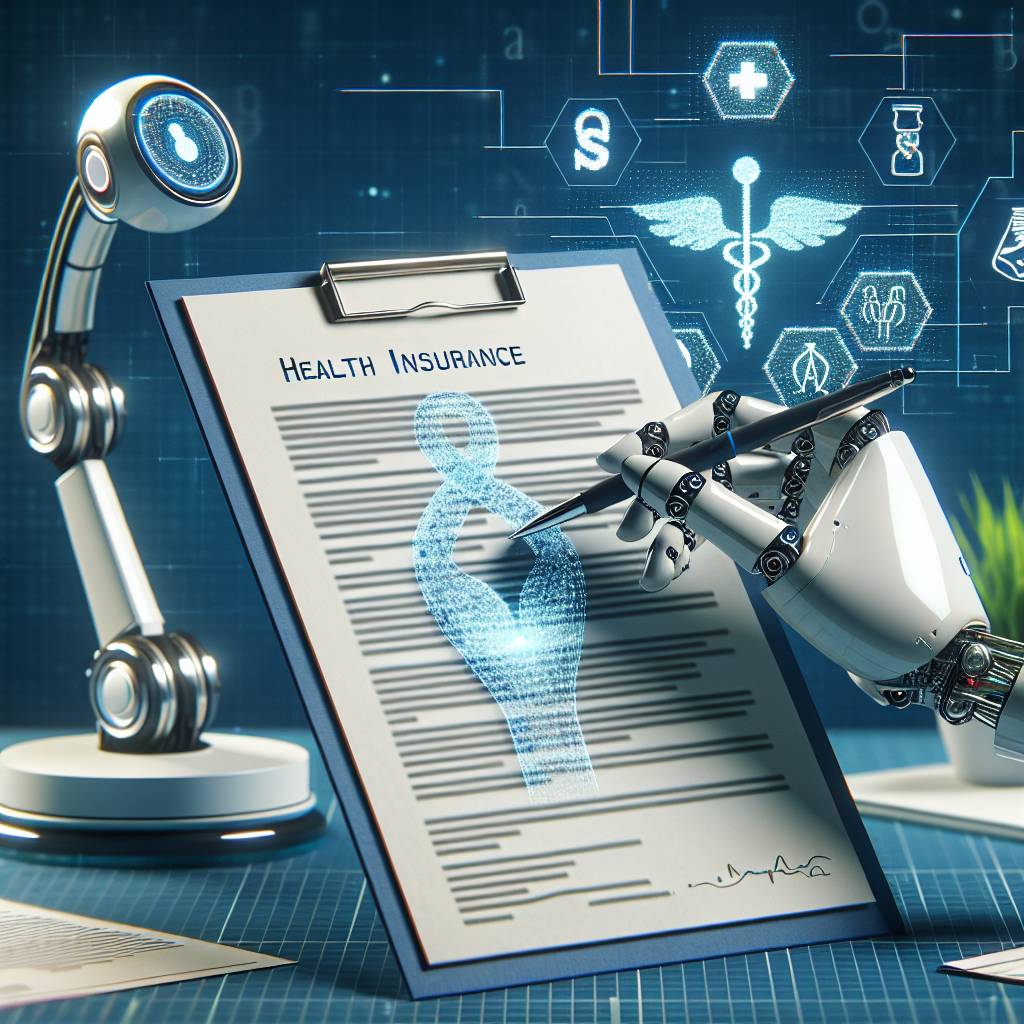
AI Automation and the Future of Health Insurance
In recent years, the healthcare industry has seen a significant shift towards the use of artificial intelligence (AI) automation to streamline processes and improve patient outcomes. One area where AI automation is making a big impact is in health insurance. From claims processing to fraud detection, AI automation is revolutionizing the way health insurance companies operate. In this article, we will explore the role of AI automation in the future of health insurance and its potential benefits.
Benefits of AI Automation in Health Insurance
1. Claims Processing: Traditionally, claims processing in health insurance has been a time-consuming and error-prone process. AI automation is changing that by streamlining the process and reducing the likelihood of errors. AI algorithms can quickly analyze claims data, identify any discrepancies, and flag potentially fraudulent claims for further investigation. This not only speeds up the claims processing process but also helps to reduce costs for health insurance companies.
2. Fraud Detection: Health insurance fraud is a significant problem that costs the industry billions of dollars each year. AI automation can help to detect fraudulent claims by analyzing patterns in claims data and flagging any suspicious activity. This not only helps to reduce the financial impact of fraud on health insurance companies but also helps to protect patients from unnecessary treatments and procedures.
3. Customer Service: AI automation is also improving customer service in the health insurance industry. Chatbots and virtual assistants powered by AI technology can provide patients with instant access to information about their coverage, claims, and benefits. This helps to reduce wait times and improve the overall customer experience for policyholders.
4. Predictive Analytics: AI automation is also being used to improve predictive analytics in health insurance. By analyzing large volumes of data, AI algorithms can identify trends and patterns that can help health insurance companies better predict future healthcare costs and outcomes. This can help insurers to adjust their pricing and coverage options to better meet the needs of their policyholders.
Challenges of AI Automation in Health Insurance
While the benefits of AI automation in health insurance are clear, there are also some challenges that need to be addressed. One of the biggest challenges is ensuring the security and privacy of patient data. Health insurance companies must take steps to protect the sensitive information they collect and ensure that it is not misused or accessed by unauthorized parties.
Another challenge is the potential for bias in AI algorithms. AI systems are only as good as the data they are trained on, and if that data is biased, the algorithms can produce biased results. Health insurance companies must be aware of this risk and take steps to mitigate it by using diverse and representative data sets.
Finally, there is the challenge of workforce displacement. As AI automation becomes more prevalent in the health insurance industry, there is a risk that some jobs may be displaced. It is important for health insurance companies to invest in retraining and upskilling their workforce to ensure that employees are able to adapt to the changing landscape of the industry.
FAQs
Q: Will AI automation replace human workers in the health insurance industry?
A: While AI automation may lead to some job displacement, it is unlikely to completely replace human workers. AI technology is best used in conjunction with human expertise to improve efficiency and accuracy in the industry.
Q: How can health insurance companies ensure the security of patient data when using AI automation?
A: Health insurance companies can ensure the security of patient data by implementing strict data protection policies, using encryption and other security measures, and regularly auditing their systems for vulnerabilities.
Q: What are some examples of AI automation in health insurance?
A: Some examples of AI automation in health insurance include claims processing, fraud detection, customer service chatbots, and predictive analytics.
In conclusion, AI automation is shaping the future of health insurance by improving efficiency, accuracy, and customer service. While there are challenges to be addressed, the benefits of AI automation in health insurance are clear. As the industry continues to evolve, health insurance companies must embrace AI technology to stay competitive and provide the best possible service to their policyholders.