
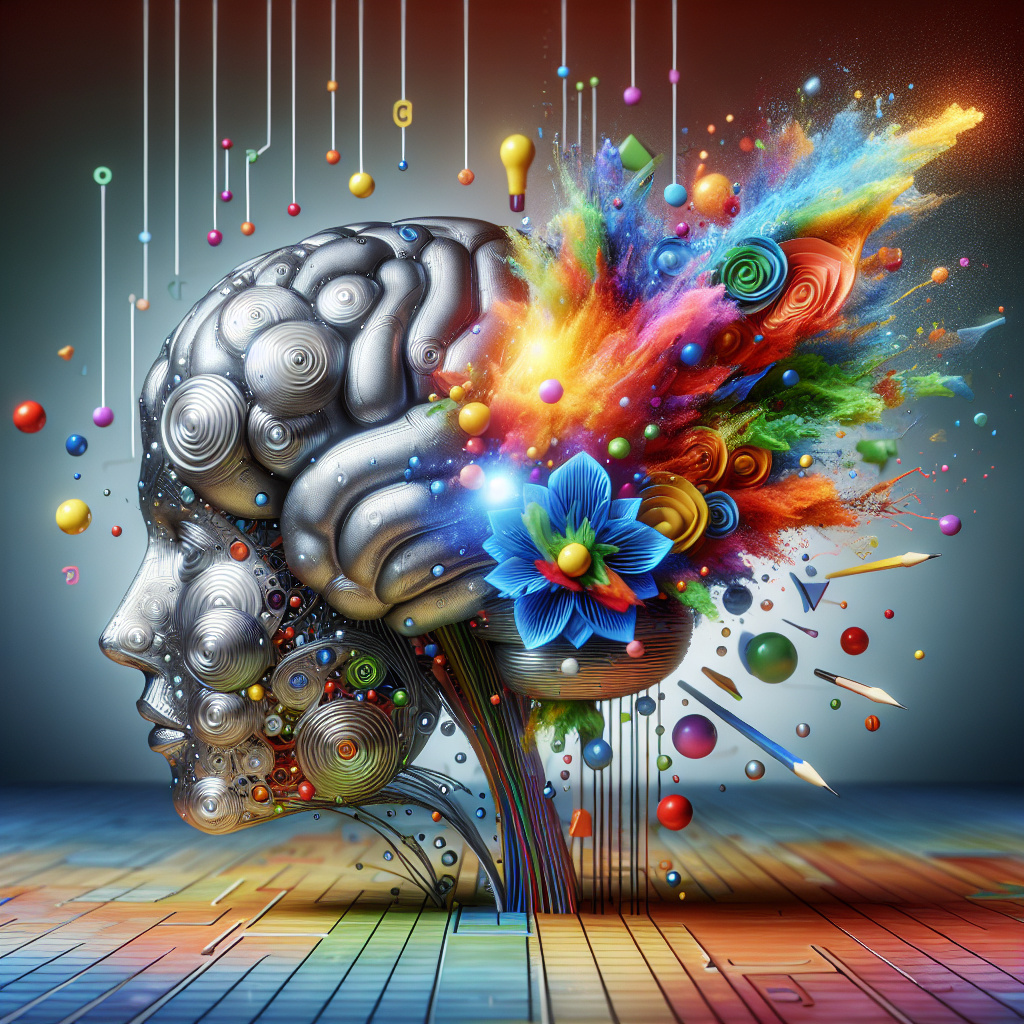
Artificial Intelligence (AI) has rapidly grown in popularity and importance in recent years, revolutionizing various industries and aspects of our lives. One area that has seen significant advancements with the integration of AI is creativity. The marriage of technology and art has resulted in a plethora of new opportunities for artists, designers, musicians, writers, and other creative professionals to enhance their work and push the boundaries of what is possible.
AI and Creativity: An Overview
AI has the ability to analyze vast amounts of data, identify patterns, and generate new ideas and solutions that were previously unimaginable. This has opened up new possibilities for artists and creators to explore new techniques, styles, and forms of expression. AI can assist creatives in generating new ideas, developing concepts, and even producing entire works of art.
One of the most exciting applications of AI in the creative industries is in the field of generative art. Generative art is created using algorithms and AI systems that can produce unique and original artworks based on input data or predefined parameters. These artworks can range from paintings and sculptures to music and poetry, and they often challenge traditional notions of creativity and authorship.
AI can also be used to enhance the creative process by providing insights, suggestions, and feedback to artists and designers. For example, AI-powered tools can analyze trends in the art world, suggest new color palettes, recommend compositions, or even help artists experiment with different styles and techniques. This can help artists to overcome creative blocks, explore new possibilities, and push the boundaries of their work.
Furthermore, AI has the potential to democratize the creative process by making art and design more accessible to a wider audience. AI-powered tools and platforms can enable people with little to no artistic skills to create beautiful and engaging artworks, designs, and music. This can empower individuals to express themselves creatively, regardless of their background or training.
FAQs:
Q: Can AI truly be creative?
A: While AI is not capable of experiencing emotions or consciousness in the same way that humans do, it can simulate creativity by generating new and innovative ideas, solutions, and artworks. AI systems can analyze vast amounts of data, identify patterns, and generate new combinations and variations that humans may not have considered. This can result in surprising and original outcomes that challenge traditional notions of creativity.
Q: How can AI enhance the creative process?
A: AI can enhance the creative process by providing insights, suggestions, and feedback to artists and designers. AI-powered tools can analyze trends in the art world, suggest new color palettes, recommend compositions, or even help artists experiment with different styles and techniques. This can help artists to overcome creative blocks, explore new possibilities, and push the boundaries of their work.
Q: Are there any ethical concerns related to AI and creativity?
A: As with any technology, there are ethical concerns related to the use of AI in the creative industries. For example, there is a concern that AI-generated artworks and designs may lack the emotional depth, cultural significance, or human touch that are often associated with traditional forms of art. There is also a concern that AI may replace human artists and designers, leading to job losses and a loss of creative diversity. It is important for artists, designers, and technologists to consider these ethical concerns and work together to ensure that AI is used responsibly and ethically in the creative industries.
In conclusion, the marriage of AI and creativity has the potential to revolutionize the art and design world, opening up new possibilities for artists, designers, musicians, writers, and other creative professionals to explore new techniques, styles, and forms of expression. AI can enhance the creative process by providing insights, suggestions, and feedback, and by democratizing the creative process and making art and design more accessible to a wider audience. While there are ethical concerns related to the use of AI in the creative industries, it is important for artists, designers, and technologists to work together to ensure that AI is used responsibly and ethically. The future of AI and creativity is bright, and the possibilities are endless.