
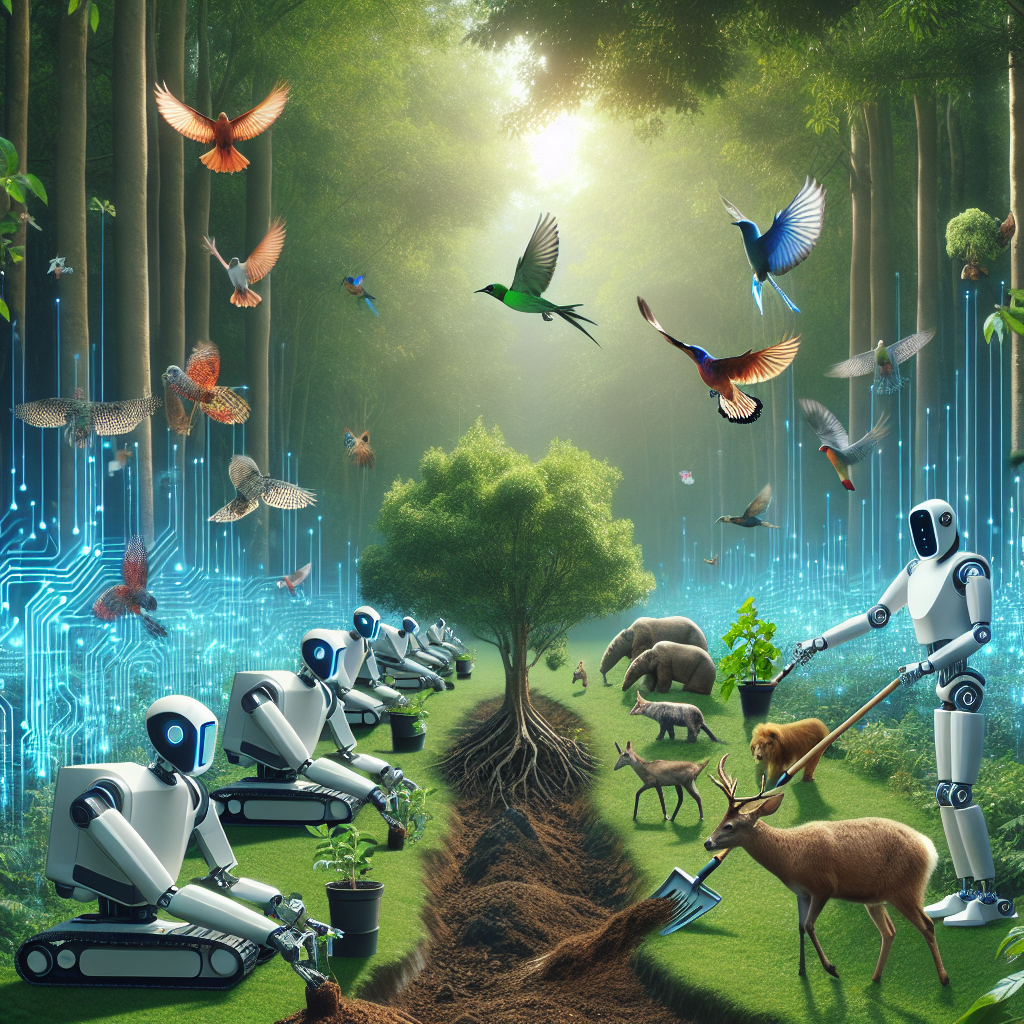
Artificial Intelligence (AI) is revolutionizing many industries, and biodiversity conservation is no exception. With the alarming rate of species extinction and habitat loss, there is an urgent need for innovative solutions to protect and preserve our planet’s biodiversity. AI offers a powerful tool to help address these challenges by providing new ways to monitor, analyze, and manage ecosystems.
One of the key applications of AI in biodiversity conservation is in the field of wildlife monitoring. Traditional methods of tracking and monitoring wildlife populations can be labor-intensive, time-consuming, and expensive. AI technologies, such as machine learning and computer vision, can help automate and streamline these processes by analyzing large amounts of data from cameras, sensors, and other sources to track the movements and behaviors of animals in their natural habitats.
For example, AI-powered camera traps can be used to automatically identify and count individual animals in a given area, providing valuable insights into population trends and distributions. This information can help conservationists make informed decisions about how to best protect and manage wildlife populations.
AI can also be used to monitor and analyze changes in habitat conditions, such as deforestation, land use changes, and climate change impacts. By analyzing satellite imagery and other data sources, AI algorithms can detect and track changes in vegetation cover, water resources, and other key indicators of ecosystem health. This information can help conservationists identify areas at risk of degradation and prioritize conservation efforts accordingly.
In addition to monitoring wildlife and habitats, AI can also be used to predict and prevent human-wildlife conflicts. By analyzing historical data on human-wildlife interactions, such as crop damage, livestock predation, and conflicts with people, AI algorithms can identify patterns and trends that can help predict where and when conflicts are likely to occur. This information can be used to develop strategies to minimize conflicts, such as implementing better fencing, providing alternative food sources for wildlife, or relocating problem animals.
Another important application of AI in biodiversity conservation is in the field of species identification and classification. With an estimated 8.7 million species on Earth, many of which are still unknown to science, the task of identifying and cataloging all living organisms is a daunting challenge. AI tools, such as deep learning algorithms, can help automate and accelerate the process of species identification by analyzing images, sounds, and other data to classify and categorize different species.
For example, AI-powered apps and tools can help amateur naturalists and researchers identify plants, insects, birds, and other organisms by taking a photo or recording a sound and matching it to a database of known species. This can help expand our knowledge of biodiversity and enable more people to participate in conservation efforts.
In addition to these applications, AI can also be used to optimize conservation strategies and decision-making processes. By analyzing complex datasets and modeling different scenarios, AI algorithms can help conservationists identify the most effective and cost-efficient ways to protect and restore ecosystems, prioritize conservation actions, and allocate resources for maximum impact.
Despite the many benefits of AI in biodiversity conservation, there are also challenges and limitations to consider. For example, AI technologies rely on large amounts of data to train and improve their algorithms, which can be a barrier in data-scarce environments or for species with limited data available. Additionally, there are ethical and privacy concerns related to the use of AI in conservation, such as the potential for bias in data collection and analysis, and the risk of infringing on the rights of local communities and indigenous peoples.
To address these challenges, it is important for conservationists, researchers, policymakers, and other stakeholders to work together to develop and implement ethical guidelines and best practices for the use of AI in biodiversity conservation. This includes ensuring transparency, accountability, and inclusivity in decision-making processes, as well as respecting the rights and knowledge of local communities and indigenous peoples.
In conclusion, AI has the potential to revolutionize biodiversity conservation by providing new tools and approaches to monitor, analyze, and manage ecosystems. By harnessing the power of AI technologies, conservationists can better understand and protect the rich diversity of life on Earth for future generations.
FAQs:
Q: How can AI help address the challenges of biodiversity conservation?
A: AI can help address the challenges of biodiversity conservation by providing new ways to monitor wildlife populations, analyze habitat conditions, predict and prevent human-wildlife conflicts, identify and classify species, and optimize conservation strategies and decision-making processes.
Q: What are some examples of AI applications in biodiversity conservation?
A: Some examples of AI applications in biodiversity conservation include wildlife monitoring using camera traps, habitat monitoring using satellite imagery, predicting and preventing human-wildlife conflicts, species identification and classification using deep learning algorithms, and optimizing conservation strategies using complex datasets and modeling techniques.
Q: What are some of the challenges and limitations of using AI in biodiversity conservation?
A: Some of the challenges and limitations of using AI in biodiversity conservation include the reliance on large amounts of data for training and improving algorithms, ethical and privacy concerns related to bias in data collection and analysis, and the risk of infringing on the rights of local communities and indigenous peoples.
Q: How can stakeholders work together to ensure the ethical use of AI in biodiversity conservation?
A: Stakeholders can work together to ensure the ethical use of AI in biodiversity conservation by developing and implementing ethical guidelines and best practices, ensuring transparency, accountability, and inclusivity in decision-making processes, and respecting the rights and knowledge of local communities and indigenous peoples.