
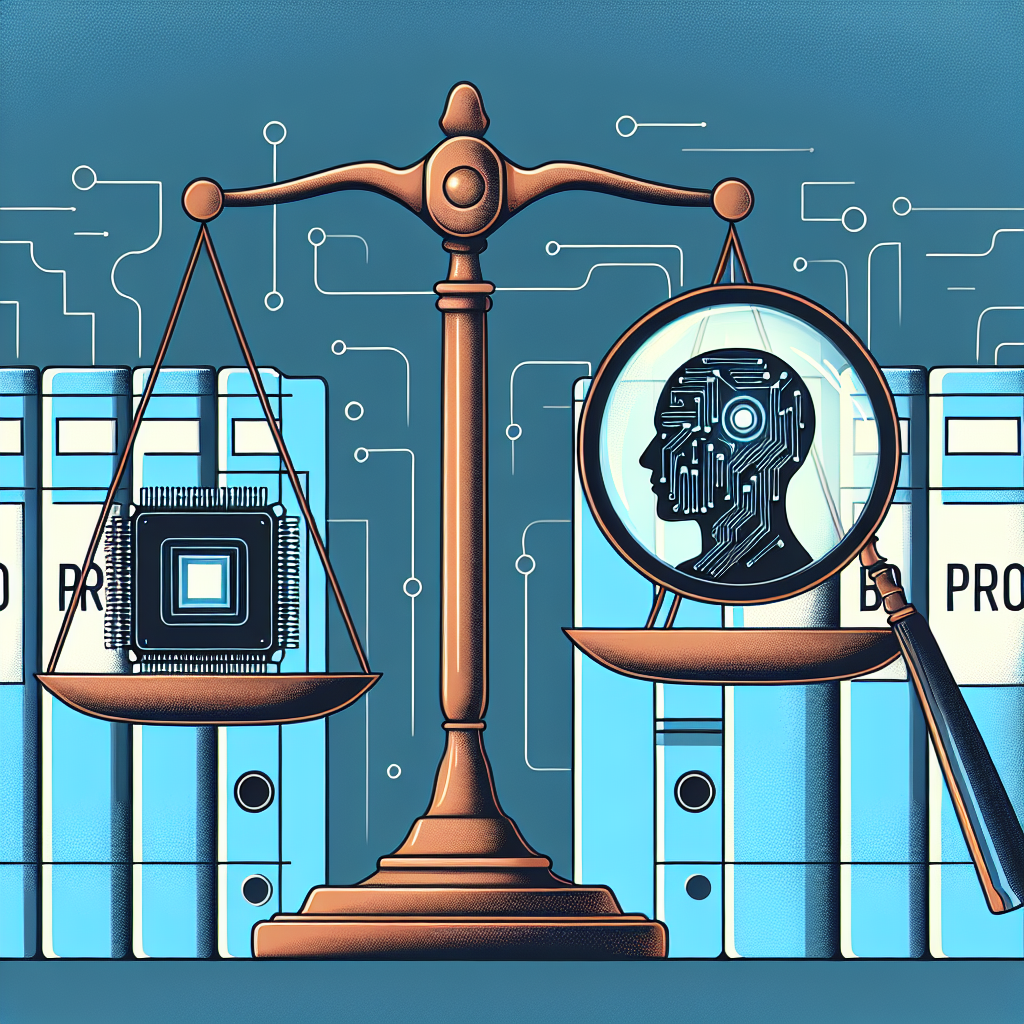
Artificial Intelligence (AI) has been revolutionizing the way legal research is conducted, particularly in the realm of pro bono cases. Pro bono cases, which are legal services provided for free to individuals who cannot afford legal representation, are often complex and time-consuming for lawyers to research and prepare for. However, AI technology is now being used to streamline the legal research process, making it more efficient and cost-effective for lawyers working on pro bono cases.
One of the key ways in which AI is improving legal research for pro bono cases is through the use of natural language processing (NLP) technology. NLP allows AI systems to understand and interpret human language, enabling them to analyze and extract relevant information from vast amounts of legal documents and data. This technology can help lawyers quickly identify relevant case law, statutes, and other legal resources that are essential for building a strong legal argument in a pro bono case.
Another way in which AI is enhancing legal research for pro bono cases is through the use of machine learning algorithms. These algorithms can analyze patterns in legal data to predict outcomes in similar cases, helping lawyers make more informed decisions and strategies for their pro bono clients. By leveraging machine learning technology, lawyers can save time and resources by focusing on the most relevant legal information for their cases.
Furthermore, AI-powered legal research tools can help lawyers stay up-to-date on the latest developments in the law. These tools can monitor changes in legislation, regulations, and case law, alerting lawyers to any updates that may impact their pro bono cases. By providing real-time information and analysis, AI technology enables lawyers to provide the most accurate and effective legal representation to their pro bono clients.
In addition, AI can assist lawyers in drafting legal documents and briefs for pro bono cases. By analyzing past legal documents and identifying common patterns and language, AI systems can generate drafts of legal documents that lawyers can then customize and refine. This streamlines the document drafting process, allowing lawyers to focus on the substantive legal issues in their pro bono cases.
Overall, AI is transforming the legal research process for pro bono cases, making it more efficient, accurate, and accessible for lawyers and their clients. By harnessing the power of AI technology, lawyers can provide high-quality legal representation to individuals in need, ultimately advancing access to justice for all.
FAQs:
Q: How does AI technology improve legal research for pro bono cases?
A: AI technology enhances legal research for pro bono cases by leveraging NLP and machine learning algorithms to analyze and extract relevant legal information from vast amounts of data. This technology helps lawyers quickly identify relevant case law, statutes, and other legal resources, saving time and resources in the research process.
Q: Can AI predict outcomes in pro bono cases?
A: AI-powered machine learning algorithms can analyze patterns in legal data to predict outcomes in similar cases. By leveraging this technology, lawyers can make more informed decisions and strategies for their pro bono clients, ultimately improving the quality of legal representation.
Q: How can AI assist lawyers in drafting legal documents for pro bono cases?
A: AI technology can analyze past legal documents and identify common patterns and language to generate drafts of legal documents. Lawyers can then customize and refine these drafts, streamlining the document drafting process and allowing them to focus on the substantive legal issues in their pro bono cases.
Q: How does AI help lawyers stay up-to-date on the latest developments in the law?
A: AI-powered legal research tools can monitor changes in legislation, regulations, and case law, alerting lawyers to any updates that may impact their pro bono cases. By providing real-time information and analysis, AI technology enables lawyers to provide the most accurate and effective legal representation to their clients.