
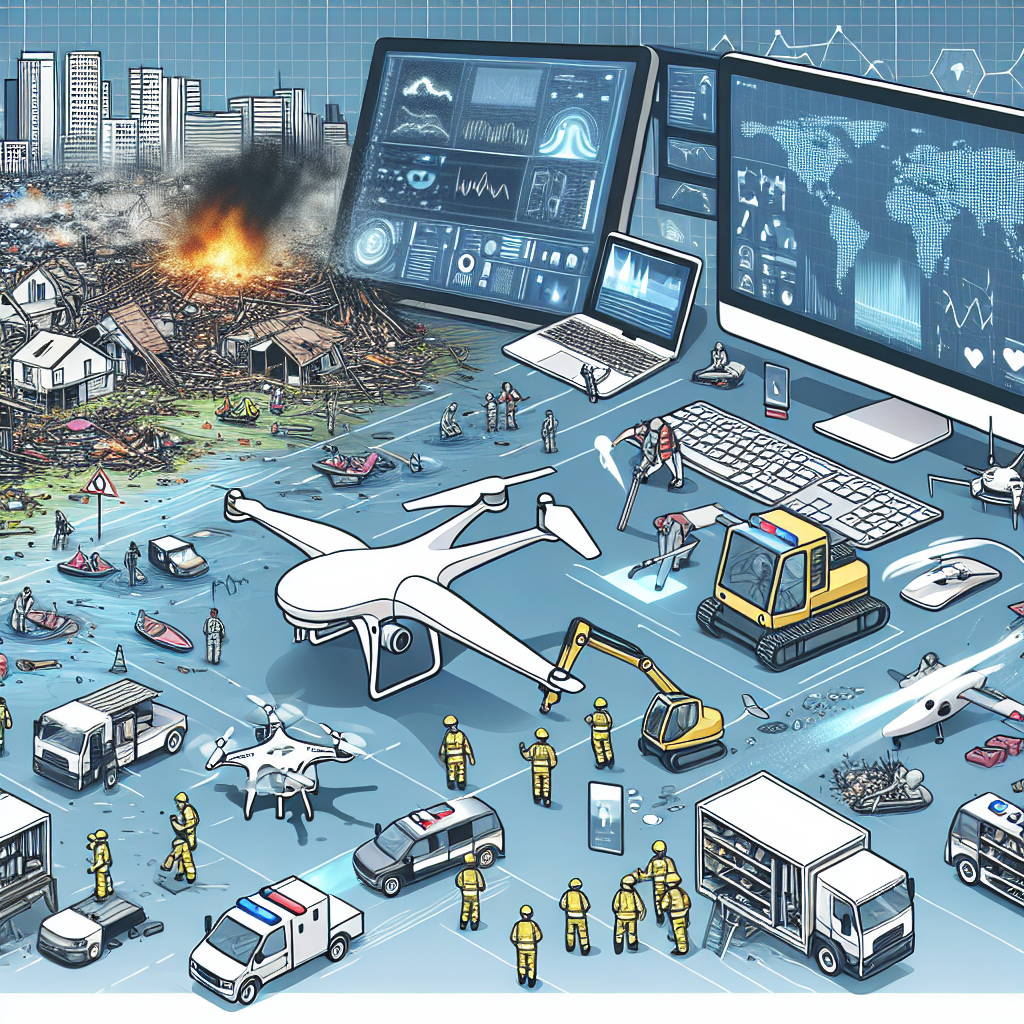
The Role of AI Tools in Disaster Relief
In recent years, the use of artificial intelligence (AI) tools in disaster relief efforts has become increasingly prevalent. These technologies have the potential to revolutionize the way in which humanitarian organizations respond to natural disasters, such as hurricanes, earthquakes, and wildfires. By leveraging the power of AI, these organizations can more effectively allocate resources, assess damage, and coordinate rescue efforts. In this article, we will explore the various ways in which AI tools are being used in disaster relief and the impact they are having on the field.
AI for Predictive Analysis
One of the key ways in which AI tools are being used in disaster relief is through predictive analysis. By analyzing historical data and real-time information, AI algorithms can help predict when and where a disaster is likely to occur. This can be particularly useful in areas that are prone to natural disasters, such as coastal regions that are at risk of hurricanes or earthquakes. By predicting these events in advance, organizations can better prepare for them and mobilize resources more effectively.
AI for Damage Assessment
Another important application of AI in disaster relief is in damage assessment. After a disaster has occurred, it is crucial to quickly assess the extent of the damage in order to prioritize rescue efforts and allocate resources. AI algorithms can be used to analyze satellite imagery, drone footage, and other data sources to rapidly assess the damage caused by a disaster. This can help organizations identify areas that are in need of urgent assistance and plan their response accordingly.
AI for Resource Allocation
AI tools can also be used to optimize the allocation of resources during a disaster relief operation. By analyzing data on population density, infrastructure, and other factors, AI algorithms can help organizations determine where resources, such as food, water, and medical supplies, are most needed. This can help ensure that resources are distributed in a fair and efficient manner, maximizing the impact of relief efforts.
AI for Coordination
Coordination is key in disaster relief operations, as multiple organizations and agencies often need to work together to provide assistance to those in need. AI tools can help facilitate this coordination by providing real-time data and analytics that can be shared among different organizations. This can help ensure that all parties are working towards a common goal and that resources are being used effectively.
FAQs
1. How are AI tools used in disaster prediction?
AI tools are used in disaster prediction by analyzing historical data and real-time information to identify patterns and trends that can help predict when and where a disaster is likely to occur. These tools can help organizations better prepare for disasters and mobilize resources more effectively.
2. How are AI tools used in damage assessment?
AI tools are used in damage assessment by analyzing satellite imagery, drone footage, and other data sources to rapidly assess the extent of the damage caused by a disaster. This information helps organizations prioritize rescue efforts and allocate resources more effectively.
3. How are AI tools used in resource allocation?
AI tools are used in resource allocation by analyzing data on population density, infrastructure, and other factors to determine where resources are most needed during a disaster relief operation. This helps ensure that resources are distributed in a fair and efficient manner, maximizing the impact of relief efforts.
4. How are AI tools used in coordination?
AI tools are used in coordination by providing real-time data and analytics that can be shared among different organizations and agencies involved in a disaster relief operation. This helps ensure that all parties are working towards a common goal and that resources are being used effectively.
In conclusion, the use of AI tools in disaster relief has the potential to greatly improve the effectiveness and efficiency of humanitarian efforts. By leveraging the power of AI for predictive analysis, damage assessment, resource allocation, and coordination, organizations can better prepare for and respond to natural disasters. As these technologies continue to evolve, we can expect to see even greater advancements in the field of disaster relief, ultimately leading to more lives saved and communities rebuilt.