
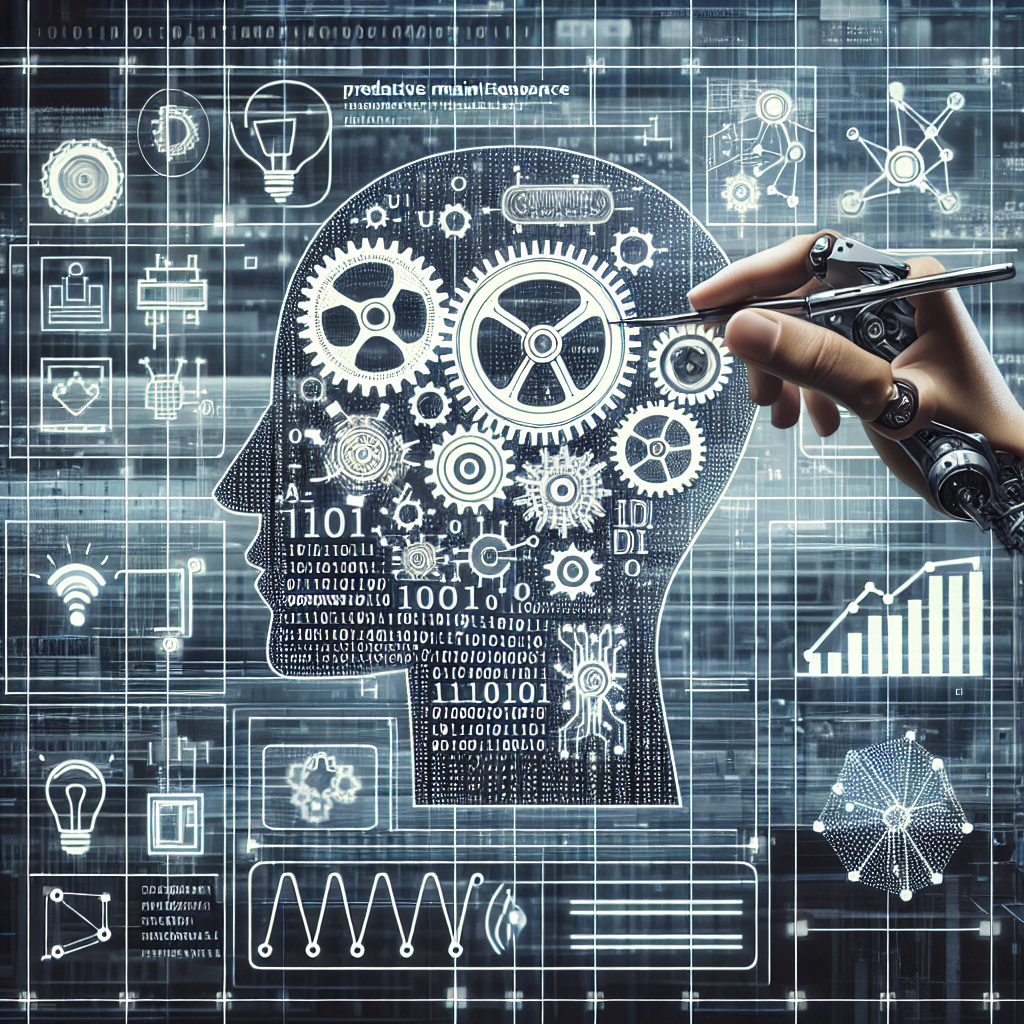
Predictive maintenance is a critical aspect of asset management that aims to anticipate and prevent equipment failures before they occur, ultimately leading to cost savings and increased operational efficiency. In recent years, artificial intelligence (AI) has emerged as a powerful tool in predictive maintenance, enabling organizations to leverage data analytics and machine learning algorithms to predict equipment failures with high accuracy.
AI development for predictive maintenance involves the use of various technologies such as machine learning, deep learning, and natural language processing to analyze data from sensors, equipment logs, and maintenance records. By processing large volumes of data in real-time, AI algorithms can detect patterns and anomalies that indicate potential equipment failures, allowing maintenance teams to take proactive measures to prevent downtime and costly repairs.
One of the key advantages of using AI for predictive maintenance is its ability to identify complex relationships and patterns in data that may not be apparent to human operators. By continuously monitoring equipment performance and predicting potential failures, AI systems can help organizations optimize maintenance schedules, reduce downtime, and extend the lifespan of assets.
There are several ways in which AI can be applied to predictive maintenance, including:
1. Condition-based monitoring: AI algorithms can analyze real-time sensor data to monitor the condition of equipment and detect early signs of failure. By detecting anomalies in equipment performance, AI systems can trigger maintenance alerts and provide recommendations for preventive action.
2. Predictive analytics: AI models can analyze historical data from equipment logs, maintenance records, and other sources to predict when equipment failures are likely to occur. By identifying patterns and trends in data, AI systems can forecast maintenance needs and help organizations plan maintenance activities more effectively.
3. Prognostics: AI algorithms can go beyond predicting when equipment failures will occur and also provide insights into why failures are happening. By analyzing root causes of equipment failures, AI systems can help organizations address underlying issues and prevent future incidents.
4. Prescriptive maintenance: AI systems can not only predict when equipment failures will occur but also recommend specific actions to prevent them. By leveraging machine learning algorithms, AI systems can optimize maintenance schedules, prioritize maintenance tasks, and allocate resources more efficiently.
Overall, AI development for predictive maintenance offers significant benefits for organizations in terms of cost savings, operational efficiency, and asset reliability. By harnessing the power of AI to analyze data and predict equipment failures, organizations can proactively manage their assets and minimize downtime, ultimately improving their bottom line.
FAQs:
Q: How accurate are AI algorithms in predicting equipment failures?
A: AI algorithms can achieve high levels of accuracy in predicting equipment failures, especially when trained on large volumes of data and optimized for specific use cases. By continuously learning from new data and adapting to changing conditions, AI systems can improve their predictive capabilities over time.
Q: What types of data are used in AI algorithms for predictive maintenance?
A: AI algorithms for predictive maintenance can analyze a wide range of data sources, including sensor data, equipment logs, maintenance records, and historical performance data. By integrating and processing diverse data sources, AI systems can generate more accurate predictions and insights.
Q: How can organizations implement AI for predictive maintenance?
A: Organizations can implement AI for predictive maintenance by collecting and integrating relevant data sources, developing machine learning models, and deploying AI systems to monitor equipment performance and predict failures. It is essential to work with data scientists and domain experts to tailor AI solutions to specific maintenance needs and optimize their performance.
Q: What are the benefits of using AI for predictive maintenance?
A: The benefits of using AI for predictive maintenance include reduced downtime, cost savings, improved asset reliability, and increased operational efficiency. By predicting equipment failures in advance and taking proactive maintenance actions, organizations can optimize their maintenance strategies and extend the lifespan of their assets.