
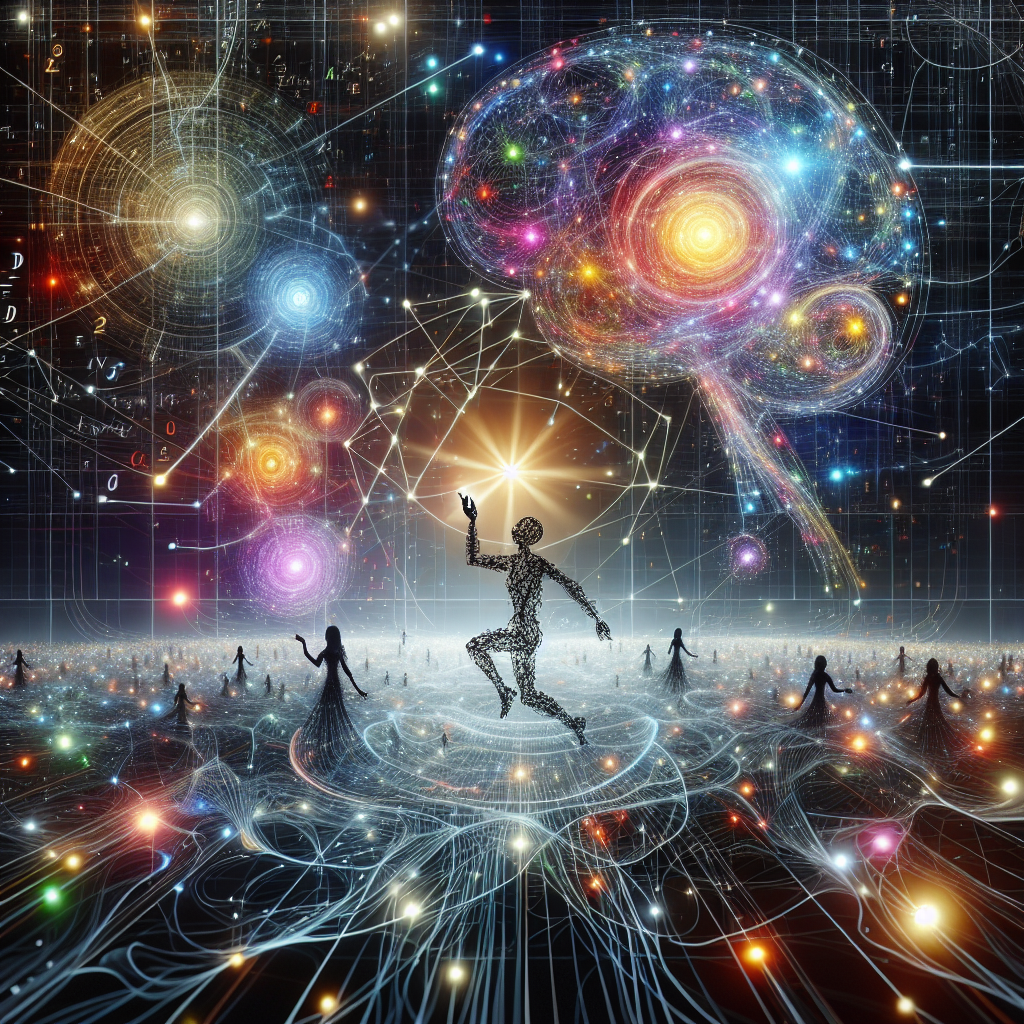
In recent years, artificial intelligence (AI) has been revolutionizing various industries, from healthcare to finance to marketing. One area that is particularly being transformed by AI is creativity in the digital age. AI is changing the way we create, consume, and interact with content, opening up new possibilities and challenges for artists, designers, and other creative professionals.
One of the key ways that AI is transforming creativity is through the use of machine learning algorithms. These algorithms analyze vast amounts of data to identify patterns and trends, which can then be used to generate new and innovative ideas. For example, AI-powered tools can analyze thousands of images to create a unique visual style, or generate music based on the patterns found in a large dataset of songs.
AI is also enabling new forms of collaboration between humans and machines. Through the use of AI-powered tools, artists and designers can work alongside intelligent systems to explore new ideas, experiment with different styles, and push the boundaries of creativity. This collaborative approach allows for a more efficient and effective creative process, as AI can help to generate ideas and provide feedback in real-time.
Furthermore, AI is democratizing creativity by making it more accessible to a wider range of people. With the rise of AI-powered tools and platforms, anyone can now create and share their own content, regardless of their background or expertise. This has the potential to revolutionize the creative industry, as it allows for a more diverse and inclusive range of voices and perspectives to be heard.
However, the AI revolution also presents a number of challenges for creativity in the digital age. One of the key concerns is the potential for AI to replace human creativity altogether. As AI becomes more advanced and capable of generating increasingly complex and sophisticated content, there is a fear that human creativity will become obsolete. This raises questions about the role of artists and designers in a world where AI can create art and music just as well as humans.
Another challenge is the ethical implications of AI in creativity. As AI becomes more integrated into the creative process, questions arise about ownership, copyright, and attribution. Who owns the rights to content created by AI? How do we ensure that AI-generated content is original and does not infringe on existing works? These are complex issues that will need to be addressed as AI continues to revolutionize creativity in the digital age.
Despite these challenges, the AI revolution holds immense potential for transforming creativity in the digital age. By harnessing the power of AI, artists and designers can explore new ideas, push the boundaries of their craft, and reach new audiences in ways that were previously unimaginable. As AI continues to evolve and become more sophisticated, we can expect to see even more exciting and innovative developments in the world of creativity.
In conclusion, the AI revolution is transforming creativity in the digital age in profound and exciting ways. From machine learning algorithms to collaborative tools to democratizing platforms, AI is reshaping the creative process and opening up new possibilities for artists and designers. While there are challenges and ethical considerations to navigate, the potential for AI to revolutionize creativity is immense. As we continue to explore the possibilities of AI in the creative industry, we can expect to see a new era of innovation and inspiration unfold before our eyes.
FAQs:
Q: Will AI replace human creativity?
A: While AI has the potential to generate creative content, it is unlikely to replace human creativity altogether. Human creativity is a complex and nuanced process that involves emotions, intuition, and personal experiences that AI cannot replicate. Instead, AI is more likely to augment and enhance human creativity, opening up new possibilities for artists and designers.
Q: How can AI help artists and designers?
A: AI can help artists and designers by providing new tools and technologies to explore new ideas, experiment with different styles, and collaborate with intelligent systems. AI-powered tools can help to generate ideas, provide feedback, and streamline the creative process, making it more efficient and effective.
Q: What are the ethical implications of AI in creativity?
A: The ethical implications of AI in creativity include questions about ownership, copyright, and attribution. As AI becomes more integrated into the creative process, issues may arise about who owns the rights to content created by AI, how to ensure that AI-generated content is original, and how to prevent infringement on existing works. These are complex issues that will need to be addressed as AI continues to revolutionize creativity in the digital age.