
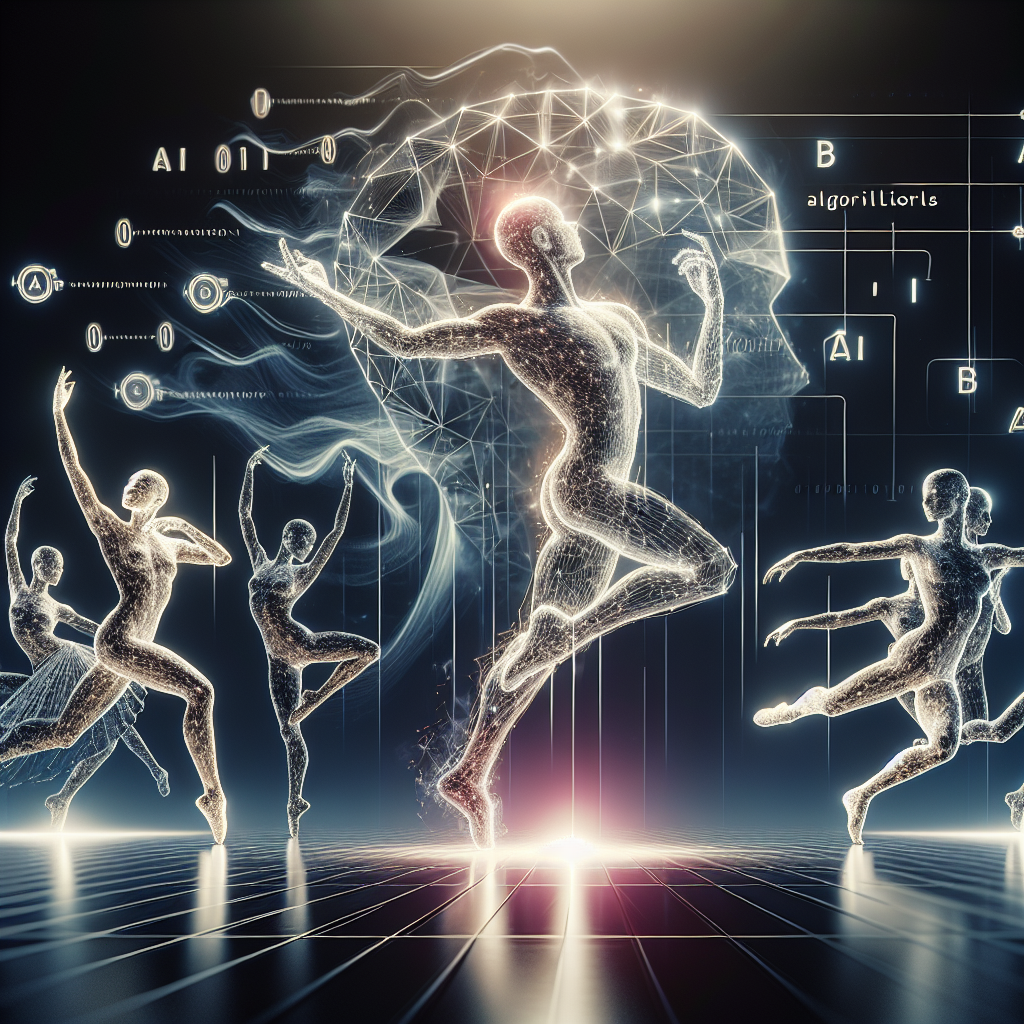
Artificial intelligence (AI) has been making waves in various industries, from healthcare to finance to entertainment. One area where AI is starting to have a significant impact is in the world of dance performances and choreography. In recent years, choreographers and dance companies have been experimenting with AI technology to create innovative and dynamic performances that push the boundaries of traditional dance.
AI is being used in a variety of ways in the world of dance. One of the most common uses of AI in dance is in the creation of choreography. Choreographers can use AI algorithms to generate movement sequences and patterns that they may not have thought of on their own. This can lead to more creative and unique choreography that pushes the boundaries of what is possible in dance.
AI is also being used in the rehearsal process. Dancers can use AI-powered tools to track their movements and receive feedback on their performance in real-time. This can help dancers improve their technique and precision, leading to more polished and professional performances.
Another way AI is being used in dance is in the creation of interactive performances. Choreographers can use AI algorithms to create performances that respond to the movements of the audience, creating a unique and immersive experience for viewers.
Overall, the impact of AI on dance performances and choreography is still in its early stages, but the possibilities are endless. As AI technology continues to advance, we can expect to see even more innovative and dynamic performances that push the boundaries of traditional dance.
FAQs:
Q: How is AI being used in choreography?
A: AI is being used in choreography to generate movement sequences and patterns that choreographers may not have thought of on their own. This can lead to more creative and unique choreography that pushes the boundaries of what is possible in dance.
Q: How is AI being used in the rehearsal process?
A: Dancers can use AI-powered tools to track their movements and receive feedback on their performance in real-time. This can help dancers improve their technique and precision, leading to more polished and professional performances.
Q: How is AI being used in interactive performances?
A: Choreographers can use AI algorithms to create performances that respond to the movements of the audience, creating a unique and immersive experience for viewers.
Q: What are some examples of AI-powered dance performances?
A: One example of an AI-powered dance performance is “A.I.M.,” a collaboration between choreographer Wayne McGregor and Google’s Arts and Culture Lab. The performance featured dancers interacting with AI-powered visuals in real-time, creating a dynamic and immersive experience for viewers.