
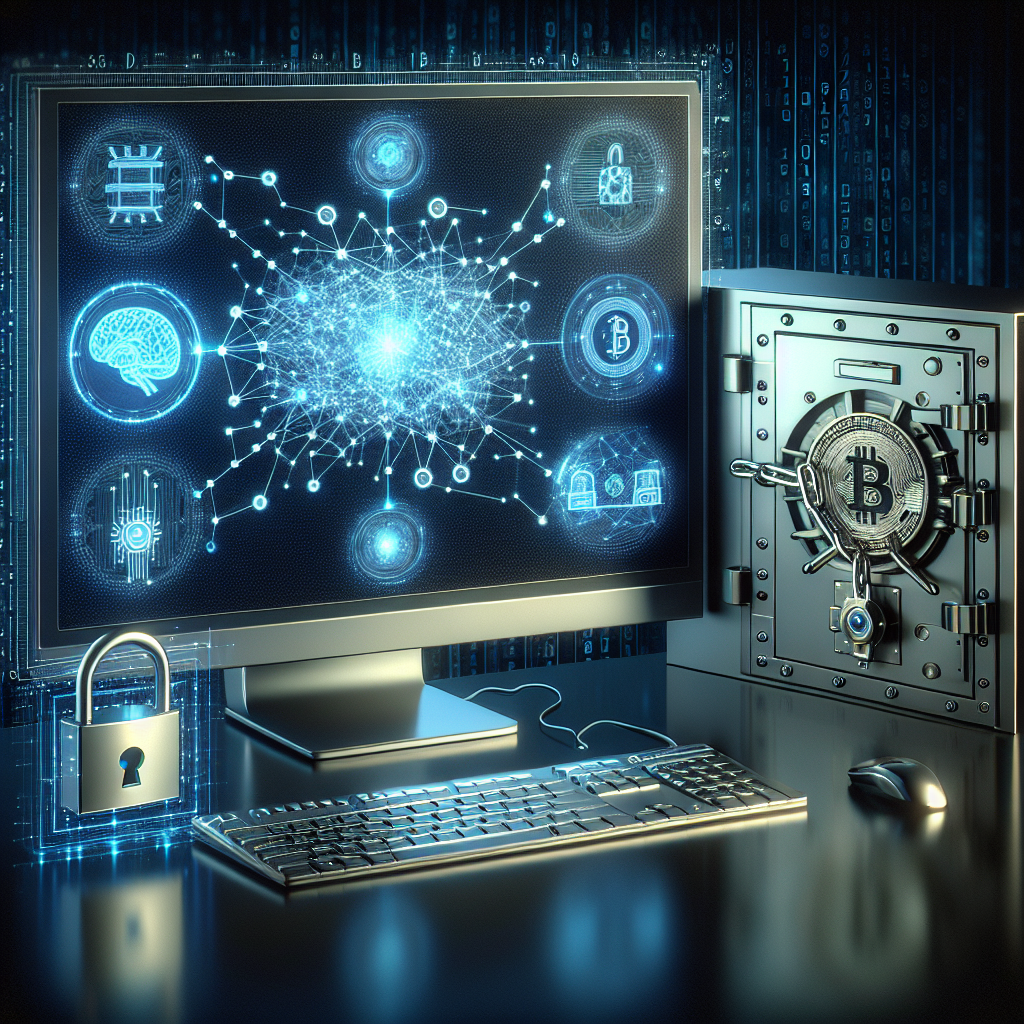
In recent years, the banking industry has seen a significant shift towards the use of artificial intelligence (AI) and blockchain technology to revolutionize security measures. With increasing cyber threats and data breaches, banks are turning to these advanced technologies to enhance security, protect customer data, and prevent fraudulent activities. This article will explore how AI and blockchain are transforming banking security and the benefits they bring to the industry.
Artificial intelligence, often referred to as AI, is the simulation of human intelligence processes by machines, particularly computer systems. In the banking sector, AI is being used to analyze vast amounts of data in real time to detect unusual patterns and identify potential security threats. By using machine learning algorithms, AI can learn from past incidents and continuously improve its ability to detect and prevent fraudulent activities.
One of the key advantages of AI in banking security is its ability to detect anomalies and suspicious activities that may go unnoticed by human analysts. For example, AI can analyze transaction data to identify unusual spending patterns or detect unauthorized access to accounts. This proactive approach to security helps banks to prevent fraud before it occurs, saving both financial losses and reputational damage.
In addition to fraud detection, AI is also being used to enhance customer authentication processes. Traditional methods of authentication, such as passwords and security questions, are increasingly being replaced by biometric authentication methods like facial recognition and fingerprint scanning. These advanced authentication methods not only offer a higher level of security but also provide a more seamless and convenient user experience for customers.
Blockchain technology, on the other hand, is a decentralized and distributed ledger that securely records transactions across multiple computers. In the banking industry, blockchain is being used to create a tamper-proof record of transactions, making it virtually impossible for hackers to alter or manipulate data. By using blockchain technology, banks can ensure the integrity and security of their transaction records, reducing the risk of fraud and improving transparency.
One of the key benefits of blockchain technology in banking security is its ability to create a secure and transparent audit trail of transactions. Every transaction recorded on a blockchain is time-stamped and linked to previous transactions, creating a chronological chain of records that can be easily verified by all parties involved. This level of transparency not only helps to prevent fraud but also improves trust and accountability within the banking industry.
Furthermore, blockchain technology can also be used to streamline and automate various banking processes, such as cross-border payments and trade finance. By using smart contracts, which are self-executing contracts with the terms of the agreement directly written into code, banks can reduce the need for manual intervention and eliminate the risk of human error. This not only improves efficiency but also reduces the likelihood of fraud and disputes.
Overall, the combination of AI and blockchain technology is transforming the banking industry by enhancing security measures, improving efficiency, and providing a better customer experience. By leveraging these advanced technologies, banks can stay ahead of cyber threats, protect customer data, and build trust with their clients. As the adoption of AI and blockchain continues to grow, we can expect to see even more innovative solutions to enhance banking security and revolutionize the industry.
FAQs:
Q: How is AI used in banking security?
A: AI is used in banking security to analyze data, detect anomalies, and identify potential security threats. It can also be used for customer authentication processes, such as biometric authentication methods.
Q: What is blockchain technology and how is it used in banking security?
A: Blockchain technology is a decentralized and distributed ledger that securely records transactions across multiple computers. In banking security, blockchain is used to create a tamper-proof record of transactions, improving transparency and reducing the risk of fraud.
Q: What are the benefits of AI and blockchain in banking security?
A: The benefits of AI and blockchain in banking security include improved fraud detection, enhanced customer authentication processes, secure and transparent audit trails of transactions, streamlined banking processes, and increased efficiency.
Q: How can banks leverage AI and blockchain technology to enhance security measures?
A: Banks can leverage AI and blockchain technology to stay ahead of cyber threats, protect customer data, and build trust with their clients. By using these advanced technologies, banks can improve security measures, prevent fraud, and provide a better customer experience.