
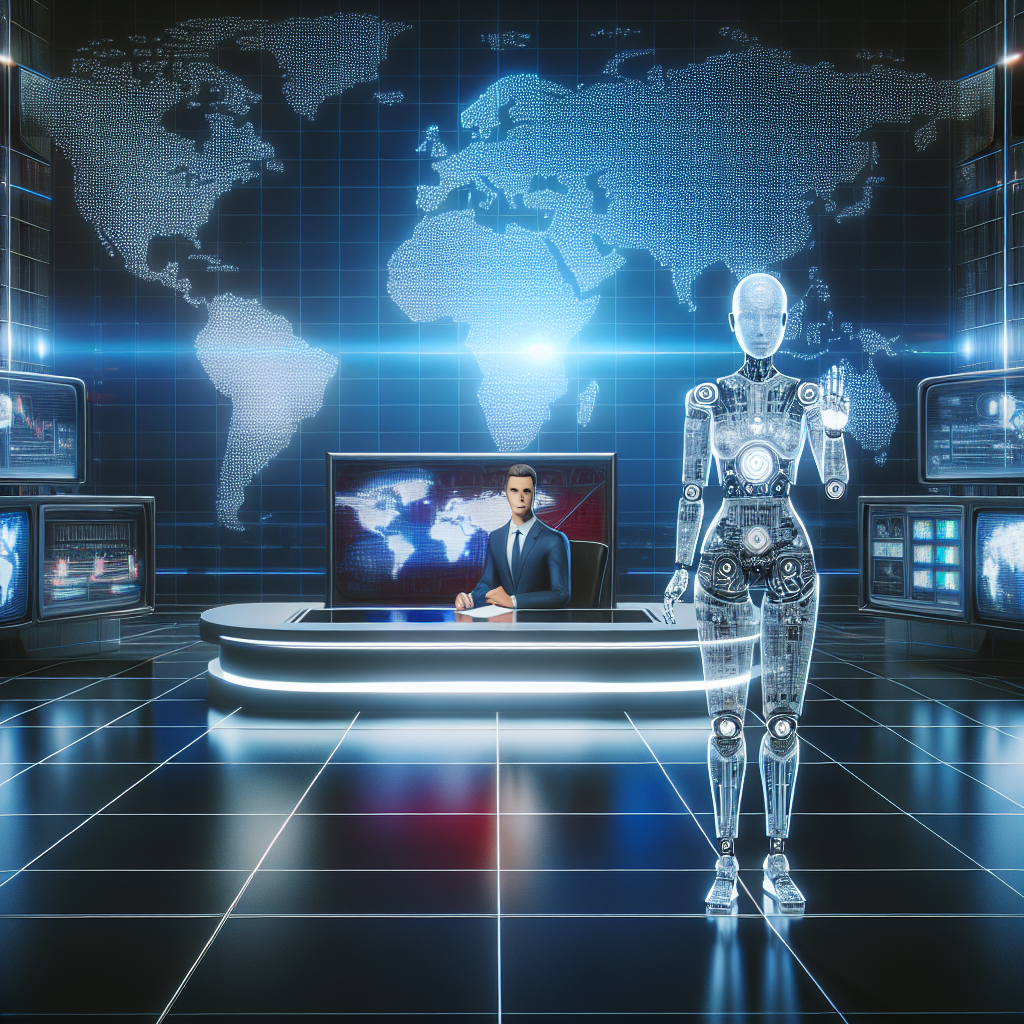
In recent years, artificial intelligence (AI) has made significant advancements in various industries, including journalism. One area where AI has been making waves is in the field of television news broadcasting. AI news anchors are becoming increasingly common, with major news networks around the world using AI technology to deliver the news to viewers.
AI news anchors are virtual, computer-generated news presenters that use AI technology to read the news, deliver reports, and even conduct interviews. These AI anchors are designed to look and sound like real human news anchors, with lifelike facial expressions, gestures, and voices. They can be programmed to deliver news in multiple languages and can work 24/7 without needing breaks or rest.
The development of AI news anchors has been driven by the increasing demand for news content in the digital age. With the rise of online news platforms and social media, news organizations are under pressure to produce more news content at a faster pace than ever before. AI news anchors offer a solution to this problem by providing a cost-effective and efficient way to deliver news to viewers.
One of the key advantages of AI news anchors is their ability to work around the clock. Unlike human news anchors who need breaks and rest, AI news anchors can work continuously without getting tired. This means that news organizations can provide up-to-date news coverage to viewers at all hours of the day and night, without the need for a large team of human presenters.
AI news anchors also offer a level of consistency that is difficult to achieve with human presenters. AI anchors can deliver news reports in a consistent tone and style, ensuring that viewers receive a uniform news experience regardless of the time of day or night. This consistency can help to build trust and credibility with viewers, as they know what to expect from the AI news anchor.
Another advantage of AI news anchors is their ability to deliver news in multiple languages. With AI technology, news organizations can easily translate news reports into different languages and have them delivered by AI anchors in a natural-sounding voice. This can help news organizations reach a wider audience and cater to viewers who speak different languages.
AI news anchors are also highly customizable, allowing news organizations to tailor their appearance and style to suit their brand. News organizations can choose the gender, age, and appearance of their AI news anchor, as well as customize their voice and mannerisms to reflect the tone and style of their news broadcasts. This level of customization can help news organizations create a unique and memorable news presentation that sets them apart from their competitors.
Despite their many advantages, AI news anchors also raise concerns about the future of television journalism. Some critics argue that AI news anchors lack the human touch and emotional connection that human presenters bring to news broadcasts. They argue that AI anchors may struggle to convey empathy, compassion, and emotion in their delivery of news reports, which are important elements of journalism.
There are also concerns about the potential impact of AI news anchors on the job market for human news presenters. As AI technology becomes more advanced and capable of delivering news reports with greater accuracy and efficiency, there is a fear that human news presenters may be replaced by AI anchors. This could lead to job losses in the journalism industry and a decrease in the diversity of voices and perspectives in news broadcasting.
However, proponents of AI news anchors argue that they are not intended to replace human presenters, but rather to complement them. AI news anchors can handle routine news reports and updates, freeing up human presenters to focus on more in-depth reporting, analysis, and interviews. This division of labor can help news organizations produce more comprehensive and high-quality news content for viewers.
In addition, AI news anchors can help news organizations improve the speed and accuracy of their news reporting. AI technology can process vast amounts of information and data in a short amount of time, allowing news organizations to deliver breaking news updates to viewers quickly and efficiently. This can help news organizations stay competitive in the fast-paced world of journalism and provide viewers with up-to-date information on the latest events and developments.
Overall, AI news anchors represent the future of television journalism, offering news organizations a cost-effective and efficient way to deliver news to viewers. While there are concerns about the impact of AI anchors on the journalism industry, their many advantages make them an attractive option for news organizations looking to stay ahead in the digital age.
FAQs about AI News Anchors:
1. How are AI news anchors created?
AI news anchors are created using advanced AI technology, including natural language processing, machine learning, and computer vision. News organizations work with AI developers to design and program the AI news anchor, including its appearance, voice, and mannerisms.
2. Can AI news anchors conduct interviews with guests?
Yes, AI news anchors can be programmed to conduct interviews with guests, using pre-scripted questions and responses. While AI anchors may not have the ability to engage in spontaneous conversations like human presenters, they can still conduct interviews in a structured and professional manner.
3. Are AI news anchors able to report on live events?
AI news anchors can report on live events by reading scripts and updates in real-time. While they may not have the ability to react to breaking news events or provide live commentary like human presenters, AI anchors can deliver live updates on events as they unfold.
4. How do viewers respond to AI news anchors?
The response to AI news anchors from viewers has been mixed. Some viewers appreciate the efficiency and consistency of AI news anchors, while others miss the human touch and emotional connection that human presenters bring to news broadcasts. Ultimately, the success of AI news anchors will depend on how well news organizations integrate them into their news broadcasts and how viewers respond to them.
5. Will AI news anchors replace human news presenters?
While AI news anchors may take on some of the routine tasks of news reporting, such as delivering news updates and reports, they are not intended to replace human news presenters. Human presenters bring a level of empathy, emotion, and analysis to news broadcasts that AI anchors may struggle to replicate. Instead, AI news anchors are designed to complement human presenters and help news organizations deliver more comprehensive and high-quality news content to viewers.