
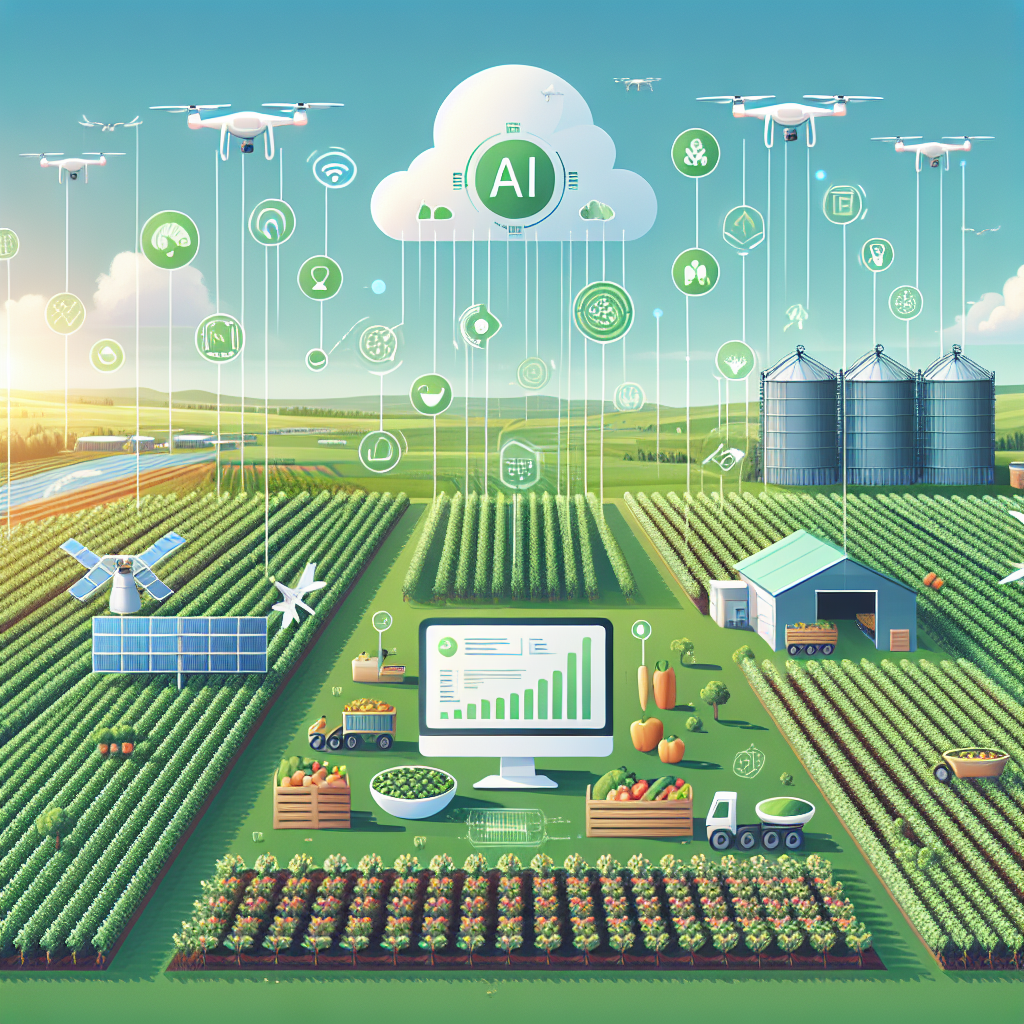
In recent years, the agricultural sector has seen a significant shift towards the use of AI-driven solutions to improve productivity, efficiency, and sustainability. With the global population expected to reach over 9 billion by 2050, the need for innovative technologies to ensure food security has become more pressing than ever. AI-driven solutions offer immense potential to revolutionize the way we grow, distribute, and consume food, ultimately helping to address the challenges of feeding a growing population while minimizing environmental impact.
One of the key areas where AI is making an impact is in precision agriculture. By utilizing advanced sensors, drones, and machine learning algorithms, farmers can collect and analyze vast amounts of data on soil conditions, crop health, and weather patterns to optimize their farming practices. This allows for more targeted use of resources such as water, fertilizers, and pesticides, leading to higher yields and reduced environmental impact. For example, AI-powered drones can quickly identify areas of a field that require additional irrigation or treatment, allowing farmers to respond promptly and effectively.
AI is also being used to improve crop breeding and genetic engineering processes, accelerating the development of new varieties that are more resilient to pests, diseases, and climate change. By analyzing genetic data and predicting the performance of different traits, AI algorithms can help breeders identify promising candidates for further testing, reducing the time and resources required to develop new crop varieties. This has the potential to significantly enhance the resilience of our food supply in the face of changing environmental conditions.
In addition to crop production, AI is also being applied to improve the efficiency of food distribution and supply chains. By analyzing data on consumer preferences, market trends, and logistical constraints, AI algorithms can help optimize the routing of food products from farm to table, reducing waste and ensuring that fresh produce reaches consumers in a timely manner. This is particularly important in the context of global food security, where improving the efficiency of food distribution can help reduce food losses and ensure that nutritious food is available to all.
Furthermore, AI-driven solutions are also being used to monitor and manage natural resources, such as water and land, in a more sustainable manner. By analyzing satellite imagery, weather data, and historical trends, AI algorithms can help farmers make informed decisions about when and where to plant crops, how to manage water resources, and how to minimize the impact of agriculture on biodiversity. This can help reduce the environmental footprint of agricultural activities and ensure the long-term sustainability of food production.
Overall, AI-driven solutions have the potential to transform the agricultural sector and contribute to global food security in a meaningful way. By harnessing the power of data and machine learning, farmers can make more informed decisions, optimize their operations, and adapt to changing environmental conditions. This can help ensure that we are able to feed a growing population while minimizing the impact on the planet.
FAQs:
Q: What are some examples of AI-driven solutions in agriculture?
A: Some examples of AI-driven solutions in agriculture include precision agriculture technologies, crop breeding and genetic engineering tools, and food distribution optimization algorithms. These technologies are designed to improve productivity, efficiency, and sustainability in the agricultural sector.
Q: How can AI help improve food security?
A: AI can help improve food security by optimizing farming practices, accelerating the development of new crop varieties, and enhancing the efficiency of food distribution and supply chains. By leveraging data and machine learning algorithms, AI-driven solutions can help farmers produce more food with fewer resources, reduce food losses, and ensure that nutritious food reaches consumers in a timely manner.
Q: What are the potential challenges of implementing AI-driven solutions in agriculture?
A: Some potential challenges of implementing AI-driven solutions in agriculture include the high upfront costs of technology adoption, the need for specialized training and expertise, and concerns about data privacy and security. Additionally, there may be resistance from traditional farmers who are accustomed to conventional farming practices.
Q: How can small-scale farmers benefit from AI-driven solutions?
A: Small-scale farmers can benefit from AI-driven solutions by gaining access to advanced technologies that can help them optimize their farming practices, improve crop yields, and reduce the environmental impact of their operations. By leveraging AI tools, small-scale farmers can level the playing field with larger commercial farms and enhance their competitiveness in the market.
Q: What is the role of governments and policymakers in promoting the adoption of AI-driven solutions in agriculture?
A: Governments and policymakers play a crucial role in promoting the adoption of AI-driven solutions in agriculture by providing financial incentives, technical support, and regulatory frameworks that encourage innovation and investment in the sector. By fostering a supportive environment for technology adoption, governments can help accelerate the transition towards a more sustainable and resilient food system.