
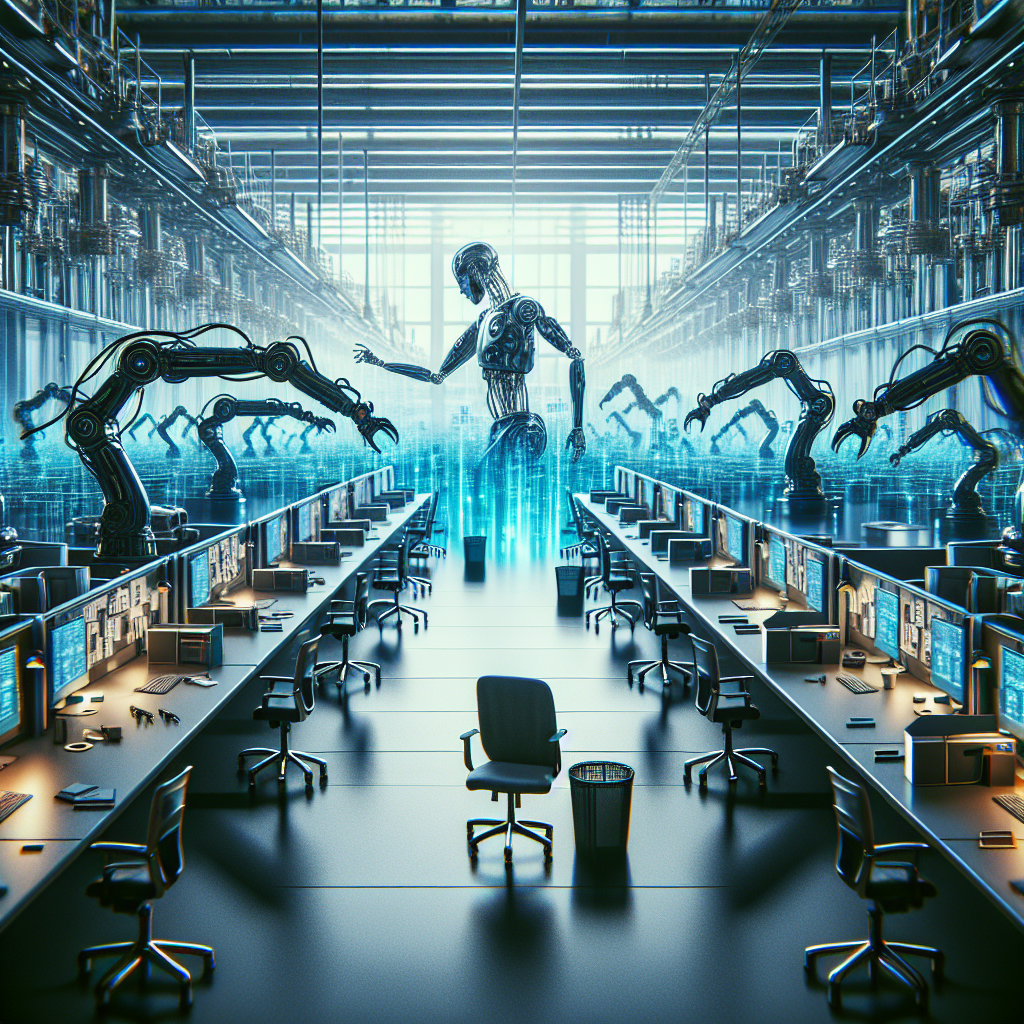
Job Displacement and Unemployment: The Risks of AI Automation
Introduction
In recent years, advancements in artificial intelligence (AI) technology have revolutionized many industries, leading to increased efficiency and productivity. However, this rapid progress has also raised concerns about job displacement and unemployment as more tasks become automated. While AI automation has the potential to improve our lives in many ways, it also poses significant risks to the workforce. In this article, we will explore the impact of AI automation on job displacement and unemployment, as well as potential solutions to mitigate these risks.
The Impact of AI Automation on Job Displacement
AI automation has already begun to reshape the workforce, with many routine and repetitive tasks being automated by machines. This trend is expected to accelerate in the coming years, as AI technology becomes more advanced and capable of performing a wider range of tasks. While automation can lead to increased efficiency and lower costs for businesses, it also has the potential to displace millions of workers who rely on these jobs for their livelihood.
One of the main risks of AI automation is that it can lead to the displacement of workers in industries that rely heavily on manual labor or routine tasks. For example, jobs in manufacturing, retail, and customer service are at high risk of being automated, as AI technology becomes more proficient at performing these tasks. This can result in mass layoffs and job losses, leaving many workers struggling to find new employment opportunities.
Another risk of AI automation is that it can exacerbate income inequality, as the benefits of automation are often concentrated in the hands of a few wealthy individuals or corporations. As automation reduces the need for human labor, workers may find themselves competing for a limited number of jobs, leading to lower wages and fewer opportunities for career advancement. This can create a cycle of poverty and economic instability, particularly for low-skilled workers who may lack the education or training to adapt to the changing job market.
The Impact of AI Automation on Unemployment
In addition to job displacement, AI automation also poses risks to overall unemployment rates. As more tasks become automated, the demand for human labor may decrease, leading to higher levels of unemployment in certain industries. This can have far-reaching consequences for the economy, as unemployed workers may struggle to find new job opportunities and may require government assistance to make ends meet.
One of the key challenges of AI automation is that it can lead to a mismatch between the skills required by employers and the skills possessed by workers. As automation replaces certain jobs, workers may need to acquire new skills and training in order to remain competitive in the job market. However, many workers may not have access to the resources or education needed to adapt to these changes, leading to higher levels of unemployment and underemployment.
Furthermore, AI automation can also lead to a phenomenon known as “technological unemployment,” where workers are displaced by machines that are able to perform their jobs more efficiently and at lower cost. This can lead to long-term unemployment for many workers, as they struggle to find new job opportunities in a rapidly changing job market. In some cases, workers may need to retrain for entirely new careers, leading to significant disruptions in their lives and livelihoods.
Solutions to Mitigate the Risks of AI Automation
While the risks of AI automation are significant, there are steps that can be taken to mitigate these risks and ensure a smooth transition to a more automated workforce. One potential solution is to invest in education and training programs that help workers acquire the skills needed to adapt to the changing job market. By providing workers with access to training in emerging fields such as data science, cybersecurity, and AI development, we can help them remain competitive and secure new job opportunities in the future.
Another solution is to implement policies that promote job creation and economic growth in industries that are less susceptible to automation. For example, investing in infrastructure projects, renewable energy, and healthcare can create new job opportunities for workers and help stimulate economic growth. By diversifying the economy and creating new sources of employment, we can reduce the impact of AI automation on overall unemployment rates.
Furthermore, policymakers can also consider implementing measures such as universal basic income or job retraining programs to support workers who are displaced by AI automation. By providing financial assistance and training opportunities to workers who have lost their jobs to automation, we can help them transition to new careers and find stable employment in a changing job market.
FAQs
Q: Will AI automation lead to mass unemployment?
A: While AI automation has the potential to displace many workers in certain industries, it is unlikely to lead to mass unemployment on a global scale. However, certain industries and regions may be more affected by automation than others, leading to higher levels of unemployment in these areas.
Q: What can workers do to prepare for AI automation?
A: Workers can prepare for AI automation by acquiring new skills and training in emerging fields such as data science, cybersecurity, and AI development. By staying informed about the latest trends in the job market and investing in their education, workers can remain competitive and secure new job opportunities in the future.
Q: How can policymakers address the risks of AI automation?
A: Policymakers can address the risks of AI automation by investing in education and training programs, promoting job creation in less susceptible industries, and implementing measures such as universal basic income or job retraining programs to support displaced workers. By taking a proactive approach to automation, policymakers can help mitigate the risks and ensure a smooth transition to a more automated workforce.
Conclusion
In conclusion, AI automation has the potential to revolutionize many industries and improve our lives in countless ways. However, it also poses significant risks to the workforce, including job displacement and unemployment. By investing in education and training programs, promoting job creation in less susceptible industries, and implementing supportive policies for displaced workers, we can mitigate the risks of AI automation and ensure a smooth transition to a more automated workforce. By taking proactive measures to address the challenges of automation, we can help create a more equitable and sustainable future for workers in a rapidly changing job market.