
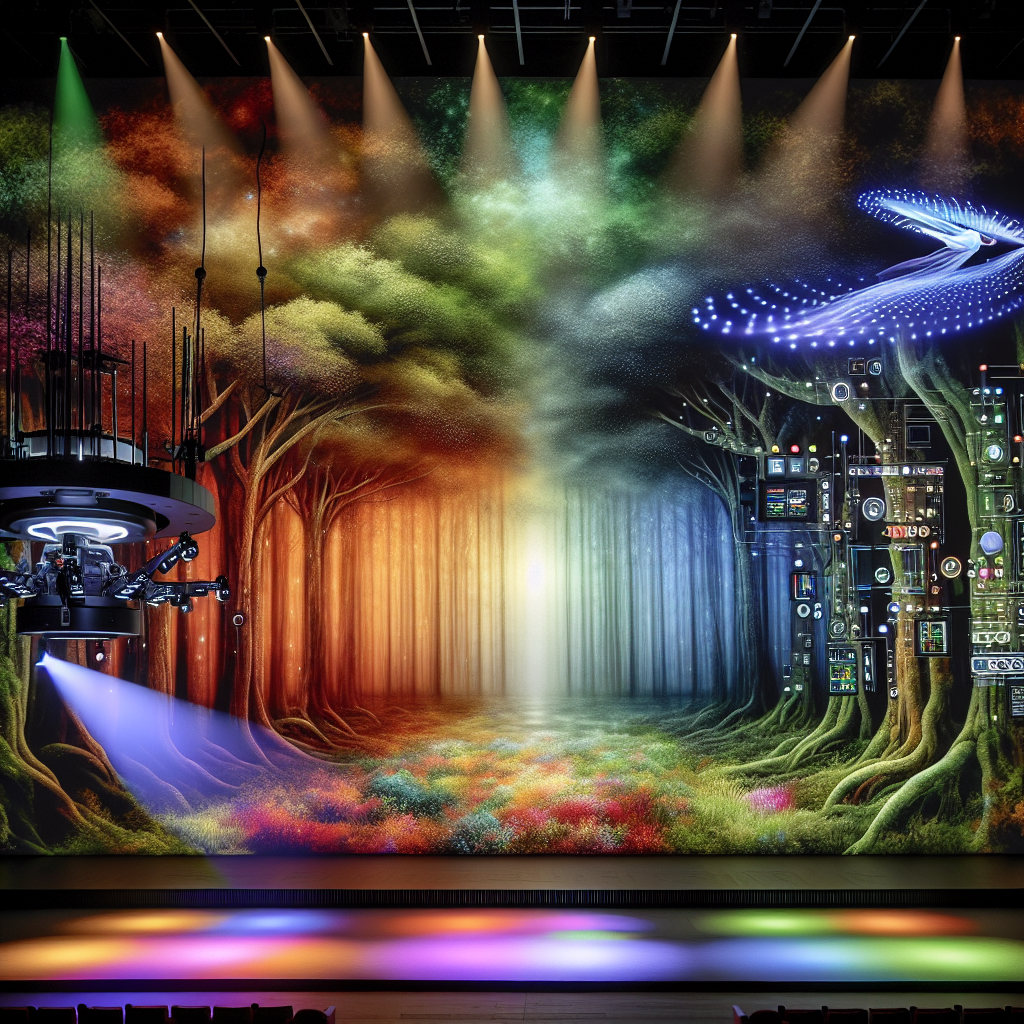
Artificial Intelligence (AI) has been making waves in various industries, and theater production is no exception. From enhancing set design to improving lighting effects, AI technology is revolutionizing the way productions are created and executed on stage. In this article, we will explore how AI is being used in theater production to create immersive and visually stunning experiences for audiences.
AI in Set Design
Set design plays a crucial role in creating the atmosphere and setting the tone for a theatrical production. Traditionally, set designers rely on their artistic vision and creativity to design and build sets that bring the script to life. However, with the help of AI, set designers can now take their designs to the next level.
One of the ways AI is being used in set design is through generative design. Generative design is a process where AI algorithms are used to generate multiple design options based on specific parameters and constraints. This allows set designers to explore a wide range of design possibilities and come up with innovative and unique set designs that may not have been possible through traditional methods.
AI can also help set designers optimize their designs for better functionality and efficiency. By analyzing data on audience behavior, movement patterns, and sightlines, AI algorithms can help set designers create sets that enhance the overall experience for the audience. For example, AI can help designers position set pieces in a way that maximizes visibility for all audience members, or optimize the acoustics of the space for better sound quality.
Furthermore, AI can also assist in the construction and installation of set designs. By using robotics and automation, AI can help set designers streamline the production process and reduce the time and cost of building sets. This allows productions to be more efficient and cost-effective, ultimately benefiting both the creators and the audience.
AI in Lighting
Lighting is another crucial element in theater production that sets the mood, highlights key moments, and enhances the overall aesthetic of the production. With the help of AI, lighting designers can create dynamic and immersive lighting effects that bring the production to life.
One way AI is being used in lighting design is through intelligent lighting systems. These systems use AI algorithms to analyze the script, music, and choreography of a production to create lighting cues that are synchronized with the performance. This allows lighting designers to create dynamic lighting effects that enhance the emotional impact of the production and create a more engaging and immersive experience for the audience.
AI can also help lighting designers optimize their designs for energy efficiency and sustainability. By analyzing data on energy consumption and environmental impact, AI algorithms can help lighting designers create lighting designs that are more energy-efficient and environmentally friendly. This not only reduces the carbon footprint of the production but also saves costs in the long run.
Furthermore, AI can assist in the real-time adjustment of lighting cues during a performance. By using sensors and cameras to track the movement of actors and objects on stage, AI algorithms can automatically adjust the lighting to ensure that the performers are always well-lit and the audience can see the action clearly. This level of automation and precision in lighting design would not be possible without the help of AI technology.
FAQs
Q: How does AI impact the role of set designers and lighting designers in theater production?
A: AI enhances the capabilities of set designers and lighting designers by providing them with tools and resources to create more innovative and efficient designs. AI algorithms can help designers generate new design options, optimize designs for functionality and efficiency, and streamline the production process. This allows designers to focus on the creative aspects of their work and deliver more impactful and immersive experiences for the audience.
Q: Will AI replace human designers in theater production?
A: While AI can automate certain tasks and assist designers in their work, it is unlikely to replace human designers completely. The creative process of designing sets and lighting requires a level of artistic vision and intuition that AI cannot replicate. AI is a tool that can enhance the capabilities of designers and help them work more efficiently, but human creativity and expertise will always be essential in theater production.
Q: How can theater productions benefit from using AI in set design and lighting?
A: Theater productions can benefit from using AI in set design and lighting in several ways. AI can help productions create more innovative and visually stunning designs, optimize designs for functionality and efficiency, and streamline the production process. By using AI technology, productions can enhance the overall experience for the audience, reduce costs, and improve sustainability. Ultimately, AI can help productions create more engaging and immersive experiences that leave a lasting impact on the audience.
In conclusion, AI is transforming the way theater productions are created and executed, particularly in the areas of set design and lighting. By using AI technology, set designers and lighting designers can create more innovative and visually stunning designs, optimize designs for functionality and efficiency, and enhance the overall experience for the audience. With the help of AI, theater productions can push the boundaries of creativity and deliver immersive and engaging experiences that captivate audiences.