
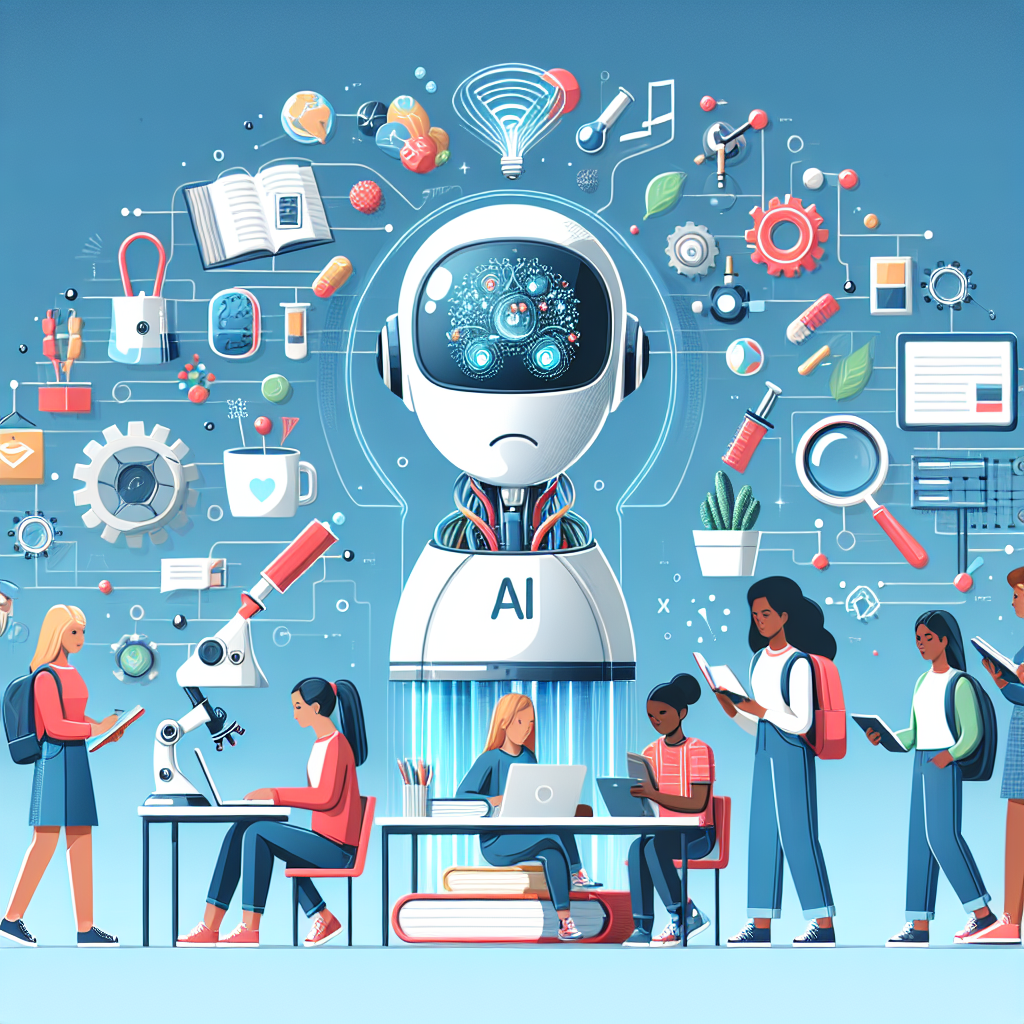
Artificial Intelligence (AI) and Inquiry-Based Learning in Education
Introduction
In recent years, there has been a growing interest in the use of Artificial Intelligence (AI) in education. AI has the potential to revolutionize the way we teach and learn, making education more personalized, adaptive, and engaging. One of the key areas where AI is making a significant impact is in inquiry-based learning, a pedagogical approach that emphasizes critical thinking, problem-solving, and discovery.
Inquiry-based learning encourages students to ask questions, explore topics in depth, and come up with their own solutions. AI can support this approach by providing students with personalized feedback, resources, and guidance. By using AI to facilitate inquiry-based learning, educators can create a more dynamic and interactive learning environment that promotes deep understanding and engagement.
Benefits of AI in Inquiry-Based Learning
There are several ways in which AI can enhance inquiry-based learning in education:
Personalized Learning: AI can analyze student data and provide personalized feedback and recommendations based on individual learning needs and preferences. This allows students to work at their own pace and focus on areas where they need the most help, leading to more effective learning outcomes.
Adaptive Learning: AI can adapt to students’ learning styles and preferences, providing them with the right level of challenge and support. This helps to keep students motivated and engaged, as they are constantly challenged to push their boundaries and improve their skills.
Enhanced Collaboration: AI can facilitate collaboration among students by providing them with tools and resources to work together on projects and share ideas. This fosters a sense of community and teamwork, as students learn from each other and support one another in their learning journey.
Real-World Applications: AI can simulate real-world scenarios and provide students with opportunities to apply their knowledge and skills in practical contexts. This helps students to see the relevance of their learning and develop critical thinking and problem-solving skills that are essential for success in the 21st century.
Challenges of AI in Inquiry-Based Learning
While AI has the potential to revolutionize inquiry-based learning in education, there are also some challenges that need to be addressed:
Ethical Concerns: There are ethical concerns surrounding the use of AI in education, such as data privacy, algorithm bias, and student autonomy. Educators need to be aware of these issues and ensure that AI is used in a responsible and ethical manner.
Technical Limitations: AI technology is still evolving, and there are technical limitations that can affect its effectiveness in supporting inquiry-based learning. Educators need to be aware of these limitations and work closely with AI developers to address them.
Teacher Training: Educators need to be trained in how to effectively use AI in inquiry-based learning, as well as how to integrate it into their curriculum. Professional development programs should be provided to help teachers develop the skills and knowledge needed to leverage AI in their teaching practice.
Integration with Existing Systems: Integrating AI into existing educational systems can be challenging, as it requires changes to infrastructure, policies, and practices. Educators need to work closely with IT departments and administrators to ensure a smooth transition to AI-powered inquiry-based learning.
FAQs
Q: How can AI support inquiry-based learning in education?
A: AI can support inquiry-based learning by providing personalized feedback, recommendations, and resources to students. It can also facilitate collaboration among students and simulate real-world scenarios for practical application of knowledge and skills.
Q: What are the benefits of using AI in inquiry-based learning?
A: The benefits of using AI in inquiry-based learning include personalized learning, adaptive learning, enhanced collaboration, and real-world applications. AI can help students work at their own pace, stay motivated, learn from each other, and apply their knowledge in practical contexts.
Q: What are the challenges of using AI in inquiry-based learning?
A: The challenges of using AI in inquiry-based learning include ethical concerns, technical limitations, teacher training, and integration with existing systems. Educators need to be aware of these challenges and work closely with AI developers to address them.
Q: How can educators prepare for the use of AI in inquiry-based learning?
A: Educators can prepare for the use of AI in inquiry-based learning by attending professional development programs, collaborating with AI developers, and integrating AI into their curriculum. They should also be aware of ethical issues and technical limitations related to AI in education.