
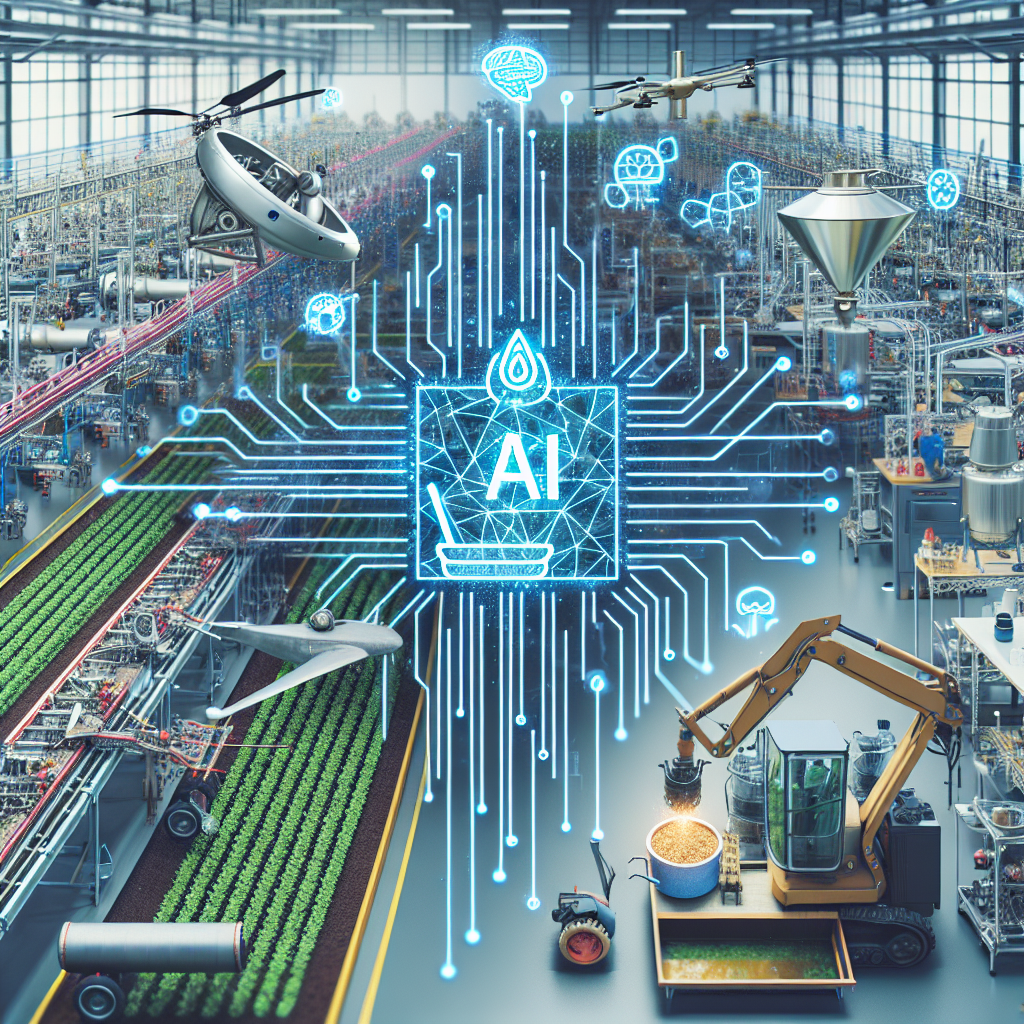
The Role of AI in Enhancing Precision Agriculture in Manufacturing
Artificial intelligence (AI) is revolutionizing the way manufacturers approach precision agriculture. By leveraging AI technologies, manufacturers are able to gather and analyze vast amounts of data to make better decisions in real-time, ultimately leading to more efficient and sustainable farming practices.
Precision agriculture, also known as precision farming or smart farming, is the use of technology to optimize farming practices and increase crop yields while minimizing inputs such as water, fertilizer, and pesticides. AI plays a crucial role in enhancing precision agriculture by enabling farmers to collect and analyze data from sensors, drones, satellites, and other sources to make informed decisions about crop management.
One of the key benefits of AI in precision agriculture is its ability to provide real-time insights into crop health, soil conditions, weather patterns, and other factors that affect crop growth. This allows farmers to make adjustments to their farming practices quickly and efficiently, resulting in higher yields and reduced waste.
AI technologies such as machine learning, computer vision, and natural language processing are used to process and analyze the data collected from various sources. Machine learning algorithms can predict crop yields, identify pests and diseases, and optimize irrigation schedules based on historical data and real-time observations.
Computer vision technology can analyze images captured by drones or satellites to detect crop health issues, such as nutrient deficiencies or pest infestations. Natural language processing algorithms can analyze text data from weather reports, research papers, and other sources to provide insights into weather patterns and other environmental factors that affect crop growth.
In addition to improving crop yields and reducing waste, AI technologies can also help manufacturers reduce their environmental impact by optimizing resource use and minimizing the use of chemicals and fertilizers. By using AI to monitor soil conditions, crop health, and weather patterns, farmers can make more sustainable decisions about irrigation, fertilization, and pest control.
AI in precision agriculture also enables manufacturers to adopt a data-driven approach to farming, allowing them to optimize their operations and maximize profitability. By analyzing data from sensors, drones, and other sources, manufacturers can identify trends, patterns, and anomalies that can help them make better decisions about crop management, equipment maintenance, and other aspects of their operations.
Furthermore, AI technologies can help manufacturers improve their supply chain management by optimizing logistics, inventory management, and distribution processes. By using AI to analyze data from sensors, drones, and other sources, manufacturers can predict demand, optimize production schedules, and reduce waste in their supply chain.
Overall, AI plays a crucial role in enhancing precision agriculture in manufacturing by enabling farmers to collect and analyze data from various sources to make informed decisions about crop management, optimize their operations, and reduce their environmental impact. By leveraging AI technologies, manufacturers can improve crop yields, reduce waste, and increase profitability while promoting sustainable farming practices.
FAQs
Q: How does AI help in optimizing irrigation schedules in precision agriculture?
A: AI technologies such as machine learning algorithms can analyze data from sensors, drones, and other sources to predict soil moisture levels and optimize irrigation schedules based on historical data and real-time observations. By using AI to monitor soil conditions and weather patterns, farmers can make more informed decisions about when and how much to irrigate their crops.
Q: How does AI help in detecting pests and diseases in crops?
A: AI technologies such as computer vision can analyze images captured by drones or satellites to detect pest infestations and crop diseases. By using AI to analyze images of crops, farmers can identify issues such as nutrient deficiencies, pest infestations, and diseases early on, allowing them to take prompt action to mitigate the damage and prevent further spread.
Q: How does AI help in predicting crop yields?
A: AI technologies such as machine learning algorithms can analyze data from sensors, drones, and other sources to predict crop yields based on historical data and real-time observations. By using AI to analyze data on soil conditions, weather patterns, and other factors that affect crop growth, farmers can make more accurate predictions about their crop yields and plan their harvest accordingly.