
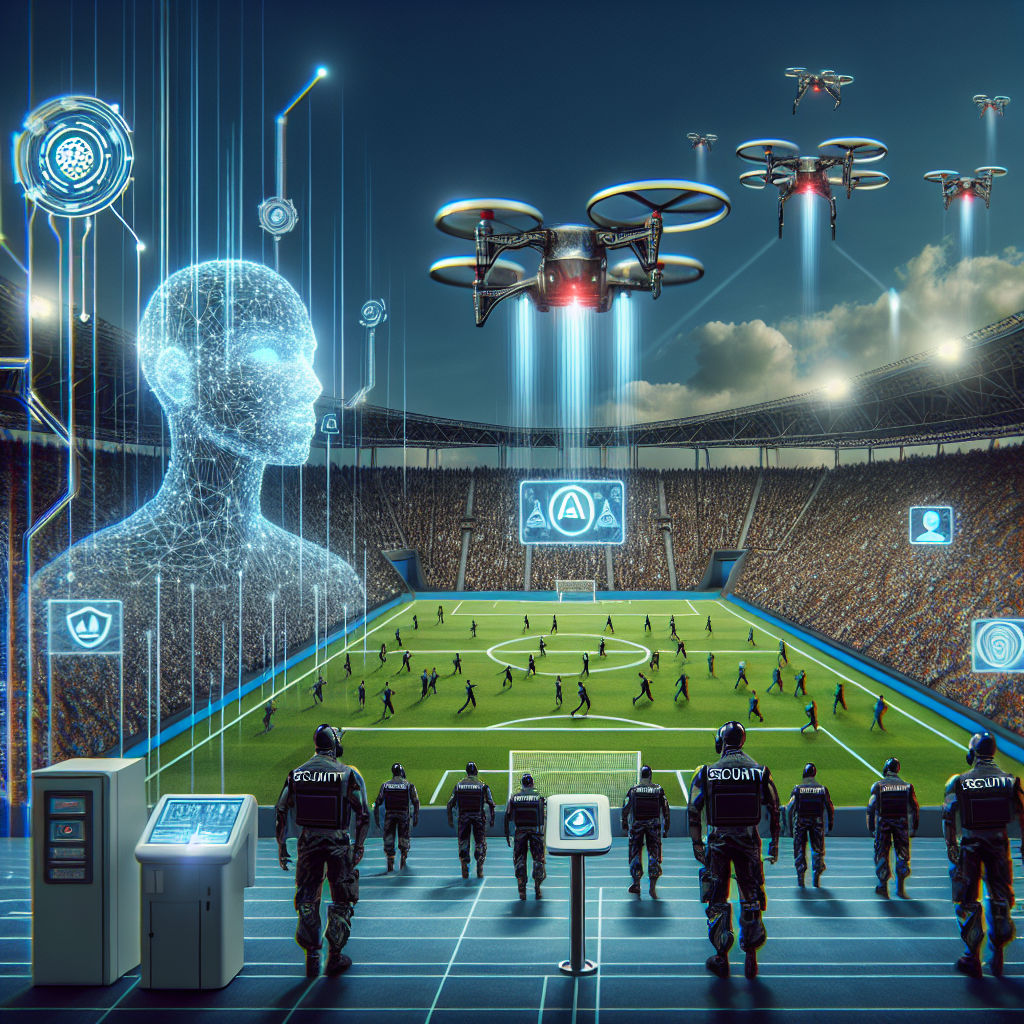
Sports events have always been a target for security threats, ranging from unruly fans to terrorist attacks. In recent years, advancements in artificial intelligence (AI) technology have transformed the way in which sports event security measures are implemented. From facial recognition to predictive analytics, AI is being used to enhance security and ensure the safety of spectators, athletes, and staff.
One of the key ways in which AI is transforming sports event security measures is through the use of facial recognition technology. This technology allows security personnel to quickly and accurately identify individuals entering the venue, helping to prevent unauthorized individuals from gaining access. Facial recognition can also be used to track the movements of known troublemakers or individuals on watch lists, enabling security teams to respond quickly to potential threats.
In addition to facial recognition, AI is also being used to monitor crowd behavior and detect potential security threats. By analyzing video feeds from security cameras, AI algorithms can detect signs of agitation or violence within the crowd, allowing security personnel to intervene before a situation escalates. This proactive approach to security has been shown to be highly effective in preventing incidents at sports events.
AI is also being used to enhance threat detection and response capabilities at sports events. By analyzing data from a variety of sources, including social media, weather reports, and historical security incidents, AI algorithms can identify potential threats and predict when and where they are likely to occur. This information allows security teams to allocate resources more effectively and respond quickly to emerging threats.
Another way in which AI is transforming sports event security measures is through the use of predictive analytics. By analyzing data on past security incidents and trends, AI algorithms can identify patterns and predict when and where future incidents are likely to occur. This information can be used to develop security plans and allocate resources in a more targeted manner, helping to prevent security breaches and ensure the safety of all individuals at the event.
In addition to enhancing security measures, AI is also being used to improve the overall fan experience at sports events. By analyzing data on fan preferences and behavior, AI algorithms can personalize the fan experience, offering targeted promotions and recommendations based on individual interests. This not only enhances the fan experience but also helps to increase revenue for sports venues and teams.
Despite the many benefits of AI in sports event security, there are some concerns about privacy and data security. Facial recognition technology, in particular, has raised questions about the potential for misuse and invasion of privacy. To address these concerns, sports venues and teams must be transparent about their use of AI technology and ensure that data is stored and used in a secure manner.
In conclusion, AI is transforming sports event security measures in a variety of ways, from enhancing threat detection and response capabilities to improving the fan experience. By leveraging the power of AI technology, sports venues and teams can ensure the safety and security of all individuals at their events while also enhancing the overall fan experience. As AI continues to evolve, it is likely that we will see even more innovative applications of this technology in the field of sports event security.
—
FAQs
Q: How does facial recognition technology work in sports event security?
A: Facial recognition technology works by analyzing unique facial features, such as the distance between the eyes and the shape of the nose, to create a digital profile of an individual. This profile is then compared to a database of known individuals to identify potential threats or unauthorized individuals entering the venue.
Q: Is facial recognition technology reliable in sports event security?
A: Facial recognition technology has been shown to be highly reliable in identifying individuals, with accuracy rates of over 99%. However, there are concerns about the potential for bias and error, particularly when it comes to identifying individuals from diverse backgrounds.
Q: How does AI help to enhance threat detection at sports events?
A: AI helps to enhance threat detection at sports events by analyzing data from a variety of sources, including social media, weather reports, and historical security incidents. By identifying patterns and predicting when and where threats are likely to occur, AI algorithms enable security teams to respond quickly and effectively to emerging threats.
Q: What are some of the concerns about the use of AI in sports event security?
A: Some of the concerns about the use of AI in sports event security include issues of privacy and data security. Facial recognition technology, in particular, has raised questions about the potential for misuse and invasion of privacy. Sports venues and teams must be transparent about their use of AI technology and ensure that data is stored and used in a secure manner.