
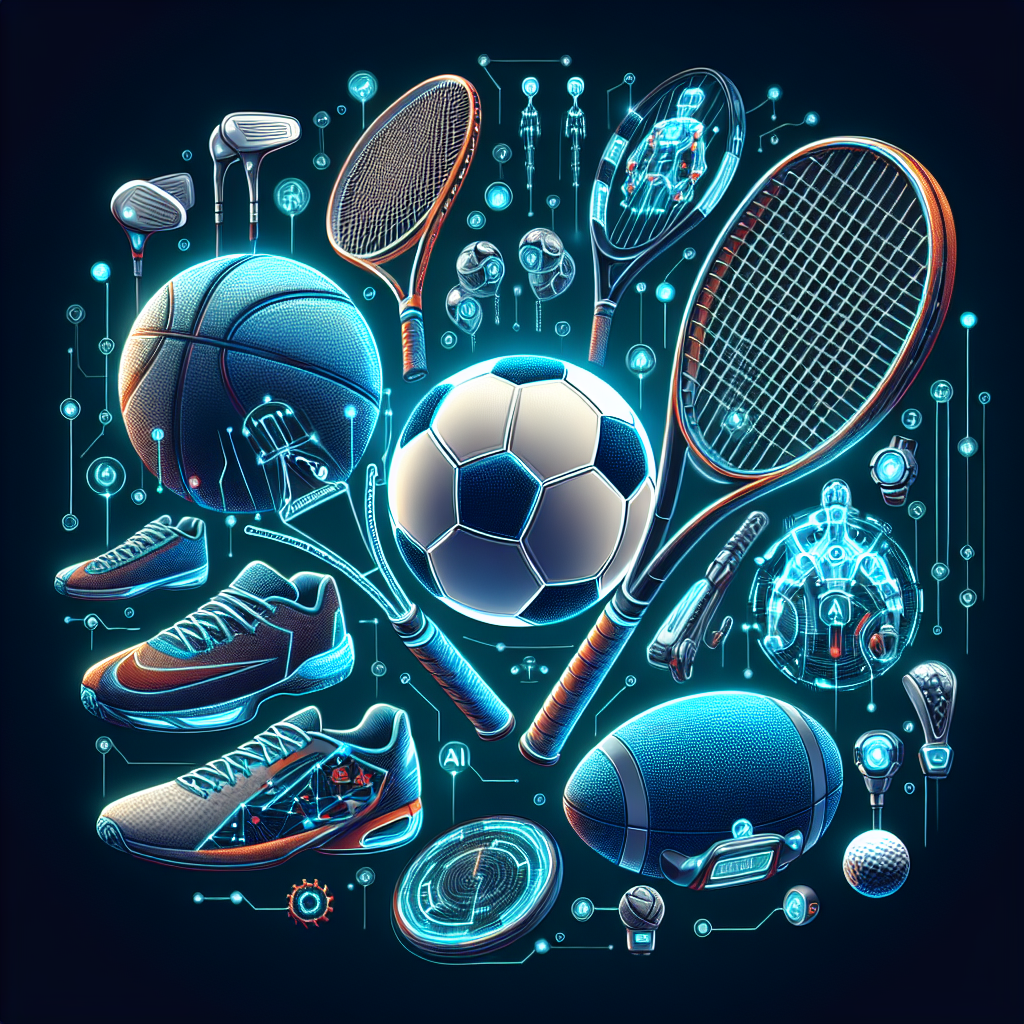
Artificial intelligence (AI) is revolutionizing the way sports equipment is customized and personalized for athletes. From shoes to helmets to rackets, AI is being used to create gear that is tailored to individual needs and preferences, ultimately improving performance and reducing the risk of injury.
One of the key benefits of AI in sports equipment customization is the ability to gather and analyze data in real-time. For example, sensors embedded in shoes can track a runner’s gait, foot strike, and other biomechanical metrics to provide insights into how the shoe can be customized to optimize performance and reduce the risk of injury. This data can be fed into AI algorithms that can then recommend the best shoe design for the individual athlete.
In addition to performance optimization, AI can also be used to personalize sports equipment to match an athlete’s unique style and preferences. For example, AI can generate custom designs for apparel, shoes, and other gear based on an athlete’s favorite colors, patterns, and logos. This level of personalization can help athletes feel more connected to their equipment and perform better on the field or court.
Furthermore, AI can also help manufacturers streamline the customization process, leading to faster turnaround times and reduced costs. By using AI to automate the design and manufacturing process, companies can create custom sports equipment more efficiently and accurately, ultimately making it more accessible to athletes of all levels.
One of the most notable examples of AI in sports equipment customization is in the world of golf. Companies like TaylorMade and Callaway have developed AI-powered tools that analyze a golfer’s swing and ball flight to recommend the best club for their game. Using data from thousands of golfers, these companies can create custom clubs that are tailored to an individual’s swing characteristics, leading to improved accuracy and distance on the course.
Another area where AI is making a significant impact is in the customization of helmets for contact sports like football and hockey. By using AI to analyze a player’s head shape, size, and impact patterns, companies can create helmets that provide better protection and reduce the risk of concussions. This level of customization can be crucial for athletes who are at a higher risk of head injuries due to the nature of their sport.
Overall, AI in sports equipment customization and personalization is transforming the way athletes train and compete. By leveraging data and AI algorithms, companies can create gear that is uniquely tailored to each individual athlete, leading to improved performance, comfort, and safety on the field or court.
FAQs:
Q: How does AI analyze data to customize sports equipment?
A: AI uses algorithms to analyze data collected from sensors embedded in the equipment or from the athlete themselves. This data can include biomechanical metrics, performance indicators, and personal preferences, which are then used to recommend the best customization options for the athlete.
Q: Can AI help with injury prevention in sports?
A: Yes, AI can help reduce the risk of injury by customizing sports equipment to better fit an athlete’s needs and biomechanics. For example, AI can recommend the best shoe design to reduce the risk of foot and ankle injuries or customize helmets to better protect against head injuries.
Q: How accessible is AI-powered sports equipment customization?
A: While AI-powered customization is still relatively new, it is becoming more accessible to athletes of all levels. Companies are increasingly incorporating AI into their design and manufacturing processes, making custom sports equipment more affordable and widely available.
Q: What are some examples of AI-powered sports equipment customization?
A: Some examples include custom golf clubs that are tailored to a golfer’s swing characteristics, personalized shoes that are designed to optimize performance and reduce the risk of injury, and helmets that are customized to fit an athlete’s head shape and reduce the risk of concussions.