
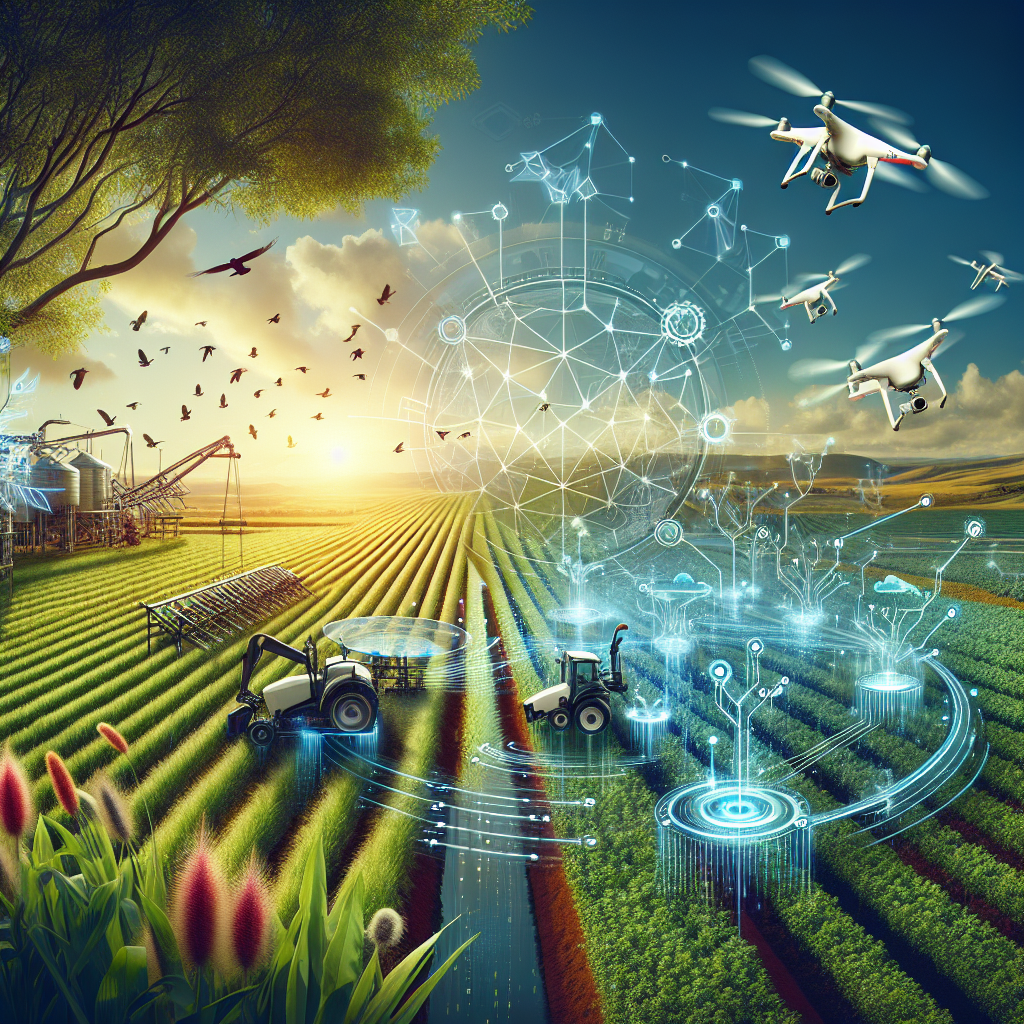
Artificial intelligence (AI) is revolutionizing various industries, and agriculture is no exception. AI-powered tools are being increasingly used to enhance agricultural ecosystem services, leading to more efficient and sustainable farming practices. These tools utilize advanced algorithms and data analytics to optimize various aspects of agriculture, from monitoring crop health to predicting weather patterns. In this article, we will explore the different AI-powered tools that are transforming the agricultural sector and their impact on enhancing ecosystem services.
1. Monitoring and Precision Agriculture
One of the key uses of AI in agriculture is in monitoring and precision agriculture. AI-powered tools can analyze satellite imagery, drone footage, and sensor data to monitor crop health, detect diseases, and optimize irrigation and fertilizer use. This allows farmers to make more informed decisions in real-time, leading to increased crop yields and reduced environmental impact. By using AI to precisely target inputs such as water and nutrients, farmers can minimize waste and improve resource efficiency, ultimately enhancing ecosystem services.
2. Pest and Disease Management
AI-powered tools are also being used to improve pest and disease management in agriculture. By analyzing historical data on pest and disease outbreaks, as well as weather patterns, AI algorithms can predict and prevent future infestations. This not only reduces crop losses and the need for chemical pesticides but also helps to maintain a healthy ecosystem by preserving natural predators and beneficial insects. By using AI to target specific areas at risk of pest outbreaks, farmers can minimize the impact on the environment and promote biological diversity.
3. Climate Resilience and Adaptation
Climate change poses a significant threat to agriculture, with extreme weather events becoming more frequent and unpredictable. AI-powered tools can help farmers adapt to these changing conditions by providing real-time weather forecasts, predicting crop yields, and recommending adaptive strategies. By using AI to analyze climate data and optimize planting schedules, farmers can mitigate the impact of climate change on their crops and improve resilience. This not only enhances ecosystem services by preserving soil health and biodiversity but also ensures food security for future generations.
4. Soil Health and Nutrient Management
Healthy soil is the foundation of sustainable agriculture, providing essential nutrients for plant growth and supporting a diverse ecosystem of microorganisms. AI-powered tools can analyze soil samples and recommend tailored nutrient management strategies to optimize soil health and fertility. By using AI to predict soil nutrient deficiencies and adjust fertilizer applications accordingly, farmers can improve crop yields while minimizing environmental pollution. This promotes sustainable agriculture practices that enhance ecosystem services by preserving soil structure and promoting biodiversity.
5. Water Conservation and Irrigation Management
Water scarcity is a growing concern in agriculture, with many regions facing droughts and water shortages. AI-powered tools can help farmers conserve water and optimize irrigation practices by analyzing soil moisture levels, weather forecasts, and crop water requirements. By using AI to automate irrigation systems and schedule watering based on real-time data, farmers can reduce water waste and improve water efficiency. This not only benefits the environment by conserving water resources but also enhances ecosystem services by maintaining healthy aquatic ecosystems and preserving water quality.
FAQs:
1. How do AI-powered tools enhance agricultural ecosystem services?
AI-powered tools use advanced algorithms and data analytics to optimize various aspects of agriculture, from monitoring crop health to predicting weather patterns. By analyzing large amounts of data and providing real-time recommendations, AI tools help farmers make more informed decisions that improve resource efficiency, reduce environmental impact, and enhance ecosystem services.
2. What are some examples of AI-powered tools in agriculture?
Some examples of AI-powered tools in agriculture include satellite imagery analysis for monitoring crop health, drone technology for precision agriculture, and machine learning algorithms for predicting pest outbreaks and optimizing irrigation practices. These tools help farmers improve productivity, reduce waste, and promote sustainability in agriculture.
3. How can AI help farmers adapt to climate change?
AI can help farmers adapt to climate change by providing real-time weather forecasts, predicting crop yields, and recommending adaptive strategies. By analyzing climate data and optimizing planting schedules, AI tools help farmers mitigate the impact of extreme weather events and improve resilience in the face of climate change.
4. How do AI-powered tools promote sustainable agriculture?
AI-powered tools promote sustainable agriculture by optimizing resource use, reducing waste, and minimizing environmental impact. By analyzing data on soil health, water availability, and pest outbreaks, AI tools help farmers make informed decisions that improve productivity while preserving ecosystem services and promoting biodiversity.