
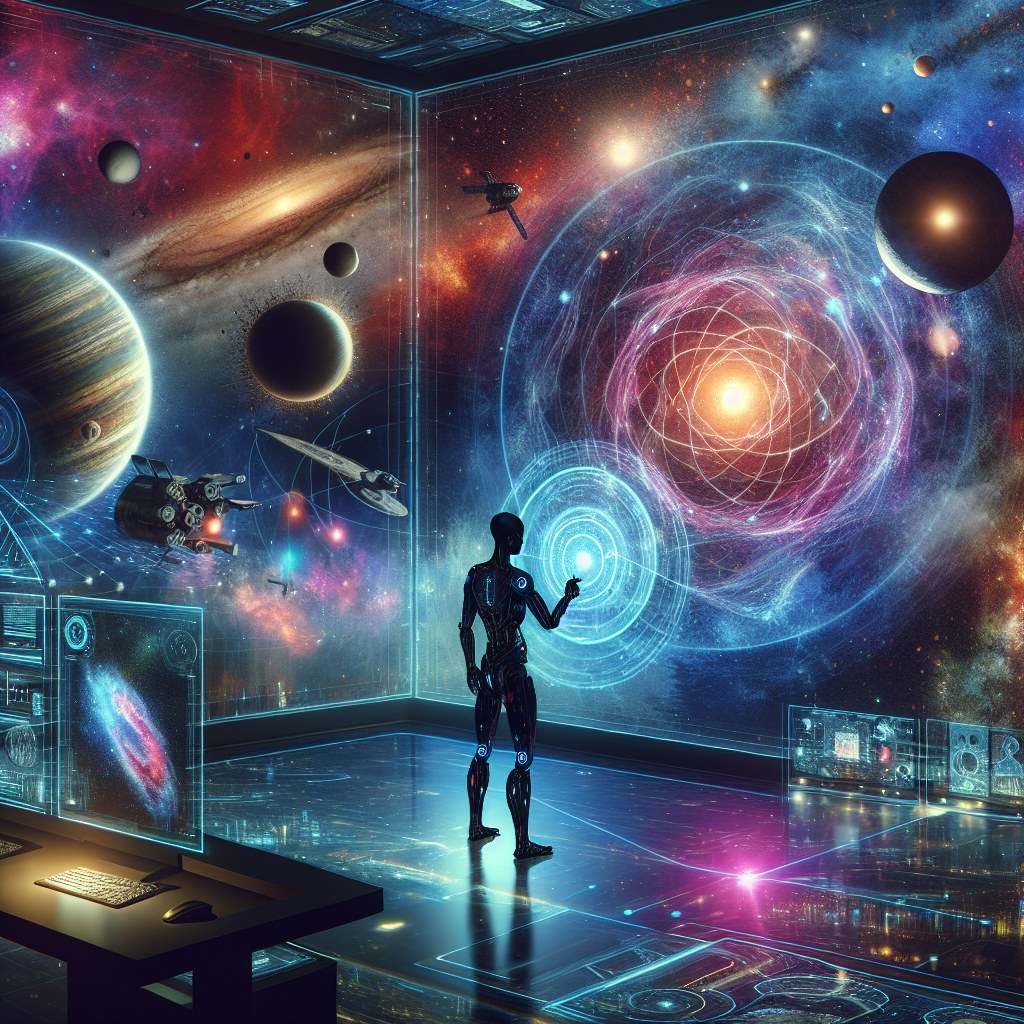
Space exploration has always captivated the imagination of humanity. From the first moon landing in 1969 to the recent Mars rover missions, the quest to understand the cosmos and expand our presence beyond Earth continues to drive scientific innovation. One of the key technological advancements that is revolutionizing space exploration is artificial intelligence (AI). AI-driven solutions are enabling new ways to explore and understand the universe, pushing the boundaries of what is possible in space exploration.
AI in Space Exploration
Artificial intelligence refers to the ability of machines to mimic human intelligence and perform tasks that typically require human cognition, such as learning, problem-solving, and decision-making. In the context of space exploration, AI is being used to automate tasks, analyze vast amounts of data, and make decisions in real-time. This allows for more efficient and effective exploration of space, as well as the discovery of new phenomena and insights.
One of the key areas where AI is being applied in space exploration is in autonomous spacecraft. These spacecraft are designed to operate independently of human control, making decisions based on data collected from sensors and cameras. AI algorithms are used to navigate, avoid obstacles, and perform scientific experiments without the need for constant human intervention. This enables spacecraft to explore remote regions of space that are difficult or dangerous for humans to reach.
AI is also being used to analyze large amounts of data collected from space missions. For example, the Hubble Space Telescope generates terabytes of data every year, which must be analyzed to make new discoveries about the universe. AI algorithms can sift through this data more quickly and accurately than humans, identifying patterns and anomalies that may lead to new breakthroughs in astrophysics.
Furthermore, AI is being used to improve communication and collaboration between spacecraft and ground control. Mission planners can use AI algorithms to optimize communication schedules, predict equipment failures, and coordinate multiple spacecraft in complex missions. This ensures that missions run smoothly and efficiently, maximizing the scientific return on investment.
Challenges and Opportunities
While AI-driven solutions have the potential to revolutionize space exploration, there are also challenges that need to be addressed. One of the main challenges is the need for robust and reliable AI algorithms that can operate in the harsh conditions of space. Space is a hostile environment, with high levels of radiation, extreme temperatures, and limited resources. AI algorithms must be able to withstand these conditions and continue to perform effectively over long periods of time.
Another challenge is the ethical and legal implications of using AI in space exploration. As AI becomes more autonomous and capable of making decisions on its own, questions arise about who is responsible for its actions and how to ensure that it acts ethically. International agreements and regulations may be needed to govern the use of AI in space, to prevent conflicts and ensure that missions are conducted responsibly.
Despite these challenges, the opportunities presented by AI in space exploration are vast. AI-driven solutions have the potential to revolutionize our understanding of the universe, enabling new discoveries and insights that were previously out of reach. By combining the power of AI with advances in robotics, sensors, and propulsion, we can explore new frontiers in space and lay the groundwork for future human missions to other planets and beyond.
FAQs
Q: How is AI used in space exploration?
A: AI is used in space exploration to automate tasks, analyze data, and make decisions in real-time. AI algorithms are used in autonomous spacecraft, data analysis, and communication systems to improve the efficiency and effectiveness of space missions.
Q: What are the benefits of using AI in space exploration?
A: The benefits of using AI in space exploration include increased efficiency, faster data analysis, and improved decision-making. AI enables spacecraft to operate autonomously, analyze large amounts of data more quickly, and collaborate more effectively with ground control.
Q: What are the challenges of using AI in space exploration?
A: The challenges of using AI in space exploration include the need for robust algorithms that can withstand the harsh conditions of space, as well as ethical and legal considerations related to AI autonomy and responsibility. International agreements may be needed to govern the use of AI in space.
Q: How can AI revolutionize space exploration in the future?
A: AI has the potential to revolutionize space exploration by enabling new discoveries, increasing the efficiency of missions, and paving the way for future human exploration of other planets. By combining AI with advances in robotics, sensors, and propulsion, we can push the boundaries of what is possible in space exploration.