
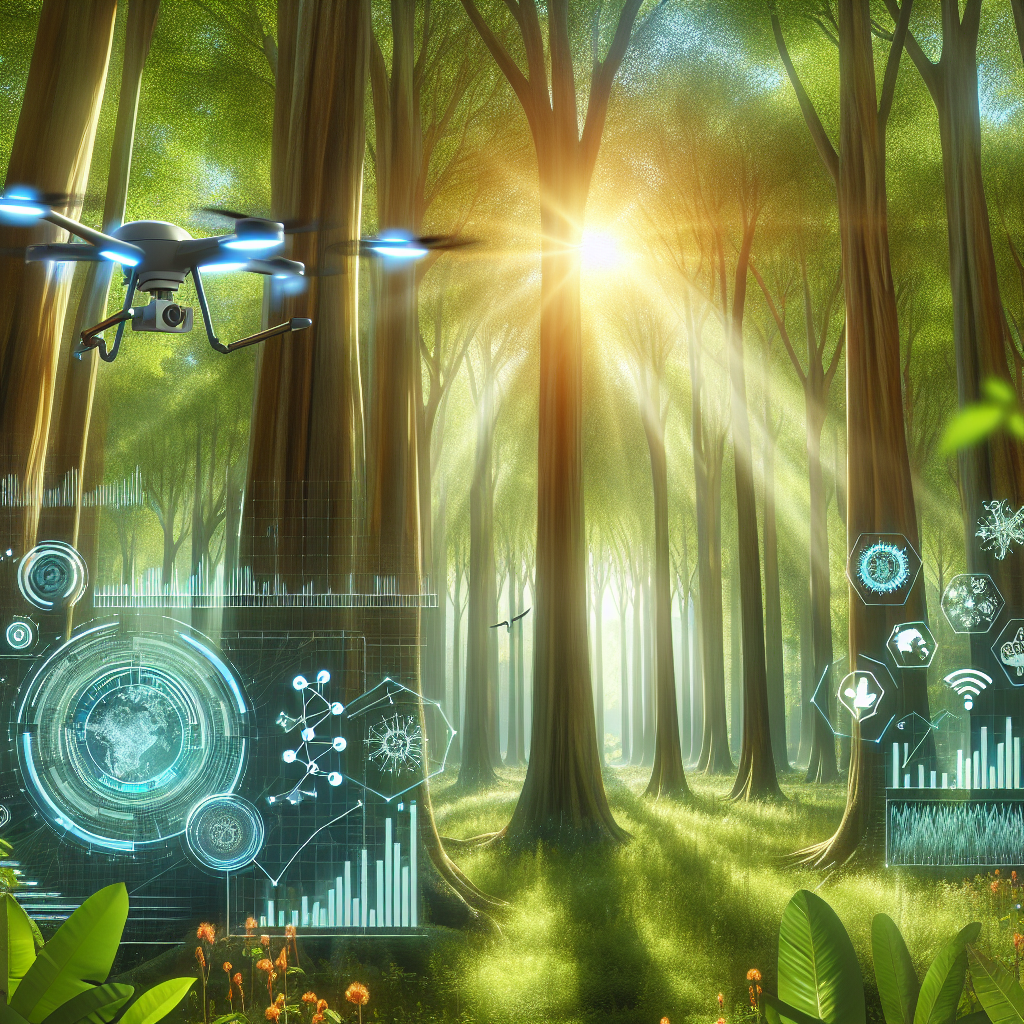
With the increasing threat of deforestation and climate change, sustainable forest management has become more crucial than ever. Artificial intelligence (AI) solutions have emerged as powerful tools to help monitor and manage forests more effectively. These technologies can provide valuable insights and data to support sustainable practices and ensure the long-term health and productivity of our forests. In this article, we will explore the various AI solutions for sustainable forest management and their potential benefits.
AI solutions for sustainable forest management encompass a wide range of applications, from monitoring forest health and biodiversity to predicting and preventing forest fires. One of the key advantages of using AI in forest management is its ability to process vast amounts of data quickly and accurately. This allows forest managers to make more informed decisions and take proactive measures to protect and preserve our forests.
One of the most common applications of AI in forest management is remote sensing. By using satellite imagery and other remote sensing technologies, AI algorithms can analyze forest cover, detect changes in land use, and monitor the health of forests in real time. This allows forest managers to identify areas that are at risk of deforestation or degradation and take appropriate action to prevent further damage.
Another important application of AI in sustainable forest management is in predicting and preventing forest fires. By analyzing historical data on weather patterns, vegetation density, and other factors, AI algorithms can predict the likelihood of a forest fire occurring in a particular area. This information can help forest managers allocate resources more effectively and take preventive measures to reduce the risk of fires spreading.
AI can also be used to monitor and protect wildlife in forests. By analyzing camera trap data and other sources of information, AI algorithms can identify and track endangered species, detect poaching activities, and assess the impact of human activities on wildlife populations. This information can help conservationists develop targeted strategies to protect biodiversity and ensure the long-term survival of endangered species.
In addition to monitoring and managing forests, AI can also be used to optimize forest operations and improve efficiency. For example, AI algorithms can optimize harvest schedules, predict timber yields, and identify areas where thinning or replanting is needed. This can help forest managers maximize the economic value of their forests while minimizing environmental impact.
Overall, AI solutions have the potential to revolutionize sustainable forest management by providing valuable insights, improving decision-making processes, and helping forest managers to achieve their conservation goals. By leveraging the power of AI technologies, we can work towards a more sustainable future for our forests and the planet.
Frequently Asked Questions (FAQs)
Q: How can AI help monitor the health of forests?
A: AI algorithms can analyze satellite imagery and other remote sensing data to monitor forest cover, detect changes in land use, and assess the health of forests in real time. This information can help forest managers identify areas that are at risk of deforestation or degradation and take appropriate action to protect and preserve the health of the forest.
Q: How can AI be used to prevent forest fires?
A: By analyzing historical data on weather patterns, vegetation density, and other factors, AI algorithms can predict the likelihood of a forest fire occurring in a particular area. This information can help forest managers allocate resources more effectively and take preventive measures to reduce the risk of fires spreading.
Q: How can AI help protect wildlife in forests?
A: AI algorithms can analyze camera trap data and other sources of information to identify and track endangered species, detect poaching activities, and assess the impact of human activities on wildlife populations. This information can help conservationists develop targeted strategies to protect biodiversity and ensure the long-term survival of endangered species.
Q: How can AI optimize forest operations?
A: AI algorithms can optimize harvest schedules, predict timber yields, and identify areas where thinning or replanting is needed. This can help forest managers maximize the economic value of their forests while minimizing environmental impact.
Q: What are the benefits of using AI in sustainable forest management?
A: AI solutions can provide valuable insights, improve decision-making processes, and help forest managers achieve their conservation goals. By leveraging the power of AI technologies, we can work towards a more sustainable future for our forests and the planet.