
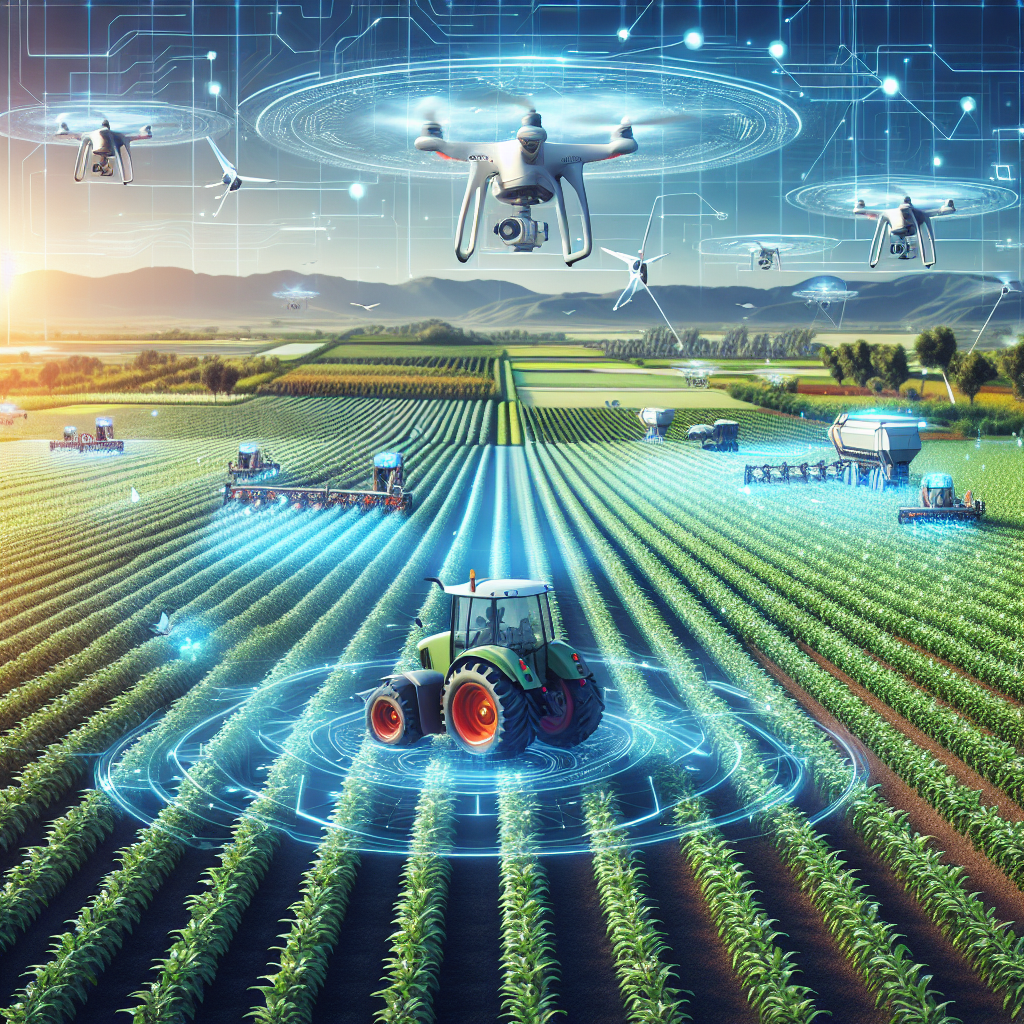
In recent years, advancements in artificial intelligence (AI) have revolutionized many industries, and one area that has seen significant progress is autonomous farming. AI technology is being used to optimize farming practices, increase efficiency, and improve crop yields. From autonomous tractors to drones and robots, AI is transforming the way farming is done.
One of the key benefits of using AI in farming is the ability to collect and analyze vast amounts of data in real time. This data can include information on soil composition, weather patterns, crop health, and more. By analyzing this data, AI algorithms can provide farmers with valuable insights and recommendations on how to optimize their farming practices.
Autonomous tractors are one of the most widely used AI technologies in farming. These tractors are equipped with sensors and GPS technology that allow them to operate without human intervention. They can plow fields, plant seeds, and apply fertilizers and pesticides with precision and efficiency. This not only saves farmers time and labor costs but also ensures that crops are planted and cared for in the most optimal way.
Drones are another AI technology that is being used in farming. Drones can be equipped with cameras and sensors that can capture aerial images of fields. These images can then be analyzed using AI algorithms to provide farmers with information on crop health, soil moisture levels, and pest infestations. This allows farmers to quickly identify and address any issues that may be affecting their crops, leading to higher yields and healthier plants.
Robots are also being used in autonomous farming to perform a variety of tasks, such as weeding, harvesting, and sorting crops. These robots are equipped with AI algorithms that allow them to navigate fields, identify crops, and perform tasks with precision and efficiency. By using robots, farmers can reduce the need for manual labor and increase the speed and accuracy of their farming operations.
One of the key advantages of using AI in autonomous farming is the ability to make real-time decisions based on data analysis. For example, AI algorithms can analyze weather forecasts and soil moisture levels to determine the optimal time to plant seeds or apply fertilizers. This can help farmers maximize their crop yields and reduce the risk of crop failure.
In addition to increasing efficiency and productivity, AI technology in farming can also help reduce the environmental impact of agriculture. By using AI algorithms to optimize farming practices, farmers can reduce the amount of water, fertilizer, and pesticides used, leading to a more sustainable and environmentally friendly approach to farming.
Overall, advancements in AI for autonomous farming are revolutionizing the way farming is done. By leveraging the power of AI technology, farmers can increase efficiency, improve crop yields, and reduce the environmental impact of agriculture. As AI continues to evolve, we can expect to see even more innovative solutions that will further transform the farming industry.
FAQs:
Q: How does AI technology improve crop yields in autonomous farming?
A: AI technology can analyze vast amounts of data in real time, such as soil composition, weather patterns, and crop health, to provide farmers with valuable insights and recommendations on how to optimize their farming practices. This can help farmers make informed decisions that can lead to higher crop yields.
Q: What are some of the key benefits of using drones in autonomous farming?
A: Drones can capture aerial images of fields, which can then be analyzed using AI algorithms to provide farmers with information on crop health, soil moisture levels, and pest infestations. This allows farmers to quickly identify and address any issues that may be affecting their crops, leading to higher yields and healthier plants.
Q: How do autonomous tractors improve efficiency in farming operations?
A: Autonomous tractors are equipped with sensors and GPS technology that allow them to operate without human intervention. They can plow fields, plant seeds, and apply fertilizers and pesticides with precision and efficiency. This saves farmers time and labor costs, while also ensuring that crops are planted and cared for in the most optimal way.
Q: What are some of the environmental benefits of using AI in autonomous farming?
A: By using AI algorithms to optimize farming practices, farmers can reduce the amount of water, fertilizer, and pesticides used, leading to a more sustainable and environmentally friendly approach to farming. This can help reduce the environmental impact of agriculture and promote a healthier ecosystem.