
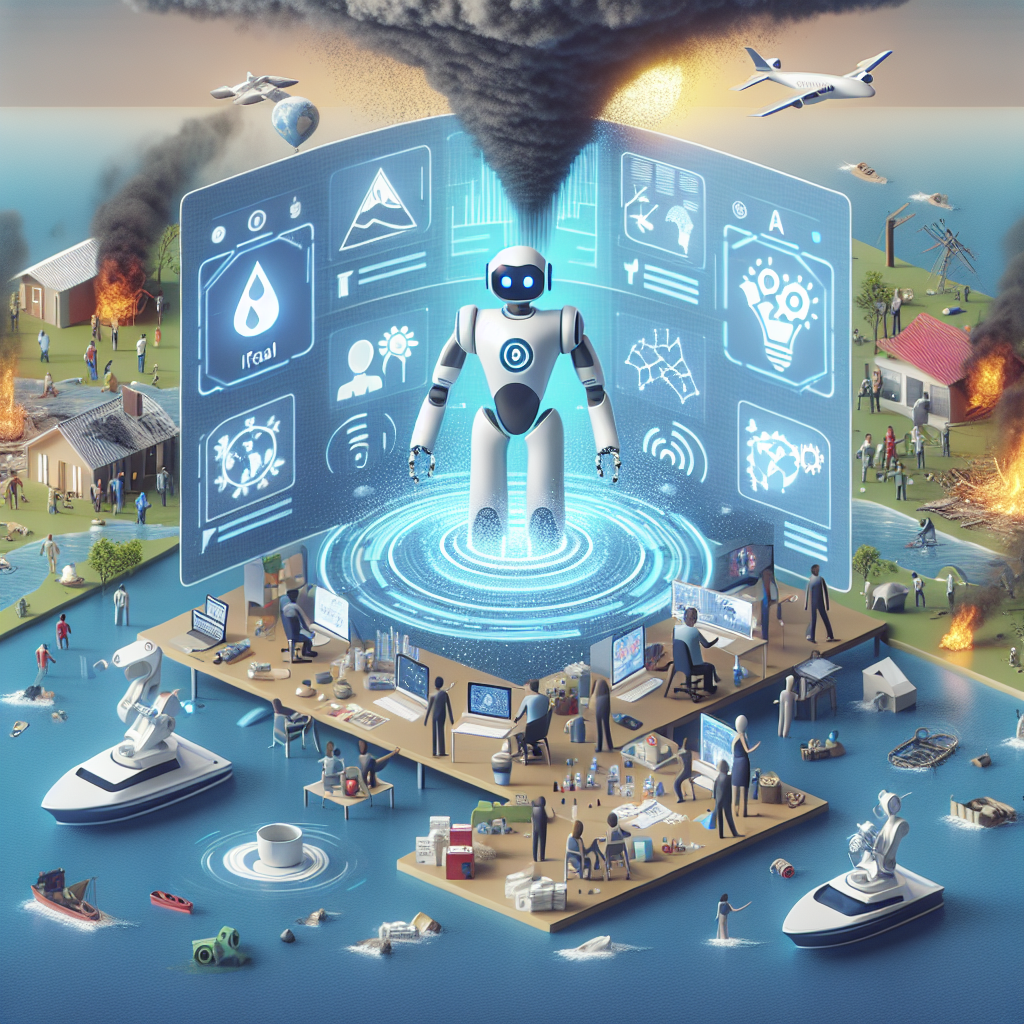
Advancements in AI for Disaster Risk Reduction and Management
In recent years, the use of artificial intelligence (AI) has been gaining momentum in various fields, including disaster risk reduction and management. AI has the potential to revolutionize the way we prepare for, respond to, and recover from natural disasters. From predicting disaster events to coordinating emergency response efforts, AI technologies are enhancing our ability to mitigate the impact of disasters and save lives. In this article, we will explore the latest advancements in AI for disaster risk reduction and management and discuss how these technologies are shaping the future of disaster management.
Predictive Modeling and Early Warning Systems
One of the key applications of AI in disaster risk reduction is predictive modeling and early warning systems. By analyzing large amounts of data from various sources, such as satellite imagery, weather forecasts, and historical disaster data, AI algorithms can predict the likelihood of a disaster event and provide early warnings to at-risk communities. These early warnings allow authorities to evacuate residents, mobilize resources, and implement preventive measures before a disaster strikes, thereby reducing the impact of the disaster and saving lives.
For example, in the case of hurricanes, AI algorithms can analyze real-time weather data to predict the trajectory and intensity of the storm, enabling authorities to issue timely warnings and evacuate coastal areas. Similarly, AI-powered flood forecasting systems can analyze rainfall data, river levels, and topographic information to predict floods and alert residents in advance. These predictive modeling and early warning systems are essential tools for disaster risk reduction and management, as they enable authorities to take proactive measures to mitigate the impact of disasters.
Emergency Response and Resource Allocation
AI technologies are also being used to improve emergency response and resource allocation during disasters. By analyzing real-time data from various sources, such as social media, sensors, and drones, AI algorithms can identify areas that are most affected by a disaster and prioritize response efforts accordingly. For example, AI-powered drones can be used to assess damage to infrastructure, search for survivors, and deliver supplies to remote areas that are inaccessible to traditional rescue teams.
Moreover, AI algorithms can optimize the allocation of resources, such as food, water, and medical supplies, by analyzing demand patterns and predicting future needs. By using AI to streamline the logistics of emergency response, authorities can ensure that resources are distributed efficiently and effectively, thereby maximizing the impact of their efforts and saving more lives.
Risk Assessment and Planning
Another important application of AI in disaster risk reduction is risk assessment and planning. By analyzing historical disaster data, demographic information, and infrastructure vulnerability, AI algorithms can identify areas that are most at risk of disasters and develop strategies to reduce their vulnerability. For example, AI-powered risk assessment tools can analyze building codes, land use patterns, and population density to identify areas that are prone to earthquakes and recommend measures to strengthen buildings, improve evacuation routes, and enhance emergency preparedness.
Furthermore, AI technologies can be used to simulate disaster scenarios and evaluate the effectiveness of different risk reduction measures. By running simulations of various disaster events, authorities can assess the potential impact of disasters, test different response strategies, and identify areas for improvement. These risk assessment and planning tools are essential for enhancing disaster preparedness and resilience, as they enable authorities to anticipate potential risks, develop effective mitigation strategies, and reduce the impact of disasters on communities.
Challenges and Opportunities
While AI technologies have the potential to revolutionize disaster risk reduction and management, there are also challenges that need to be addressed. One of the main challenges is the availability of high-quality data, as AI algorithms rely on large amounts of data to make accurate predictions and recommendations. In many developing countries, data on disasters, infrastructure, and demographics are often incomplete or outdated, making it difficult to train AI models effectively. Moreover, there are concerns about the ethical and privacy implications of using AI in disaster management, such as the potential for bias in decision-making and the misuse of personal data.
Despite these challenges, there are also opportunities for AI to make a significant impact on disaster risk reduction and management. By collaborating with governments, NGOs, and private sector partners, AI developers can access valuable data, expertise, and resources to develop innovative solutions for disaster preparedness and response. Moreover, advances in AI technologies, such as machine learning, natural language processing, and computer vision, are enabling researchers to develop more sophisticated predictive models, decision support tools, and risk assessment systems for disaster management.
Overall, the use of AI in disaster risk reduction and management is a promising area of research that has the potential to transform the way we prepare for, respond to, and recover from disasters. By harnessing the power of AI technologies, we can enhance our ability to predict, prevent, and mitigate the impact of disasters, ultimately saving lives and protecting communities from harm.
FAQs
1. How is AI used in disaster risk reduction and management?
AI is used in disaster risk reduction and management in various ways, such as predictive modeling and early warning systems, emergency response and resource allocation, and risk assessment and planning. By analyzing large amounts of data from various sources, AI algorithms can predict disaster events, coordinate emergency response efforts, and develop strategies to reduce the vulnerability of communities to disasters.
2. What are the benefits of using AI in disaster management?
The benefits of using AI in disaster management include improved prediction and early warning of disasters, optimized resource allocation and emergency response, and enhanced risk assessment and planning. By leveraging AI technologies, authorities can reduce the impact of disasters, save lives, and protect communities from harm.
3. What are the challenges of using AI in disaster management?
Some of the challenges of using AI in disaster management include the availability of high-quality data, ethical and privacy concerns, and the need for collaboration with various stakeholders. Addressing these challenges is essential to ensure that AI technologies are used effectively and ethically in disaster risk reduction and management.
4. How can AI technologies be further advanced for disaster management?
AI technologies can be further advanced for disaster management by investing in research and development, improving data quality and accessibility, and promoting collaboration among researchers, governments, and NGOs. By leveraging the latest advances in AI, such as machine learning, natural language processing, and computer vision, researchers can develop innovative solutions for disaster preparedness and response.